

Where to Go Fishing in Rwanda
Bujuku Eco Tours2026-07-30T17:49:09+03:00Where to go fishing in Rwanda. Fishing isn’t the first activity most people associate with in a Rwanda trip, and that’s precisely what makes it worth understanding properly for anyone with even a casual interest in wetting a line. Rwanda’s lakes and rivers, from Akagera National Park’s Lake Ihema and Lake Shakani to the vast waters of lake kivu and the quieter Lake Muhazi close to Kigali, offer a genuinely varied fishing landscape, ranging from wildlife-adjacent sport fishing among hippos and crocodiles to peaceful lakeside afternoons and the culturally rich night-fishing traditions of Lake Kivu’s sambaza fishermen.
Rwanda is a landlocked country whose fishing takes place entirely across its freshwater lakes and rivers, and the country’s commercial fishing industry is concentrated on three main water bodies: Lake Kivu, Lake Muhazi and Lake Mugesera, which together with aquaculture supply the bulk of Rwanda’s domestic fish production, estimated at around 13,000 tonnes annually, of which capture fisheries contribute roughly 9,000 tonnes and aquaculture the remainder.
Despite this domestic production, Rwanda remains a net importer of fish from neighbouring Uganda and Tanzania to meet demand, with some of that imported fish re-exported onward to the Democratic Republic of Congo.
For visitors, the sport fishing experience is distinct from this commercial backdrop and concentrated in a smaller number of specific locations. Akagera National Park’s Lake Ihema and Lake Shakani are widely regarded as Rwanda’s best sport fishing destinations, offering a managed, permit-based experience where fishing spots are deliberately chosen away from the areas most frequented by hippo and crocodile, allowing anglers to fish safely while still experiencing the park’s wildlife-rich atmosphere, fish eagles overhead, hippo grunts across the water, and occasional elephant visible along the shoreline.
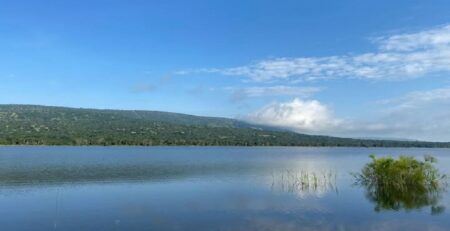
Lake Kivu offers a different character entirely: a vast, scenic freshwater lake shared with the Democratic Republic of Congo, notably free of bilharzia, crocodiles and hippos in its main areas, making it one of the more universally comfortable large lakes in East Africa for water-based activity generally.
Its main commercial catch is the small sardine-like sambaza, caught at night using a traditional method involving lantern light to attract the fish, and this same tradition has become a genuinely memorable cultural tourism experience in its own right, quite apart from sport fishing for the larger tilapia, catfish and Nile perch also present in the lake’s waters.
Rwanda's Fishing Destinations at a Glance
Here is a direct comparison of Rwanda’s main fishing locations and what each offer.
Location | Character | Main Species | Permit Required? |
Lake Ihema (Akagera NP) | Wildlife-rich savannah park lake; hippo and crocodile nearby | Tilapia, Nile perch | Yes; Akagera National Park fishing permit |
Lake Shakani (Akagera NP) | The only lake in Akagera dedicated specifically to tourist sport fishing | Tilapia, catfish | Yes; Akagera National Park fishing permit |
Lake Kivu | Vast scenic lake; no bilharzia, crocodiles or hippos in main areas | Nile perch, tilapia, catfish, tiger fish; sambaza (small sardine, commercial) | Generally accessible; confirm locally with boat operators |
Lake Muhazi | Quiet lake near Kigali; gentle, accessible setting | Marbled lungfish, Nile tilapia, blue-spotted tilapia, catfish | Generally accessible; confirm locally |
Lake Mugesera | Commercial fishing lake, less developed for tourism | Various tilapia and local species | Generally accessible; confirm locally |
Rivers (Akagera, Nyabarongo, Akanyaru, Sebeya) | Flowing water fishing, less commonly targeted by visitors | Various local species | Varies by location |
Best Fishing Locations in Rwanda
What follows covers Rwanda’s main fishing destinations in detail, with an honest account of what each offers and how to plan a visit.
Akagera National Park: Lake Ihema
Lake Ihema, Rwanda’s second-largest lake and the centerpiece of Akagera National Park’s water-based activities, offers sport fishing alongside its famous boat cruise, with anglers targeting tilapia and Nile perch, the latter capable of reaching genuinely impressive sizes.
Fishing spots on Ihema are carefully selected to keep anglers safely away from the lake’s substantial hippo population and resident crocodiles, and the experience of casting a line with fish eagles calling overhead and hippo grunts carrying across the water gives Ihema fishing a genuinely distinctive wildlife-park character unlike fishing almost anywhere else.
A fishing permit through Akagera National Park authorities is required, and anglers should bring their own equipment or arrange hire in advance.
Akagera National Park: Lake Shakani
Lake Shakani, covered in detail in this guide’s companion piece on the lake specifically, is the only lake within Akagera where sport fishing as a tourist activity is the primary designated purpose, and it remains one of the most popular fishing destinations in the country for this reason. Tilapia and catfish are the most commonly caught species, the activity is generally catch-and-release with the option to keep one fish to roast, and the lake’s papyrus-fringed shoreline and resident hippo population add the same distinctive wildlife-park atmosphere found at Ihema. Shakani Campsite, on the lake’s edge, allows anglers to combine fishing with an overnight stay directly at the water.
Lake Kivu:
Lake Kivu offers sport fishing for Nile perch, tilapia and catfish across its scenic waters, framed by rolling hills and, on the horizon, the volcanic peaks of the Virunga range. Nile perch here can reach substantial sizes, and Lake Kivu is one of the destinations specifically noted for anglers seeking this species alongside Lake Ihema.
The lake’s freedom from bilharzia, crocodiles and hippos in its main areas makes for a genuinely relaxed fishing environment compared with the wildlife-adjacent lakes of Akagera, and the towns of Rubavu (Gisenyi), Karongi (Kibuye) and Rusizi (Cyangugu) all provide practical access points with accommodation and boat hire.
Lake Kivu:
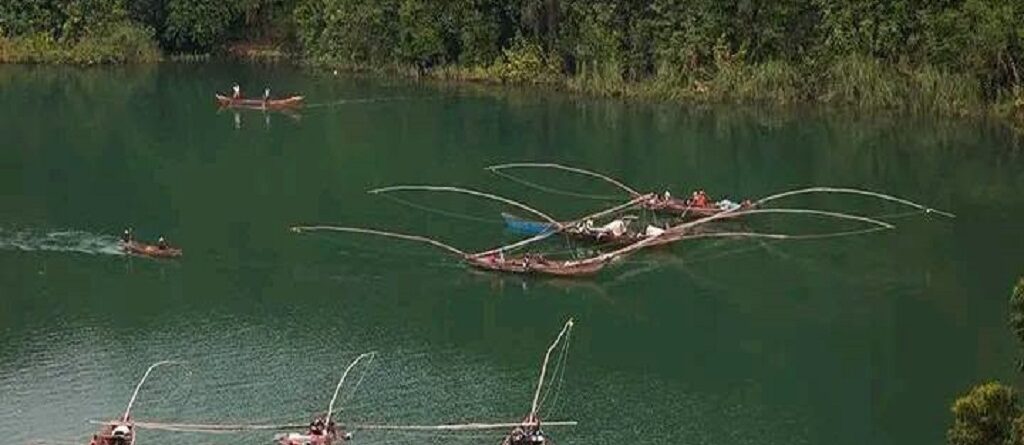
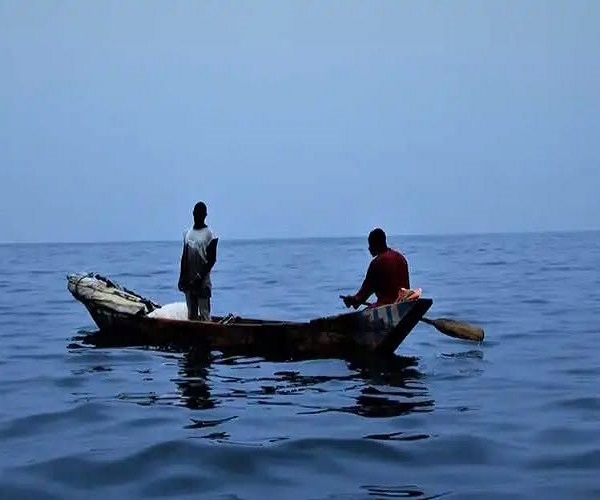
Beyond conventional sport fishing, Lake Kivu’s most culturally distinctive fishing experience is the traditional night fishing method used to catch sambaza, a small sardine-like fish that forms an important part of the local diet and economy. Groups of fishermen head out onto the lake after dark in wooden canoes lashed together, using lantern light to attract the fish to the surface before netting them, all while singing traditional work songs that coordinate their movements and pass the long hours on the water.
Visitors can join this expedition, typically gathering at the lakeshore around 4:30am to witness the full process from boat preparation through the return catch, and it’s consistently described as one of the most memorable and genuinely cultural experiences available on Lake Kivu, regardless of whether you have any interest in fishing as a sport.
Lake Muhazi
Lake Muhazi, roughly forty minutes by road from Kigali in Rwanda’s Eastern Province, offers a quieter, more accessible fishing experience for visitors who want a peaceful half-day escape from the capital without travelling as far as Akagera or Lake Kivu. The lake supports marbled lungfish, Nile tilapia and blue-spotted tilapia among its main catches, and visitors can either hire a boat and captain to fish from the water or cast from the shore. Muhazi’s gentle, cool setting, framed by rolling hills and local communities along its banks, makes it a genuinely relaxing destination, and its proximity to Kigali makes it one of the most practical fishing options for travellers without extensive time to spare.
Lake Mugesera and Other Waters
Lake Mugesera, alongside smaller-scale fishing opportunities on the twin lakes of Burera and Ruhondo and on rivers including the Akagera, Nyabarongo, Akanyaru and Sebeya, round out Rwanda’s fishing landscape, though these locations are considerably less developed for tourist sport fishing than Akagera’s lakes or Lake Kivu.
They suit travellers with a specific interest in exploring beyond the established fishing tourism circuit, ideally with a local guide who can arrange access and provide context on which specific spots are worth targeting.
Frequently Asked Questions
Frequently Asked Questions
Where is the best place to go fishing in Rwanda?
Lake Ihema and Lake Shakani, both within Akagera National Park, are widely regarded as Rwanda’s best sport fishing destinations, offering a managed, permit-based experience within a genuine wildlife park setting. Lake Kivu is the other major destination, offering both conventional sport fishing for Nile perch, tilapia and catfish, and the culturally distinctive night fishing tradition for sambaza.
Do you need a permit to fish in Rwanda?
Yes, specifically for fishing within Akagera National Park at Lake Ihema or Lake Shakani, where a dedicated fishing permit is required in addition to standard park entry fees. Lake Kivu and Lake Muhazi involve less formal permit structures, though confirming current requirements with a local operator before your visit is worthwhile.
Is it safe to fish at Akagera National Park given the hippos and crocodiles?
Yes, when done through the park’s managed fishing programme. Fishing spots on both Lake Ihema and Lake Shakani are deliberately chosen in areas away from the highest concentrations of hippo and crocodile activity, allowing anglers to fish safely while still experiencing the park’s wildlife atmosphere from a reasonable distance.
Can you keep the fish you catch in Rwanda?
In most locations, sport fishing follows a general catch-and-release approach, but visitors are typically permitted to keep one fish from their catch to have prepared as a meal, either at their accommodation or at a lakeside setting. This varies by location and is worth confirming with your guide or the specific park or lake authority before you begin.
How far is Lake Muhazi from Kigali?
Approximately forty minutes by road, making it the most accessible fishing destination for travellers based in the capital who want a half-day escape without the longer transfer required to reach Akagera National Park or Lake Kivu.



Leave a Reply