

What to Do at Lake Shakani, Akagera National Park
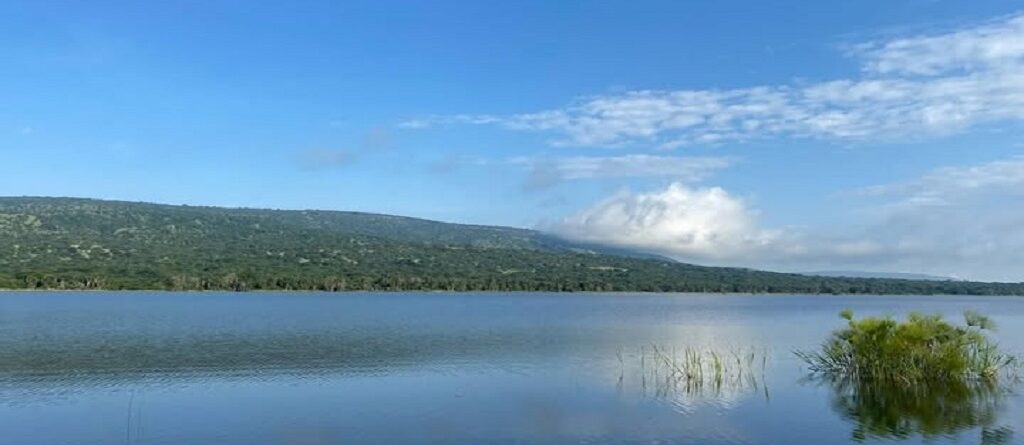
Bujuku Eco Tours2026-07-31T19:25:55+03:00What to do at lake shakani, Akagera national park. Lake Shakani is located quietly in the southern section of Akagera National Park, a few kilometers northeast of the park headquarters, and it holds a distinction found nowhere else in Rwanda: it’s the only lake in the country where sport fishing is permitted as a tourist activity. For most visitors arriving in Akagera focused on the Big Five game drives and the well-known boat cruise on Lake Ihema, Shakani is an easy stop to overlook, but its combination of fishing, birding, hippo-watching and a genuinely peaceful campsite on its shore make it one of the more distinctive lower-key experiences within Rwanda’s only savannah national park.
This guide covers exactly what there is to do at Lake Shakani, how it fits into a broader Akagera itinerary, what the fishing activity actually involves, and what to expect from a night at the lake’s campsite.
What to do at lake shakani, Akagera National Park facts
Akagera National Park holds over ten lakes within its boundary, part of an interconnected wetland and papyrus swamp system that covers more than a third of the park’s total area, making it the largest protected wetland complex in Eastern and Central Africa.
Of all these lakes, Shakani is the only one where sport fishing is permitted, a restriction Akagera Management Company enforces specifically to protect the ecological balance of the park’s other water bodies, particularly Lake Ihema, which remains reserved for boat cruise wildlife viewing rather than any extractive activity.
The lake’s location, a few kilometres northeast of the park headquarters in the southern section of Akagera, puts it within easy reach of the main entrance and the most commonly used accommodation, making it a practical addition to a standard itinerary rather than requiring a significant detour.
Its shoreline supports a large hippo population, and the surrounding papyrus and marsh vegetation is genuinely productive for birdlife, with species including the black-headed gonolek, African jacana, squacco heron, common moorhen, open-billed stork and long-toed lapwing recorded regularly around its margins.
Shakani Campsite, on the lake’s edge, is one of only four designated campsites within Akagera and is specifically positioned to give campers a lakeshore wilderness experience, falling asleep and waking to birdsong and the distinctive grunting calls of nearby hippos.
This combination of a specific, restricted activity, genuinely good birding, and an atmospheric campsite gives Lake Shakani a character distinct from the rest of the park’s more conventional game-drive-focused areas.
Lake Shakani Compared with Akagera's Other Key Water Features
Akagera’s lake system offers different experiences at each major water body. Here is how Shakani compares with the park’s other notable lakes.
Lake | Signature Activity | Location in Park | Key Wildlife |
Lake Shakani | Sport fishing (the only lake where this is permitted) | Southern section, near park HQ | Hippo, papyrus and wetland birds, catfish and tilapia |
Lake Ihema | Boat cruise wildlife viewing | Southern section, Rwanda’s second-largest lake | Hippo, Nile crocodile, elephant, extensive waterbird life |
Lake Rwanyakazinga | Game drive viewpoint; largest lake in the park | Northeastern section | Large buffalo herds, crocodile, hippo |
Lake Mihindi | Café and picnic stop; northern sector access | Northern section | General wetland birdlife, occasional elephant |
What to Do at Lake Shakani
Lake Shakani’s activities are more specific and more low-key than the park’s headline attractions, and understanding exactly what’s on offer helps set the right expectations before you arrive.
Sport Fishing
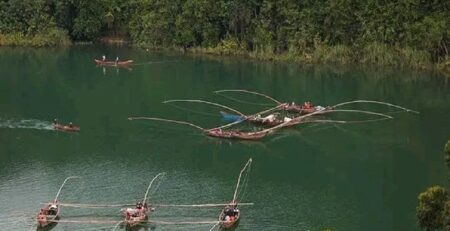
Sport fishing is Lake Shakani’s headline activity and the reason most visitors specifically seek it out. It’s the only place in Akagera, and the only place in Rwanda more broadly, where sport fishing is permitted as a tourist activity, and it’s open to both complete beginners and experienced anglers. The most commonly caught species are tilapia and catfish, with Nile perch also occasionally caught.
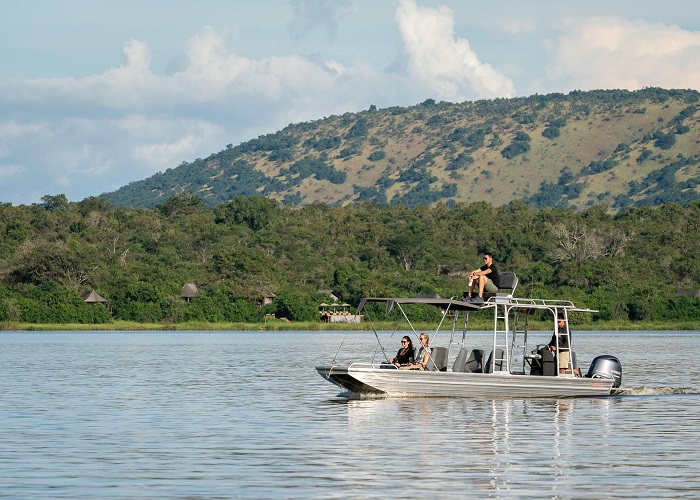
Fishing can be done from the shoreline with a local guide directing visitors to the most productive spots, or from a motorised boat for those wanting to fish further from the bank.
A fishing permit is required in addition to standard park entry fees, and visitors are advised to bring their own equipment, though gear can be hired at the park premises for those who prefer not to travel with fishing tackle.
The activity is typically catch-and-release, though visitors are permitted to keep and roast a catch if they wish, and this is a detail many first-timers don’t expect but consistently enjoy.
Birdwatching
The papyrus swamp and marsh vegetation around Lake Shakani’s margins make it a genuinely productive birding location within a park already recognised as one of the best birding destinations in East Africa, with over 525 species recorded across Akagera as a whole.
Species specifically associated with Shakani’s wetland edge include the black-headed gonolek, African jacana, squacco heron, common moorhen, open-billed stork and long-toed lapwing, alongside more general wetland species like herons, kingfishers and various waders.
Lake Shakani supports a substantial hippo population, and visitors camping at the adjacent Shakani Campsite frequently hear, and often see, hippos moving between the water and the surrounding grassland after dark. During the day, hippos are commonly visible resting in the lake’s shallows, and the combination of hippo viewing with fishing or birding makes a stop at Shakani a genuinely multi-purpose activity rather than a single-focus one.
Camping at Shakani Campsite
Shakani Campsite, on the lake’s edge, is one of four designated campsites within Akagera National Park and offers a genuine lakeshore wilderness camping experience.
The site has a low stone wall boundary, an ablution block with flush toilets and solar-heated showers, and tents available for hire from the park’s reception for visitors who don’t want to carry their own equipment, though guests are still responsible for arranging their own bedding.
The camp’s position directly on the lake shore means falling asleep to birdsong and the distinctive grunting calls of nearby hippos, a genuinely atmospheric experience that differs meaningfully from staying at one of the park’s lodges.
Nature Walks Along the Shoreline
Guided nature walks along sections of Lake Shakani’s shoreline are available for visitors staying at the campsite or those who arrange one through the park’s guiding service, offering a slower, ground-level perspective on the wetland ecosystem than a vehicle-based game drive provides.
These walks are typically shorter and more localised than a full game drive, focusing on the immediate lake environment rather than covering significant ground, and they pair naturally with a fishing or birding session on the same visit.
When to Visit Lake Shakani
Lake Shakani and its associated activities are accessible year-round, and camping at the Shakani Campsite operates throughout the year without seasonal closure.
The dry seasons, from June through September and December through February, offer the most comfortable conditions for fishing and camping, with normal water levels making fishing generally easier and firmer ground conditions around the campsite and shoreline.
The dry season months are also specifically recommended for wildlife viewing around the lake, since animals including elephant, buffalo and various antelope species come to Shakani and Akagera’s other water sources to drink and cool off as the surrounding grassland dries out, concentrating wildlife activity around the lake margins more predictably than during the wetter months.
Season | Months | Fishing Conditions | Wildlife at the Lake |
Long dry season | June – September | Normal water levels; comfortable fishing conditions | Strong; animals concentrate at water sources |
Short dry season | December – February | Good conditions; popular period | Strong; similar concentration effect as mid-year dry season |
Long rains | March – May | Higher water levels; fishing still possible | More dispersed; less predictable concentration |
Short rains | October – November | Moderate conditions | Moderate; some dispersal from water sources |
What Does a Visit to Lake Shakani Cost?
Visiting Lake Shakani requires standard Akagera National Park entry fees regardless of which specific activities you undertake once inside.
As of recent published rates, non-resident international visitors pay approximately USD 100 per person for park entry, foreign residents pay approximately USD 50, and Rwandan or East African Community citizens pay a considerably lower rate.
These figures are reviewed periodically by Akagera Management Company, so confirming the current rate with your operator or directly with the park before travel is worthwhile.
The sport fishing activity itself carries its own separate permit fee, historically around USD 25 per person for a full day, with a reduced rate for children aged six to twelve, and the activity is restricted to visitors aged six and above.
Camping at Shakani Campsite carries its own modest camping fee in addition to park entry, and equipment hire, whether fishing gear or camping tents, is available at the park’s reception for an additional cost for visitors who prefer not to travel with their own equipment.
Budget — Self-drive, camping at Shakani, own fishing gear
Self-driving into the park, camping at Shakani Campsite with your own tent and equipment, and bringing your own fishing gear keeps costs to park entry, the camping fee and the fishing permit alone, making this one of the most affordable ways to experience Akagera’s water-based activities.
Mid-range — Guided vehicle, campsite or budget lodge, hired equipment
A private guided vehicle for the wider game drive circuit, combined with either a night at Shakani Campsite or a nearby budget lodge, hired fishing equipment from the park’s reception, and a half-day guided fishing session with an instructor if you’re new to the activity.
Luxury — Premium lodge with a dedicated Shakani excursion
A stay at one of Akagera’s premium lodges such as Magashi Safari Camp or Mantis Akagera Game Lodge, with a private vehicle and guide arranging a specific half-day or full-day excursion to Lake Shakani for fishing and birding alongside the standard game drive programme.
Where to Stay Near Lake Shakani
Lake Shakani sits close enough to the park headquarters and the southern entrance area that most Akagera accommodation options are within a reasonable drive, and the Shakani Campsite itself offers the most direct, immersive option for travellers who want to be right on the lake shore overnight.
For travellers who prefer a lodge over camping, several properties in the southern part of the park put you within a short drive of Shakani while offering more conventional accommodation standards.
Property | Style | Distance to Shakani | Best For |
Shakani Campsite | Public campsite on the lake shore | Directly on the lake | Campers wanting the most immersive lakeshore wilderness experience |
Mantis Akagera Game Lodge | Mid-range to upper lodge | Short drive from the southern park area | Travellers wanting comfortable accommodation with easy access to Shakani and the main game circuits |
Ruzizi Tented Camp | Mid-range tented camp near Lake Ihema | Short drive | Travellers combining the Ihema boat cruise base with a Shakani fishing excursion |
Magashi Safari Camp | Luxury tented camp, northern sector | Longer drive; better suited to a dedicated excursion day | Luxury travellers prioritizing overall Akagera experience with Shakani as a planned add-on |
Add Your Heading Text Here
Lorem ipsum dolor sit amet, consectetur adipiscing elit. Ut elit tellus, luctus nec ullamcorper mattis, pulvinar dapibus leo.



Leave a Reply