

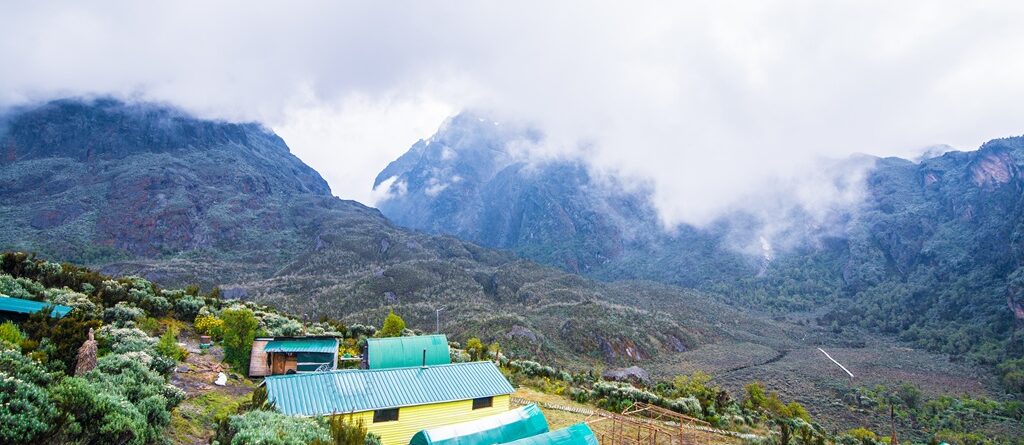
Accommodation in Rwenzori Mountains National Park
Bujuku Eco Tours2026-07-31T11:21:08+03:00Accommodation in Rwenzori Mountains National Park: Most people planning a Rwenzori trek spend weeks comparing routes, fitness plans, and summit statistics, and remarkably little time thinking about where they’ll actually sleep each night. That’s a mistake worth correcting early, because accommodation on this mountain isn’t a minor logistical footnote.
It’s the difference between a trek that feels genuinely well-supported and one where exhaustion compounds with a poor night’s rest at 4,000 meters. The Rwenzori, the “Mountains of the Moon,” and a UNESCO World Heritage Site since 1994, don’t offer the polished mountain lodges you’d find on some other iconic African treks. What they offer instead is a specific, well-organized system of huts and camps built for the realities of this particular mountain, and understanding that system before you book changes how well the whole trip goes.
The complexity worth addressing honestly is that Rwenzori accommodation splits across two entirely different management systems, the Central Circuit Trail and the Kilembe Trail, each with its own huts, its own booking structure, and its own trade-offs, on top of a separate question of where you’ll stay before and after the climb in Kasese town. Getting this straight matters more here than on almost any other Uganda itinerary, because once you’re on the mountain, you can’t simply upgrade your room if the first night disappoints you.
Why Accommodation Planning Matters More Here Than on Other Treks
The Rwenzori mountains present a genuinely unusual combination of remoteness and altitude that shapes what accommodation can realistically offer. Unlike Kilimanjaro, where a well-developed hut and lodge network has grown up around one of Africa’s most-climbed peaks, the Rwenzori mountains remain considerably less visited, and the accommodation infrastructure reflects that.
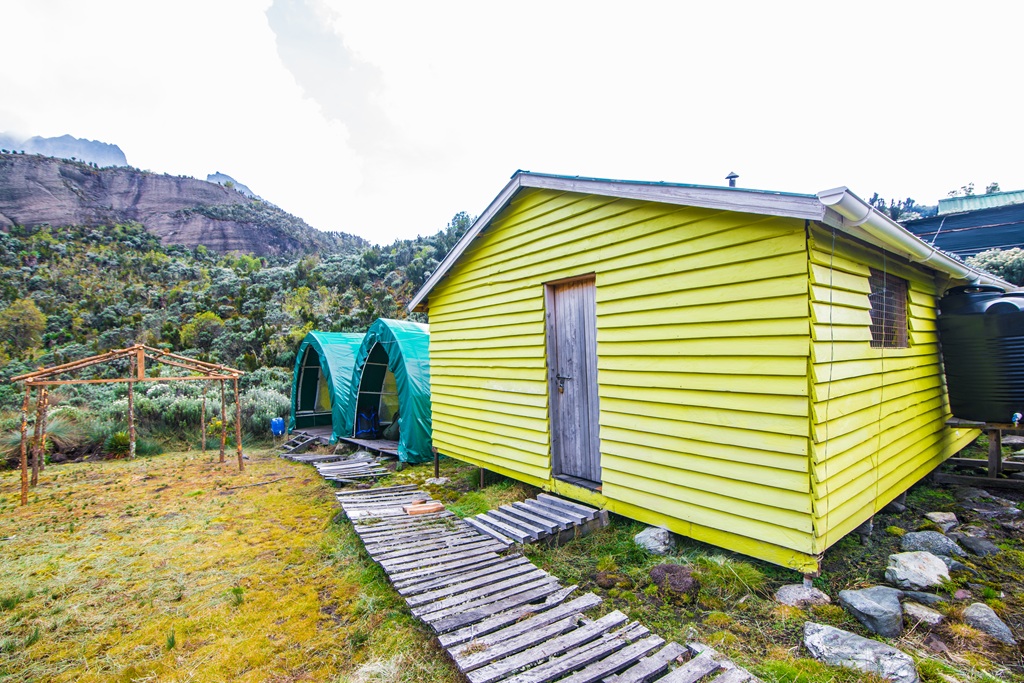
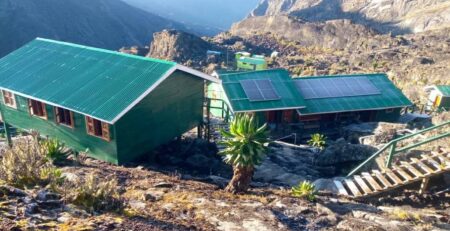
Huts are basic by design: wooden structures with bunk or triple-deck beds, one thin mattress per hiker, and shared, simple sanitation facilities. That’s not a shortfall in service. It’s an honest reflection of what’s practical to build and maintain at these altitudes in this specific terrain, and every operator worth working with will tell you this plainly rather than oversell the comfort level.
What separates a genuinely good night on the mountain from a miserable one usually comes down to two things: whether the specific camp has solar lighting, and how well your operator has prepared you for what to expect.
The Kilembe Trail’s camps generally have the edge here, since several were built more recently with solar panels providing basic lighting and device charging, a facility the older Central Circuit huts largely lack. That’s a genuinely practical difference worth weighing when you’re choosing between the two main trails, not a minor detail to skim past.
There’s also a psychological dimension worth naming honestly. After six, eight, or more hours of trekking at altitude, arriving at a hut that’s dry, has a working stove for your cook to prepare a hot meal, and offers some shelter from the near-constant Rwenzori mist makes an enormous difference to morale, even if the bed itself is modest. Trekkers who arrive expecting exactly this, rather than a cosy alpine lodge, consistently report a better overall experience than those who didn’t fully absorb what mountain accommodation here actually involves.
Where You'll Stay
Rwenzori accommodation splits into three distinct categories, and understanding how they help you connect picture the full arc of a trekking itinerary rather than just the summit push itself.
- The Central Circuit Trail, the mountain’s original and longest-established route, is managed by Rwenzori Mountaineering Services and entered from Nyakalengija, near Ibanda trading center. Its huts, Nyabitaba at 2,651 meters, John Matte at 3,505 meters, Bujuku at 3,962 meters, Elena and Kitandara both around 4,023 meters, and Guy Yeoman at 3,505 meters, are simple wooden structures offering triple-deck bunk arrangements, one foam mattress per trekker, and basic pit latrines. These huts don’t currently have solar lighting, so trekkers rely on their own headlamps in the evenings. The setting compensates considerably for the basic facilities: Kitandara Hut in particular sits beside the beautiful Kitandara Lakes with views toward Mount Luigi di Savoia, a genuinely spectacular overnight stop by any standard.
- The Kilembe Trail, developed more recently and managed by Rwenzori Trekking Services, enters the mountain from the southern flanks near Kasese. Its camps, Sine at roughly 2,590 meters, Kalalama at 3,147 meters, Mutinda at 3,688 meters, Bugata at 4,062 meters, Hunwick’s and Butawu both around 3,974 meters, Margherita Camp at 4,485 meters, and Kiharo at 3,460 meters, are similarly built from timber but generally benefit from solar-powered lighting, a real practical upgrade over the Central Circuit’s huts. Sine Camp, the first overnight stop, sits near the scenic Enock Falls in tropical rainforest, while Hunwick’s Camp, higher up in the Afro-Alpine zone, offers striking views across the Butawu Valley toward Mount Baker’s glaciers.
- Kasese town and its immediate surroundings form the third piece of the puzzle, and it’s where virtually every Rwenzori trekker spends at least one night before setting off and another after returning. Kasese sits roughly 30 kilometres from both the Nyakalengija and Kilembe trailheads and has developed a genuinely functional, if modest, hospitality scene built specifically around trekkers arriving from or departing to the mountain. This is where the comfort tiers actually apply in a meaningful way, since options here range from simple guesthouses to genuinely comfortable, well-appointed lodges.
Comparing the Two Trail Accommodation Systems
Feature | Central Circuit Trail | Kilembe Trail |
Managed by | Rwenzori Mountaineering Services | Rwenzori Trekking Services |
Entry point | Nyakalengija, near Ibanda | Kasese’s southern flanks |
Number of main huts/camps | 6 huts | 8 camps |
Solar lighting | Generally not available | Available at most camps |
Character | Older, more established route with historic huts | Newer infrastructure, generally better maintained facilities |
Signature overnight stop | Kitandara Hut, beside Kitandara Lakes | Hunwick’s Camp, Afro-Alpine views of Mount Baker |
Best suited to | Trekkers prioritizing the classic, most storied route | Trekkers prioritizing slightly better overnight comfort |
How Season Affects Your Accommodation Experience
Rwenzori accommodation doesn’t close seasonally, and the huts and camps operate year-round, but weather has a genuinely outsized effect on how comfortable those nights actually feel, given the basic nature of the shelters themselves.
Season | Months | Conditions | Impact on Accommodation Comfort |
Drier season | June to August, and December to February | Reduced rainfall, firmer trails | Huts and camps stay drier; gear has a better chance to dry overnight |
Wetter season | March to May, and September to November | Frequent rain, higher humidity | Persistent dampness inside huts; drying wet gear becomes genuinely difficult |
Costs for Accommodation in Rwenzori Mountains National Park
Costs vary considerably depending on whether you’re looking at mountain huts, bundled into your trekking package, or standalone accommodation in Kasese before and after your climb.
Accommodation Type | Approximate Cost | Notes |
Mountain huts and camps (Central Circuit or Kilembe) | Bundled into trek package cost | Rarely priced separately; included in your operator’s overall trekking fee |
Budget guesthouse in Kasese | $15 to $45 per night | Simple rooms, often shared facilities, ideal for value-focused trekkers |
Mid-range hotel in Kasese or near trailheads | $45 to $120 per night | Self-contained rooms, hot water, often includes breakfast |
Rwenzori Trekkers Hostel, Kilembe | Varies by room type | Camping, dorms, and private rooms available at one property |
Luxury lodges near park entrances | $150 to $300+ per night | Stone cottages, fireplaces, higher-end finishes for pre- and post-trek comfort |
Full Accommodation Comparison
Stage | Option | Style | Best For |
Pre-trek base, Kasese | Hotel Margherita | Long-established, centrally located mid-range hotel | Trekkers wanting a familiar, reliable base near both trailheads |
Pre-trek base, Kasese | White House Hotel | Budget guesthouse near trekking company offices | Value-focused independent trekkers |
Pre-trek base, near Nyakalengija | Rwenzori Base Camp | Self-contained rooms, gardens, restaurant, roughly $45 to $65 per room | Trekkers wanting comfort close to the Central Circuit trailhead |
Pre-trek base, near Nyakalengija | Equator Snow Lodge | Luxury stone cottages with fireplaces, since 2012 | Trekkers wanting a proper comfort upgrade before or after the climb |
Pre-trek base, near Nyakalengija | Ruboni Community Camp | Bakonzo community-run, cultural activities included | Travellers wanting an authentic, community-focused stay |
Pre-trek base, Kilembe | Rwenzori Trekkers Hostel | Dorms, singles, doubles, and camping at 1,450m elevation | Budget and independent trekkers starting the Kilembe Trail |
On the Central Circuit Trail | Nyabitaba, John Matte, Bujuku, Elena, Kitandara, Guy Yeoman huts | Basic wooden huts, bunk beds, no solar | Trekkers on the classic, most historic Rwenzori route |
On the Kilembe Trail | Sine, Kalalama, Mutinda, Bugata, Hunwick’s, Margherita, Kiharo camps | Wooden cabins, generally solar-powered | Trekkers prioritising slightly better overnight facilities |
What to Expect
A typical night on either trail follows a similar rhythm regardless of which system you’re using. You’ll arrive at the hut or camp in the afternoon after several hours of walking, usually with enough daylight left to change out of wet gear, hang anything salvageable near whatever heat source is available, and rest before dinner.
Your trekking crew, guide, cook, and porters, will typically have gone ahead or kept pace to have the camp’s basic kitchen facilities ready, and a hot meal after a demanding day genuinely does more for morale than the modest sleeping arrangements might suggest.
Sleeping arrangements are consistently simple: one foam mattress per person on a bunk or triple-deck frame, shared among the trekkers and sometimes crew staying at that hut that night. Privacy is minimal, and earplugs are worth packing given how thin the walls between bunks tend to be.
Sanitation is basic, generally pit latrines rather than flush facilities, and hot showers are not something to expect anywhere on the mountain itself, only once you’re back in Kasese. None of this is a design flaw. It’s the realistic ceiling for what’s practical to build and maintain at these altitudes on a mountain that sees a fraction of the visitor traffic of more famous East African peaks.
The reward for accepting these basics is genuinely worth it. Huts and camps are positioned specifically for their views, Kitandara’s lakeside setting, Hunwick’s Afro-Alpine panorama toward Mount Baker’s glaciers, and waking up to that scenery after a demanding trekking day is part of what makes the Rwenzori a genuinely different experience from a standard safari lodge stay.
Frequently Asked Questions
Do I need to book mountain huts separately from my trek?
No. Hut and camp reservations on both the Central Circuit and Kilembe trails are handled by your trekking operator as part of your overall package, given the limited capacity and coordination required at each site.
Is there electricity in the mountain huts?
Generally only on the Kilembe Trail, where most camps have solar-powered lighting. The Central Circuit’s huts currently lack this, so bring a reliable headlamp with spare batteries regardless of which trail you choose.
Are there hot showers on the mountain?
No. Hot showers are not available at mountain huts or camps on either trail. Plan for your first proper hot shower back in Kasese once the trek concludes.
What’s the difference in comfort between the Central Circuit and Kilembe Trail accommodation?
The Kilembe Trail’s camps are generally newer and better equipped, most notably with solar lighting, while the Central Circuit’s huts are older and more basic but sit on the mountain’s original, most historic route.
Where should I stay in Kasese before and after my trek?
Options range from budget guesthouses like White House Hotel to established mid-range properties like Hotel Margherita and luxury options like Equator Snow Lodge near the Nyakalengija trailhead, depending on your budget and priorities.
How cold does it get in the huts at night?
Temperatures at the higher camps and huts, above 3,500 metres, regularly drop close to freezing overnight, making a properly rated sleeping bag essential regardless of which season you trek in.

Leave a Reply