

Guide to Dian Fossey Hike
Bujuku Eco Tours2026-07-28T12:39:03+03:00Guide to Dian Fossey Hike: Most travelers go to Rwanda with one activity circled in red on their itinerary and that is ‘gorilla trekking’. Fewer visitors realize that a half-day walk on the same slopes, through the same bamboo and hagenia forest, leads to the grave of the woman who made that trekking possible in the first place.
The Dian Fossey hike sits quietly beside Rwanda’s headline attraction, and it is also one of the most misunderstood activities in Volcanoes National Park. People assume it is a shorter, easier cousin of gorilla trekking, or a historical footnote you fit in if there’s a spare morning. Neither assumption holds up once you look at the permit structure, the trail itself, and what the experience actually delivers.
Why the Dian Fossey Hike Matters
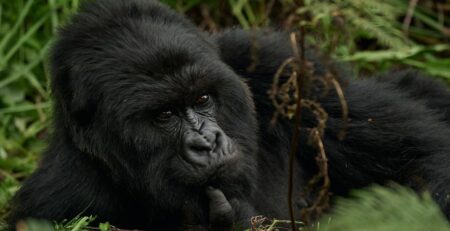
Dian Fossey arrived in the Virunga region in 1967, having crossed from a first attempt at fieldwork in what is now Democratic Republic of Congo, and she spent the following eighteen years living and working at an altitude few researchers would tolerate for that long. Her research camp, Karisoke, took its name from the two volcanoes that bracket it, Karisimbi and Bisoke, and it became the base from which she documented gorilla behaviors more thoroughly than anyone before her. Before Fossey, mountain gorillas were widely assumed to be aggressive and dangerous. Her patient, unarmed proximity to habituated groups, including her closest study subject, a silverback named Digit, rewrote that assumption for scientists and for the public.
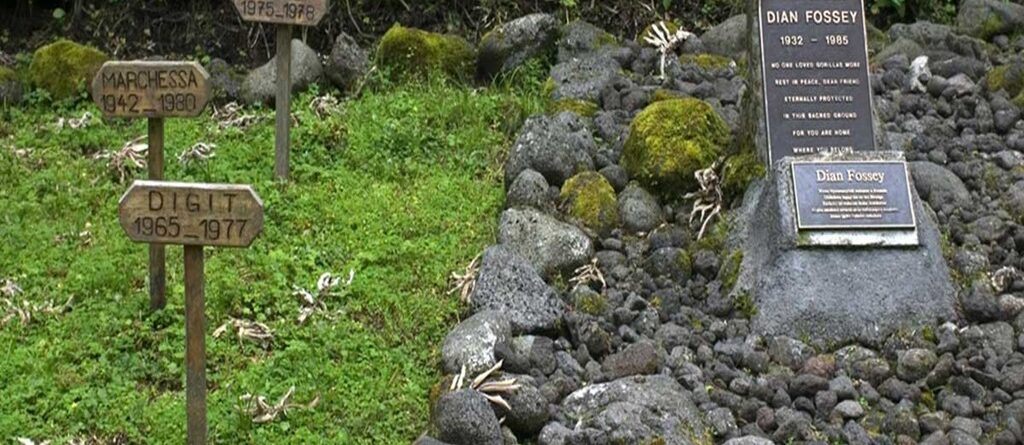
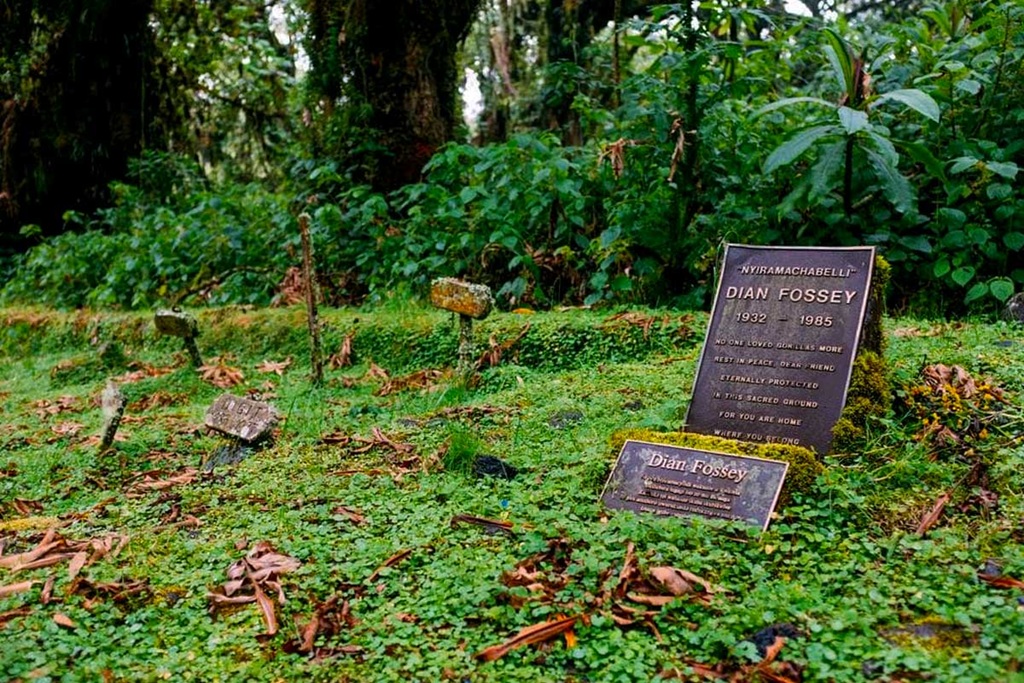
Her methods were not without controversy. Fossey ran an aggressive anti-poaching campaign that included confrontations with poachers and, by some accounts, harsh treatment of local communities, and her approach is still debated among conservationists today. What is not debated is the outcome: mountain gorilla numbers, which were in freefall through the 1960s and 1970s, stabilized and eventually grew, and the population today sits above one thousand individuals across the Virunga Massif and Bwindi. Fossey was found murdered in her cabin at Karisoke in December 1985, a case that remains officially unsolved, and she was buried in the small gorilla cemetery she had established, close to Digit’s own grave.
The reason this matters for your trip planning is simple: Rwanda’s entire gorilla tourism model, the permits, the habituation process, the revenue-sharing with local communities, traces its lineage back to work that started at Karisoke. Standing at that grave site isn’t sentimental tourism. It’s the closest thing Volcanoes National Park has to a founding monument, and it gives weight to everything else you do in the park afterward.
Where the Hike Takes Place
The hike begins at Kinigi, the park headquarters for Volcanoes National Park in Rwanda’s Northern Province, roughly two to three hours’ drive from Kigali depending on road conditions. This is the same briefing point used for gorilla trekking and golden monkey tracking, so if you’re doing multiple activities during your stay, you’ll become familiar with it quickly.
From Kinigi, guides drive guests approximately thirty minutes to the trailhead at the base of Mount Bisoke, which is also the starting point for the Bisoke summit hike. This shared starting point is worth understanding, because for the first stretch of the walk you are on the same path used by summit hikers and, on any given day, potentially near gorilla groups that range through this section of forest. The Dian Fossey trail breaks away from the Bisoke route at an elevation of about 2,967 meters and climbs toward Karisimbi through a distinctive stretch of hagenia and hypericum forest, reaching the grave site and the ruins of the old Karisoke camp at an elevation close to 3,000 meters. The camp itself, abandoned since instability in the region in the early 1990s, has not been rebuilt as a functioning research base, though the site has been cleared enough for visits, and its quiet, overgrown state is part of what makes the visit affecting rather than staged.
When to Go for the Dian Fossey Hike
Unlike gorilla trekking, which some operators discourage in the heaviest rains simply due to difficulty rather than closure, the Dian Fossey hike runs year-round and the park does not close it seasonally. That said, season still shapes the experience considerably, mainly through trail conditions and crowd levels.
Season | Months | Trail Conditions | Crowd Levels | Best For |
Long dry season | June to mid-September | Firm, less slippery, easier footing | Higher, overlaps with peak gorilla trekking demand | Comfort and easier walking over solitude |
Short dry season | December to February | Firm and generally reliable | Moderate, a good compromise | Dry conditions without June to August crowds |
Long rains | March to May | Muddy, sections slick and slower going | Lowest of the year | Budget-conscious travellers comfortable with mud |
Short rains | September to November | Mixed, afternoon showers common | Low to moderate | Lower lodge rates without full rainy-season mud |
How Much Does a Dian Fossey Hike Actually Cost
This is where clients are consistently surprised, usually pleasantly. Against the cost of a gorilla trekking permit, the Dian Fossey hike is genuinely affordable.
Category | Approximate Cost | Notes |
Foreign non-resident permit | $75 per person | Covers park entrance and ranger escort |
Foreign resident permit | $60 per person | Requires proof of residency in Rwanda |
East African Community citizen | $55 per person | Requires proof of citizenship |
Rwandan national | Approx. 4,000 RWF | Local rate |
Porter | $10 to $20 | Optional but genuinely useful, supports local employment |
Walking stick | Free | Provided at the trailhead |
Gorilla trekking permit (comparison) | $1,500 per person | Separate activity, separate permit |
Accommodation Near Volcanoes National Park
Musanze town and the immediate area around Kinigi offer accommodation across every budget tier, and where you stay affects your morning logistics more than most travelers expect, since briefing starts at 7:00am sharp.
Tier | Typical Rate (per person/night) | Example Style | Best For |
Budget | $40 to $90 | Simple guesthouses in Musanze town | Independent travelers, longer stays, backpackers |
Mid-range | $150 to $350 | Comfortable lodges with volcano views, closer to Kinigi | Most safari travelers wanting comfort without luxury pricing |
Luxury | $600 to $1,200+ | Boutique lodges, private suites, spa facilities, dedicated guides | Honeymooners, milestone trips, comfort after physical activity |
What to Expect on your hike to Dian Fossey
The day begins early. Guests report to Kinigi park headquarters by 7:00am for registration and a briefing from park rangers, which covers safety guidelines, wildlife encounter protocol, and a short introduction to Fossey’s history. From there, it’s roughly a thirty-minute drive to the trailhead at the base of Mount Bisoke.
The first ten to fifteen minutes of walking happen outside the park boundary, through cultivated farmland with clear views back across the Virunga foothills. You’ll then cross the stone wall that marks the park’s edge, a structure that exists mainly to keep forest buffalo and elephants from wandering into neighboring farmland. From here, the trail climbs into genuine forest, first bamboo, then giving way to hagenia woodland as you gain altitude. Because this section overlaps with the Bisoke summit trail and known gorilla ranging areas, there is a real, if unpredictable, chance of a brief gorilla sighting, though guides are clear that photography isn’t permitted during incidental encounters like this since the animals haven’t been prepared for close visitor contact the way trekking groups are. Beyond gorillas, expect golden monkeys, forest buffalo, duiker, forest elephant signs, and a strong range of Albertine Rift endemic bird species for anyone travelling with binoculars.
At an elevation of roughly 2,967 meters, the trail leaves the Bisoke route and turns toward Karisimbi, entering the hagenia-hypericum zone that characterizes the final approach to Karisoke. The overall walk runs one to three hours each way depending on fitness and trail conditions, making it a moderate but genuinely physical outing, not a stroll. At the grave site, you’ll have time with rangers to see Fossey’s headstone alongside the small cemetery of gorillas she studied, including Digit, and to take in the ruins of the original camp buildings. Many guides invite visitors to leave a small stone or flowers as a gesture of respect, a tradition worth asking about in advance if it matters to you.
Frequently Asked Questions
Is the Dian Fossey hiking the same as gorilla trekking?
No. They are entirely separate activities with separate permits, separate trailheads within the same general area, and different objectives. Gorilla trekking guarantees time with a habituated family; the Dian Fossey hike focuses on history and the grave site, with only a small, unguaranteed chance of a gorilla sighting along the way.
Will I definitely see gorillas on this hike?
No, and guides are upfront about this. Sightings happen because the trail overlaps with areas gorillas’ range through, but they are not managed encounters, and photography isn’t permitted if one occurs, since the animals haven’t been habituated for this kind of contact.
How difficult is the hike physically?
Moderate but genuine. Expect one to three hours each way at altitudes between 2,900 and 3,000 meters, with muddy or slippery sections outside the dry season. Reasonable fitness is required, though it does not demand technical climbing skill.
Can I visit the actual Karisoke Research Center?
You’ll visit the historic site where Fossey’s cabin and the original camp stood, now in ruins. The modern incarnation of the Dian Fossey Gorilla Fund’s research and education work operates from facilities outside the park, including the Ellen DeGeneres Campus near Kinigi, which some tours include as a separate stop.
What is the minimum age for this hike?
Fifteen years old, consistent with other physical activities across Volcanoes National Park.
Should I book this before or after my gorilla trekking day?
Before, if your schedule allows it. Doing the history first tends to deepen the trekking experience that follows, rather than feeling like a lesser add-on afterward.




Leave a Reply