


Kampala City Tours
Bujuku Eco Tours2026-08-06T09:03:47+03:00Kampala City Tours: A Kampala city tour is not a filler activity you squeeze in before your flight home. It is a full experience on its own, and for many visitors it becomes the part of their Uganda safari they talk about the longest.
Built across a series of hills near the northern shores of Lake Victoria, Kampala blends royal Buganda heritage, colonial history, bustling markets, religious landmarks, and a food scene that deserves far more attention than it gets.
Whether you have half a day between connecting safaris or a full weekend to wander, this guide walks you through the best things to do in Kampala, how city tours work, what they cost, and how to make the most of your time in Uganda’s capital.

Why Take a Kampala City Tour?
Most travelers land at Entebbe International Airport, sleep off the jet lag, and head straight to Bwindi Impenetrable National Park or Murchison Falls. Understandable, but a mistake. Kampala is where you meet the real Uganda, the working, trading, praying, laughing Uganda that exists beyond the safari lodges.
A guided Kampala city tour gives you context for everything else you will see in the country. The Buganda Kingdom sites explain the culture. The markets explain the economy. The boda boda riders explain, well, the traffic.
A good city tour also solves a practical problem. Kampala is not an easy city to navigate on your own. Streets change names, matatu taxi stages look identical to newcomers, and the best experiences are often hidden behind unmarked doors. A local guide turns confusion into discovery.
Top Attractions on a Kampala City Tour
The Kasubi Tombs
A UNESCO World Heritage Site and the burial ground of four Buganda kings, the Kasubi Tombs sit on Kasubi Hill about five kilometers from the city center. The main tomb building, Muzibu Azaala Mpanga, is one of the largest grass thatched structures in the world, rebuilt with remarkable care after a fire in 2010. Visiting with a guide who understands Buganda royal traditions transform the site from an interesting building into a living lesson on one of Africa’s oldest kingdoms.
Uganda National Mosque (Gaddafi Mosque)
Commissioned by Muammar Gaddafi and completed in 2006, this is the largest mosque in East Africa and holds one of the best free views in the city.
Climb the 304 steps of the minaret and Kampala unfolds beneath you, all seven original hills and the sprawl beyond. Women are provided with headscarves and wraps at the entrance, and the resident guides are famously funny and generous with their time.
Namirembe and Rubaga Cathedrals
Kampala’s religious history plays out across two facing hills. Namirembe Cathedral, the Anglican seat, is the oldest cathedral in Uganda and its red brick dome has watched over the city since 1919.
Across the valley, Rubaga Cathedral anchors the Catholic faith with twin towers and sweeping views. Both are active places of worship, so visit respectfully, ideally outside service hours unless you want to experience Ugandan choral singing, which honestly you might.
The Uganda Museum
Founded in 1908, the Uganda Museum on Kira Road is the oldest museum in East Africa. Its collection covers archaeology, traditional music instruments you can actually play, ethnographic displays from across Uganda’s more than fifty tribes, and natural history exhibits.
Give it at least an hour. Two if you get pulled into a conversation with one of the curators, which happens more often than you would think.
Owino Market (St. Balikuddembe Market)
This is Kampala at full volume. Owino is one of the largest open-air markets in East Africa, a maze of second-hand clothing, fresh produce, spices, fabrics, and just about anything else a human being might need.
It is crowded, noisy, and absolutely worth it. Go with a guide, keep your valuables close, and bring your bargaining spirit. The vendors expect it and respect it.
The Kabaka’s Palace and the Idi Amin Torture Chambers
The Lubiri Palace on Mengo Hill is the official residence of the Kabaka, the King of Buganda. Tours do not enter the palace itself but cover the grounds and the sobering underground chambers where thousands of Ugandans were held and killed during the Idi Amin era.
It is a heavy stop, but understanding this chapter of history matters, and the guides handle it with honesty and care. Nearby, the Kabaka’s Lake, dug by hand in the 1880s on royal orders, offers a quieter moment afterward.
Bahai Temple
The only Bahai House of Worship on the African continent sits on Kikaya Hill north of the city, surrounded by fifty acres of gardens.
The temple welcomes visitors of all faiths, and the grounds are one of the most peaceful spots in greater Kampala, popular with birders, picnickers, and anyone needing a break from the downtown pace.
Ndere Cultural Centre
If your evening is free, the Ndere Troupe performs traditional music and dance from across Uganda several nights a week. It sounds touristy on paper.
It is not. The performances are genuinely brilliant, the storytelling between numbers is sharp and funny, and dinner is served during the show. Many visitors rank it among their favorite nights in Uganda.
Street Food and Local Flavors
No Kampala city tour is complete without eating. Start with a Rolex, Uganda’s beloved street food, a rolled chapati filled with fried eggs, tomatoes, cabbage, and onions, cooked fresh at roadside stands for less than a dollar.
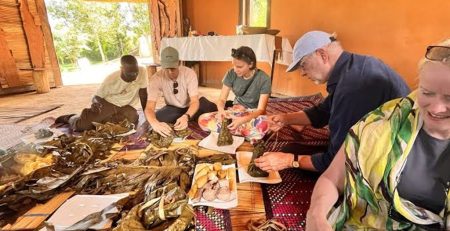
Try luwombo, a traditional Buganda dish of chicken, beef, or groundnut sauce steamed in banana leaves. Sample roasted gonja (sweet plantain), fresh jackfruit from market stalls, and if you are feeling brave, grasshoppers in season, known locally as nsenene and eaten fried with onions. Wash it all down with a cold Nile Special or fresh passion fruit juice.
How Kampala City Tours Work
Most tours run as half day (about four hours) or full day (seven to eight hours) experiences, either on foot through the downtown core, by vehicle across the hills, or by boda boda motorcycle taxi for the adventurous.
Boda boda tours have become hugely popular because they cut through Kampala traffic and cover far more ground, though you should only book with established operators who provide helmets and trained riders.
Walking tours typically focus on the old taxi park, craft markets, the downtown trading streets, and Owino Market. Vehicle based tours cover the tombs, mosque, cathedrals, palace, and museum. Full day options combine both, usually with a lunch stop for local food. Private tours can be customized around your interests, whether that is history, photography, food, art galleries, or Kampala’s growing craft coffee scene.
Best Time to Visit Kampala
Kampala sits just north of the equator at around 1,200 meters elevation, which keeps temperatures pleasant year-round, usually between 17 and 28 degrees Celsius. The dry seasons, December to February and June to August, are the most comfortable for walking tours.
Rainy seasons bring short, heavy afternoon downpours rather than all day rain, so morning tours work well even then. Weekdays show you the working city at full speed, while Sundays are calmer and better for visiting religious sites and the Bahai gardens.
Tips for Your Kampala Tour
Carry small denominations of Ugandan shillings for markets, street food, and tips. Dress modestly for religious sites, covering shoulders and knees.
Drink bottled water and pace yourself, Kampala’s hills are steeper than they look. Traffic is heavy from 7 to 10 in the morning and 4 to 8 in the evening, so plan sightseeing around those windows.
English is widely spoken, but learning a few Luganda greetings goes a long way. Try ‘Oli otya’ (how are you) and watch faces light up.
On safety, Kampala is generally welcoming for tourists, especially with a guide. Standard city precautions apply. Keep phones out of easy reach near busy roads, use registered taxis or ride apps at night, and let your guide handle negotiations in crowded markets.
Combining Kampala with Your Uganda Safari
Kampala works beautifully as the opening or closing chapter of a longer Uganda safari itinerary. Many travelers spend a day in the capital before heading west to Kibale Forest for chimpanzee tracking, Queen Elizabeth National Park for game drives, or Bwindi for gorilla trekking.
Others pair a city tour with a day trip to the source of the Nile in Jinja, about two hours east, or the Uganda Equator crossing at Kayabwe on the road to the southwestern parks.
Entebbe, forty kilometers south, offers its own attractions including the Uganda Wildlife Conservation Education Centre and botanical gardens, making a Kampala and Entebbe combination a smart use of arrival or departure days.





Leave a Reply