

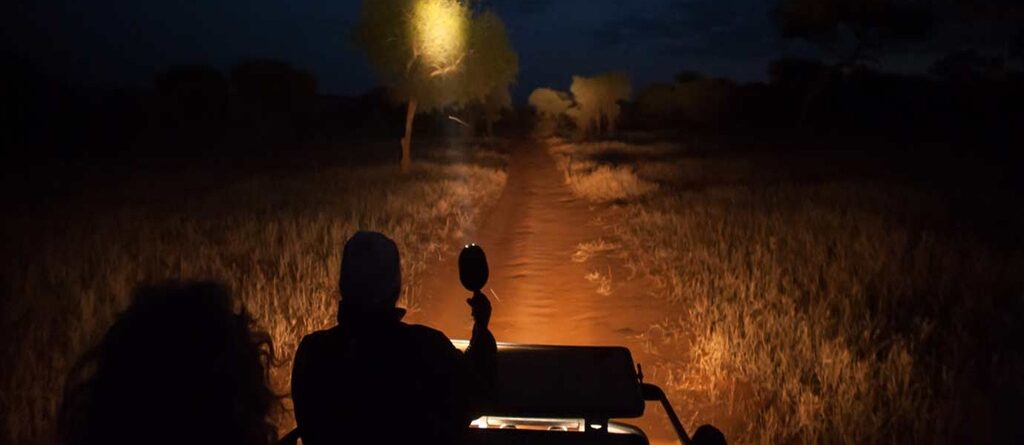
Night Game Drives in Uganda
Bujuku Eco Tours2026-08-04T12:35:24+03:00Night Game Drives in Uganda: A night game drive gives you the same landscape running on an entirely different shift. If this is your first African safari and you have limited days, prioritize getting your daytime game drives and gorilla or chimp permits sorted first. A night drive adds real value, but it works best as a complement to daytime viewing, not a substitute for it. Most nocturnal predators are considerably harder to spot in the dark than herbivores are during the day, and a night drive that turns up nothing beyond a few bush babies and a distant hyena call is a real possibility, not a rare disappointment.
Where a night drive earns its place clearly is for travelers who’ve already had solid daytime sightings and want the fuller picture, particularly anyone specifically hoping to see leopards, which are far more active after dark than during the heat of the day, or genuinely curious about the smaller nocturnal species, genets, civets, porcupines, that simply don’t appear on a standard game drive itinerary. My honest recommendation: if you’re spending two or more nights at Murchison Falls, Queen Elizabeth, or Lake Mburo, add one night drive to your schedule. It’s inexpensive relative to almost everything else on a Uganda safari, and even a quieter night still delivers a genuinely different atmosphere, spotlights sweeping across dark grassland, the bush sounding completely different than it does at noon, that’s worth experiencing at least once.

Where to Go for Night Game Drives in Uganda
Night game drives are officially permitted in three of Uganda’s ten national parks, and each offers a distinctly different experience worth understanding before you choose where to prioritize the activity.
- Queen Elizabeth National Park. This runs its night drives specifically through the Mweya Peninsula area, deliberately away from the busier Kasenyi Plains that see heavy daytime traffic. This matters practically: Mweya’s relative quiet after dark makes for a calmer, less crowded experience than you might expect from one of Uganda’s most visited parks. Sightings here regularly include lions and leopards on the move, hyenas working the edges of the plains, and hippos out of the water and grazing on land, something you’d rarely see during a daytime visit. Civets, genets, and banded mongoose round out the smaller wildlife on offer, alongside some of the clearest night skies in western Uganda.
- Murchison Falls National Park. Uganda’s largest protected area runs its night drives through the northern sector; the same open savannah zone used for daytime game viewing. The wide, unobstructed sightlines here genuinely help visibility once the spotlight comes out, and the park’s high overall predator density gives you a reasonable shot at lions actively hunting, a genuinely different sight from the drowsy daytime lions most visitors are used to. Leopards, hyenas, porcupines, and a strong selection of nocturnal birdlife round out a typical night here, and some circuits pass close enough to the falls themselves to let you take in the sound of the Nile crashing through its gorge under a night sky, a considerably different sensation than the daytime version of the same view.
- Lake Mburo National Park. This stands apart from the other two in one specific, useful way: it’s the only park in Uganda where you can run a night game drive in your own private vehicle, provided you have a licensed armed ranger on board. This makes it the most flexible and often the most affordable option, and it suits travelers already road-tripping through western Uganda in a self-drive vehicle. Mburo’s compact size, its Uganda’s smallest savannah park, meanng, guides can cover meaningful ground in a shorter window, and its species list leans toward smaller nocturnal mammals rarely seen elsewhere in the country: side-striped jackals, honey badgers, white-tailed mongoose, aardvark, and bush pigs. Leopards are present too, though sightings here depend more on luck than in the larger parks.
Comparing Uganda's Night Game Drive Parks
Park | Drive Location | Signature Sightings | Best Suited To |
Mweya Peninsula | Lions, leopards, hyenas, hippos grazing on land | Travelers wanting a calmer alternative to busy daytime Kasenyi circuits | |
Murchison Falls National Park | Northern sector | Actively hunting lions, leopards, views near the falls at night | Travelers wanting Uganda’s highest predator density after dark |
Lake Mburo National Park | Throughout the park | Side-striped jackals, honey badgers, aardvark, occasional leopards | Self-drive travelers and those wanting flexible, budget-friendly access |
When to Go for Your Night Drive
Night game drives run year-round in all three approved parks, since the activity doesn’t depend on migratory movement the way some East African wildlife viewing does. Season still matters, though, mainly through its effect on visibility and road access.
Season | Months | Conditions | Best For |
Long dry season | June to September | Short grass, clear tracks, strong spotlight visibility | The most reliable sightings and easiest access |
Short dry season | December to February | Similarly favorable, slightly cooler evenings | A strong second-choice window with fewer crowds than peak June to September |
Long rains | March to May | Taller grass can obscure smaller animals, muddy tracks in places | Budget-conscious travelers willing to accept lower visibility odds |
Short rains | September to November | Mixed conditions, generally still workable | A reasonable middle ground |
The practical impact here is bigger than it might seem. Tall, wet-season grass genuinely hides smaller nocturnal mammals from a spotlight in a way it doesn’t during the dry months, so if seeing genets, civets, or mongoose specifically matters to you, the dry season gives you meaningfully better odds. If your priority is simply the atmosphere and a shot at a predator sighting, the activity remains worthwhile across the calendar.
How Much does a Night Game Drive in Uganda Costs
Night game drives are one of the more affordable add-on activities across Uganda’s safari circuit, with pricing set consistently by the Uganda Wildlife Authority across the three approved parks.
Option | Approximate Cost | Notes |
Private vehicle with UWA ranger guide | $25 to $30 per person | Requires a pre-registered vehicle; ranger fee is mandatory |
UWA vehicle and ranger guide | $35 to $40 per person | Convenient if you don’t have your own registered vehicle available |
East African citizens and residents | Lower local rate (UGX) | Roughly 30,000 to 50,000 UGX depending on vehicle type |
Private tour operator packages | $50 to $100 per person | Often bundles the ranger fee with vehicle, guide, and sometimes snacks or drinks |
Where to Stay Near Uganda's Night Drive Parks
Basing yourself at a lodge inside or near the specific sector where night drives operate matters more than it might seem, since the activity typically departs from your lodge in the early evening and returns after dark.
Park | Accommodation Range | Notes |
Queen Elizabeth (Mweya area) | $80 to $500+ per person/night | Lodges near Mweya Peninsula offer the shortest transfer to the night drive departure point |
Murchison Falls (northern sector) | $50 to $500+ per person/night | Properties near Paraa or the northern circuit minimise evening transfer time |
Lake Mburo | $40 to $300 per person/night | Given the flexibility of self-drive access, location within the park matters less here |
What to Expect: Activities and Wildlife on a Night Drive
A typical night game drive begins shortly after sunset, usually between 6:30pm and 7pm, and runs for two to three hours depending on the park and how sightings unfold along the way. Your ranger guide handles the spotlight personally, sweeping it steadily across the grassland and treelined rather than the vehicle simply driving with headlights alone, since eyeshine picked up by a handheld light is how most sightings actually happen. Expect the pace to be considerably slower than a daytime drive, since spotting anything at all in the dark takes real patience and a guide’s trained eye.
Species you’re most likely to encounter vary by park, but broadly include lions and leopards on the move, spotted hyenas working the margins of open ground, African civets and genets in and around thicker vegetation, bush babies calling and leaping through branches, porcupines foraging in the open, and in Lake Mburo specifically, side-striped jackals, honey badgers, and the occasional aardvark, species genuinely difficult to see anywhere else in Uganda. Hippos, spending their days submerged, are frequently seen out of the water grazing on land after dark, a genuinely different sight from the daytime version most visitors are used to.
It’s worth setting expectations honestly here: night drives are inherently less predictable than daytime ones. Some nights deliver a leopard sighting that makes the whole activity worthwhile on its own; others deliver mostly bush babies, distant hyena calls, and an excellent view of the stars. Both outcomes are normal, and neither reflects poorly on the park or your guide.
Planning how to Get the Most from Your Night Drive
- Book through your lodge or a licensed operator well ahead of your stay, not on arrival. Because only pre-registered vehicles and licensed guides can conduct night drives, spontaneous, same-day bookings aren’t always possible, particularly during peak season when ranger availability is genuinely limited.
- Dress more warmly than you’d expect. Temperatures across Uganda’s savannah parks drop noticeably after sunset, and an open-sided safari vehicle moving at speed makes it feel considerably cooler than standing still. A warm layer and something to cover your legs make a real difference to how comfortable two to three hours feels.
- Bring a good torch or headlamp of your own as a backup, along with a fully charged camera or phone, since photography in low light benefits from any extra light source you can bring, though be mindful not to point your own light directly at wildlife, which can disturb natural behavior.
- Pair your night drive with a daytime game drive in the same park rather than relying on the night drive alone. Most animals are still easier to see and identify during the day, and a night drive works best as the complement to a daytime circuit you’ve already done, not a replacement for it.
- Consider Lake Mburo specifically if you’re on a self-drive itinerary. Being the only park where a private vehicle with an armed ranger is permitted gives you genuine flexibility that Queen Elizabeth and Murchison Falls don’t offer in quite the same way.
Who Should Priorities a Night Game Drive: Recommendations by Traveler Type
- Leopard-focused travelers: Murchison Falls or Queen Elizabeth, both offering the strongest predator density and the best odds of an active leopard sighting after dark.
- Self-drive travelers: Lake Mburo, given its unique allowance for private vehicles with an accompanying ranger.
- First-time Uganda visitors with limited days: Treat this as a genuine add-on rather than a priority. Secure your daytime game drives and any gorilla or chimp permits first, then slot in a night drive if your schedule and park choice allow it.
- Photography-focused travelers: Queen Elizabeth’s Mweya Peninsula circuit, which tends to be calmer and less crowded than Murchison’s more heavily trafficked northern sector, giving more unhurried time at sightings.
- Families with children: Lake Mburo, thanks to its shorter overall drive time and smaller, more contained park layout, which suits shorter attention spans better than a longer circuit elsewhere.
- Travelers chasing smaller, unusual species: Lake Mburo again, for its strong showing of side-striped jackals, honey badgers, and aardvark rarely seen on Uganda’s other night circuits.






Leave a Reply