


Kanangorok Hot Springs
Bujuku Eco Tours2026-07-22T10:44:28+03:00Kanangorok Hot Springs: Kanangorok is located about 30 to 40 kilometers north of Apoka, and the drive alone runs one and a half to two hours each way over rough terrain, meaning a half-day commitment at minimum once you arrive in time at the springs.
If you’re spending only one night at Kidepo, which is already a considerable journey from the rest of Uganda’s safari circuit, prioritize game drives in the Narus Valley first. Kanangorok is a genuine bonus for a longer stay, not a headline activity to build a short visit around Kidepo national park. Where the visit earns its place clearly is for travelers who have already committed to Kidepo’s remoteness and want to see the part of the park that even most Kidepo visitors skip. If you’re drawn to genuine off-the-path destinations, culturally rich sites, and landscapes that feel properly untouched, Kanangorok delivers something few places in Uganda can match.

Why Is Kanangorok Hot Springs Worth Knowing
Kanangorok exists because of the same geological forces that shape much of East Africa’s landscape, water heated deep underground along fault lines associated with the East African Rift system, forced up through cracks in the rock until it reaches the surface as a steaming, mineral-rich flow. Temperatures here run considerably cooler than at other major Uganda’s hot spring site. Sempaya in the western part of Uganda, is typically measured between the range of 50 to 60 degrees Celsius moderately than the boiling water found there.
That distinction matters practically; while Sempaya’s water can seriously burn on contact, sections of Kanangorok’s flow are genuinely safe to dip your feet into, and some visitors do exactly that, though caution and local guidance still matter since temperatures vary across the site.
The name itself carries meaning worth knowing before you arrive. Kanangorok translates from the local Karamojong dialect as “place of black stones,” a literal description of the dark volcanic rock the water flows through and around.
The cultural story behind the site runs deeper than the name. Local legend tells of a young man named Longorok, sent by a Sudanese king to fetch water from the Kidepo Valley during a devastating drought as an offering meant to appease ancestral spirits and end the dry spell. As he reached the spot where the springs now flow, the story goes, storm clouds gathered and lightning struck him blind, and his blood is said to have mixed with the water that began boiling up from the rock, a site now known as Kanangorok. Locals continue to attribute healing properties to the water, and it’s genuinely common to see people bathing in it, drawn by belief in its power to treat skin conditions and other ailments, a practice rooted in the mineral content, magnesium, sulfur, and calcium, that gives the water its distinctive smell and reputation.
There’s a wildlife dimension here too that surprises visitors who assume a hot spring stop means leaving the safari behind. Kanangorok sits in a part of Kidepo that’s genuinely rich in specific species you won’t find elsewhere in the park, or in Uganda at all in some cases. The surrounding thicket and open plains host greater and lesser kudu, and the area around the springs is the only reliable place in Uganda to spot wild ostriches, alongside secretary birds, Jackson’s hornbills, and speckle-fronted weavers. Elephants are known to visit the nearby Kanangorok River to drink, and the drive itself, crossing the dry, sand-floored Kidepo riverbed and passing beneath the Morungole and Napore mountain ranges, delivers some of the most dramatic scenery anywhere in the park.
How to Get to Kanangorok Hot Springs
Kanangorok Hot Springs lie in the northern reaches of Kidepo Valley National Park, in Uganda’s remote northeastern Karamoja region, close enough to the South Sudan border that the springs sit just eleven kilometers from the Kidepo River’s international boundary point.
The site is roughly 30 to 40 kilometers north of Apoka, the park’s main tourism hub and the location of most accommodation and the park headquarters.
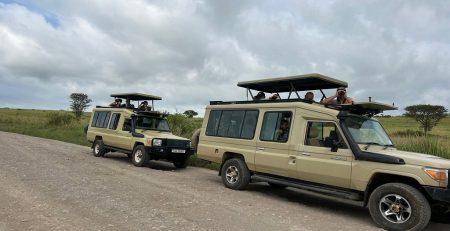
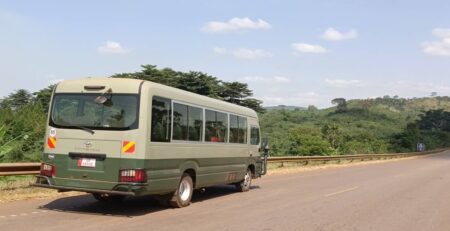
Reaching Kanangorok requires a 4×4 vehicle and a guide familiar with the route, since there’s no formal paved road leading to the springs, only tracks across the valley floor that cross the dry, sandy bed of the Kidepo River before opening onto expansive plains flanked by the Morungole range to the east and the Jebel Lotuke massif across the South Sudan border to the north.
The drive itself typically takes one and a half to two hours each way from Apoka, passing through shifting vegetation zones, savannah grassland, scrubland, and stands of Borassus palm trees that offer genuine wildlife viewing opportunities along the way rather than functioning as a transit corridor.
Given Kidepo’s overall distance from the rest of Uganda’s safari circuit, most visitors reach the park itself by a scheduled flight from Entebbe to the Apoka airstrip, with the Kanangorok excursion arranged locally as a dedicated half-day activity from your lodge.
When to Visit Kanangorok Hot Springs
Kidepo’s climate follows a semi-arid pattern typical of the Karamoja region, and the condition of the tracks leading to Kanangorok depends heavily on rainfall, making seasonal timing a genuinely practical consideration rather than a minor preference.
Season | Months | Conditions | Best For |
Long dry season | June to September | Firm tracks, easier access, low vegetation improving wildlife visibility | The most reliable window for reaching the springs comfortably |
Short dry season | December to February | Similarly favourable, generally the park’s second peak period | A strong alternative with slightly cooler mornings |
Wet season | March to May and October to November | Tracks can become difficult or impassable in places | Only for travellers with flexible schedules and experienced 4×4 guides |
How Much Does It Cost to Visit Kanangorok Hot Springs
Kanangorok itself doesn’t carry a separate site entrance fee beyond your Kidepo Valley National Park entry, which makes it a genuinely low incremental cost once you’ve already committed to the journey to reach the park.
Activity | Approximate Cost | Notes |
Kidepo Valley National Park entrance | $40 for foreign non-residents | Valid for 24 hours from time of entry; covers general park access |
Guided excursion to Kanangorok | Bundled into lodge/operator day rates | Usually arranged as a half-day 4×4 excursion with a park ranger guide |
Domestic flight, Entebbe to Apoka | $200 to $400 per person one-way | The most practical way to reach Kidepo given the distance by road |
Road transfer from Kampala | 8 to 10 hours by road | A considerably longer and more demanding alternative to flying |
Where to Stay Near Kanangorok Hot Springs
All accommodation options for a Kanangorok visit are based around Apoka, Kidepo’s tourism hub, given the total absence of lodging any closer to the springs themselves.
Tier | Typical Style | Examples | Best For |
Mid-range | Comfortable safari lodge | Apoka Safari Lodge | Travelers wanting solid comfort without ultra-luxury pricing |
Upper mid-range | Tented camp experience | Kidepo Savannah Lodge | Travelers wanting a more immersive tented wilderness stay |
Luxury | Exclusive tented camps | Select high-end properties around Apoka | Travelers prioritizing comfort in one of Uganda’s most remote settings |
What to Expect from The Kanangorok Hot Springs Experience
The excursion typically departs from your lodge in the morning, allowing the full round trip plus time at the springs to comfortably fit within a day without pushing into evening hours when driving conditions become harder to manage.
The drive itself crosses the dry, white sand bed of the Kidepo River before opening onto the wide plains that lead toward the South Sudan border, a landscape of scattered rock outcrops, Borassus palm stands, and distant mountain silhouettes that many visitors describe as some of the most striking scenery anywhere in Uganda.
On arrival, expect a genuinely rustic site rather than a developed attraction. The springs emerge from dark volcanic rock, flowing between stones and releasing a faint sulphureous smell that’s part of the site’s character rather than a flaw.
Some pools run warm enough to dip your feet in comfortably, while others carry noticeably more heat, and your guide will point out which sections are safe to approach directly.
It’s common to find local Karamojong visitors at the site, sometimes bathing in sections of the water believed to carry healing properties, and a respectful, observational approach to this cultural practice adds a dimension to the visit that a purely scenic stop wouldn’t offer.
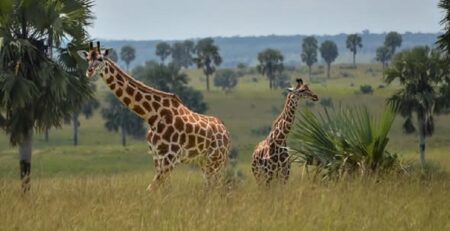
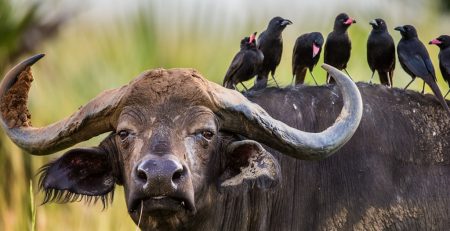
Wildlife sightings around the springs are a genuine possibility rather than an afterthought. The surrounding thicket and open ground support greater and lesser kudu, and this specific area is the best place in Uganda to spot wild ostriches, alongside secretary birds and Jackson’s hornbills moving through the bush. Elephants occasionally visit the nearby river to drink, and the broader drive offers reasonable odds of buffalo, zebra, and giraffe sightings along the way, meaning the Kanangorok excursion functions as a genuine game drive extension rather than purely a detour to see the springs.
Combining Kanangorok with Other Kidepo Activities
Most visitors treat Kanangorok as one component of a broader Kidepo stay rather than the sole reason for visiting the park, and it pairs naturally with several of Kidepo’s other signature experiences.
- Game drives through the Narus Valley, Kidepo’s most reliable wildlife viewing area and a natural complement to the more scenery-focused Kanangorok excursion, together giving you both strong game viewing and the park’s most dramatic remote landscape.
- Night game drives, offering a chance at nocturnal predators including lions, leopards, and cheetahs that the daytime Kanangorok trip won’t reveal, conducted with a ranger guide in a proper 4×4.
- Cultural visits with Karamojong communities, deepening the context behind the legend and healing traditions tied to Kanangorok itself, and offering insight into a distinct cultural region unlike anywhere else in Uganda’s safari circuit.
- Hiking toward Mount Morungole, for travelers wanting a more physically engaging complement to the vehicle-based Kanangorok excursion, taking in the mountain range visible throughout the drive to the springs.
How to Make the Journey Worthwhile
- Book the excursion through your lodge with a guide who knows the current track conditions. Given the absence of a formal road, local knowledge genuinely matters here more than at almost any other named Uganda attraction, and conditions can shift meaningfully between visits depending on recent rainfall.
- Set aside a full half-day rather than trying to fit this in around other activities. Between the one and a half to two-hour drive each way and time at the springs themselves, rushing this excursion undermines both the safety of the trip and the chance to properly take in the scenery and wildlife along the way.
- Bring more water and sun protection than you think you’ll need. Karamoja’s semi-arid climate and the open, largely shadeless terrain around the springs make dehydration a genuine risk on a half-day excursion, particularly during the hottest months.
- Approach any local bathers at the springs with respect rather than treating the scene as a photo opportunity. The healing beliefs tied to Kanangorok are genuinely held, not a performance for visitors, and your guide can advise on appropriate etiquette if locals are present during your visit.
- Confirm your Kidepo stay includes enough nights to absorb a half-day excursion without cutting into your core game drive time. Given how far Kidepo sits from the rest of Uganda’s circuit, a minimum of two to three nights is worth planning for if Kanangorok is a genuine priority alongside the park’s other wildlife activities.



Leave a Reply