

Accommodations in Mgahinga Gorilla National Park: A Complete Guide to Where to Stay
Bujuku Eco Tours2026-07-31T17:16:18+03:00Accomodations in Mgahinga Gorilla National Park: A complete guide to where to stay. Mgahinga Gorilla National Park is the smallest of Uganda’s national parks and one of the most under-visited, tucked into the country’s far southwestern corner where Uganda, Rwanda and the Democratic Republic of Congo meet across the volcanic peaks of the Virunga Massif.
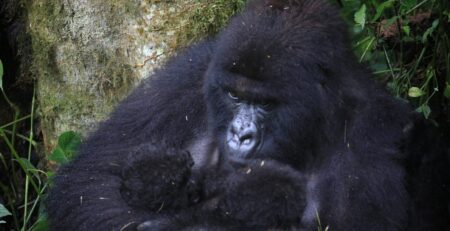
It holds a single habituated mountain gorilla family, golden monkey trekking, three dormant volcanoes offering genuine hiking challenges, and the Batwa Trail, one of Uganda’s most meaningful cultural experiences.
Because the park is small and its visitor numbers modest compared with Uganda’s more famous Bwindi Impenetrable Forest, the accommodation landscape here is compact, close-knit, and easier to navigate than at Uganda’s larger parks.
This guide works through Mgahinga’s accommodation options in detail: what each property offers, how close each sits to the park’s Ntebeko trailhead where gorilla and golden monkey treks begin, and which kind of traveler each option genuinely suits. It also covers how Mgahinga fits within a wider southwestern Uganda circuit, since most visitors combine it with Bwindi or with a Rwanda gorilla trekking trip given its position directly on the border.
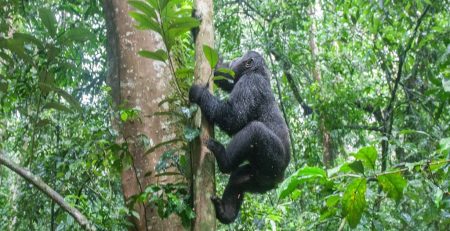
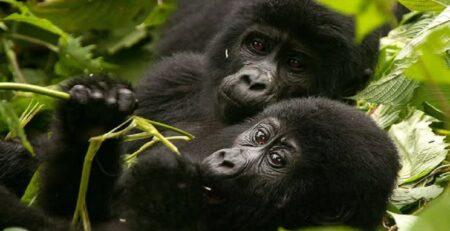
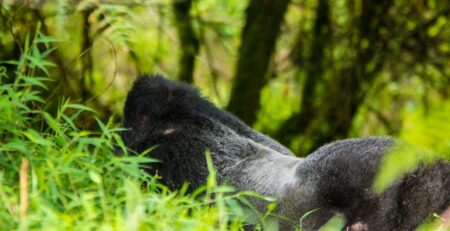
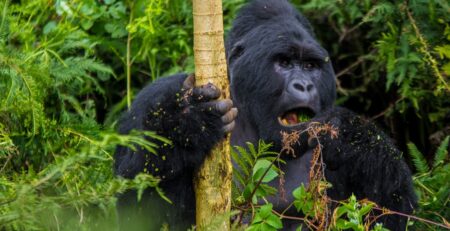
What does matter for accommodation planning at Mgahinga is understanding that the park holds only one habituated gorilla family, the Nyakagezi group, which means gorilla permits here are considerably more limited in number than at Bwindi, and travellers specifically wanting Mgahinga gorilla trekking should confirm permit availability well in advance.
The park’s real strength for many visitors lies less in gorilla trekking volume and more in its combination of golden monkey trekking, volcano hiking and the Batwa cultural trail, none of which require the same scarce permit allocation.
Why Mgahinga's Accommodation Landscape Is So Compact
Mgahinga Gorilla National Park sits within the Virunga Massif, the chain of volcanoes shared between Uganda, Rwanda and the Democratic Republic of Congo that also holds the bulk of the world’s remaining mountain gorilla population. Uganda’s portion of the Virunga Massif is by far the smallest of the three countries’ shares, and this is precisely why Mgahinga has only one habituated gorilla family compared with several at Bwindi and multiple more at Rwanda’s Volcanoes National Park across the border. The park’s modest scale and lower visitor volume mean the accommodation sector here has developed more slowly and more selectively than at Uganda’s larger, more established primate trekking destinations.
The compensating strength of Mgahinga is its volcanic landscape and the range of activities available beyond gorilla trekking. The park contains three of the Virunga chain’s eight volcanoes: Mount Muhabura, Mount Gahinga and Mount Sabyinyo, all of which can be climbed as day hikes of varying difficulty, with Sabinyo’s summit uniquely marking the tripoint where Uganda, Rwanda and the DRC meet. Golden monkey trekking, considerably less expensive and less physically demanding than gorilla trekking, is also available here, and the Batwa Trail offers a guided cultural experience led by members of the Batwa community, the original forest-dwelling inhabitants of this region before their displacement from the forest for conservation purposes.
Because most of Mgahinga’s accommodation sits within a short distance of the single Ntebeko trailhead, the decision that matters most for visitors is less about location and more about which specific property’s style, service level and price point best matches their trip. This is a genuinely different planning dynamic from Uganda’s larger parks, where sector geography drives much of the accommodation decision.
Mgahinga's Accommodation Landscape at a Glance
Here is a direct comparison of Mgahinga’s accommodation tiers and what each deliver.
Tier | Distance from Ntebeko | Style | Best For |
Luxury lodge (Mount Gahinga Lodge) | 5-10 minutes | Volcanoes Safaris-style luxury cottages with volcano views | Travellers wanting the most comfortable base directly at the park boundary |
Community-run mid-range camp | 10-15 minutes | Community-owned lodge supporting local conservation initiatives | Travellers wanting a genuine community-benefit stay with solid comfort |
Kisoro town guesthouses | 20-30 minutes | Budget guesthouses and small hotels | Budget-conscious and self-drive travellers |
Cross-border Rwanda properties | 45-60 minutes (via border crossing) | Full range from budget to luxury in Musanze/Kinigi area | Travellers combining Mgahinga with Rwanda’s Volcanoes National Park |
Best Accommodation Options at Mgahinga
What follows covers the most significant accommodation options in and around Mgahinga Gorilla National Park, with an honest account of what each offer.
Mount Gahinga Lodge: The Established Luxury Choice
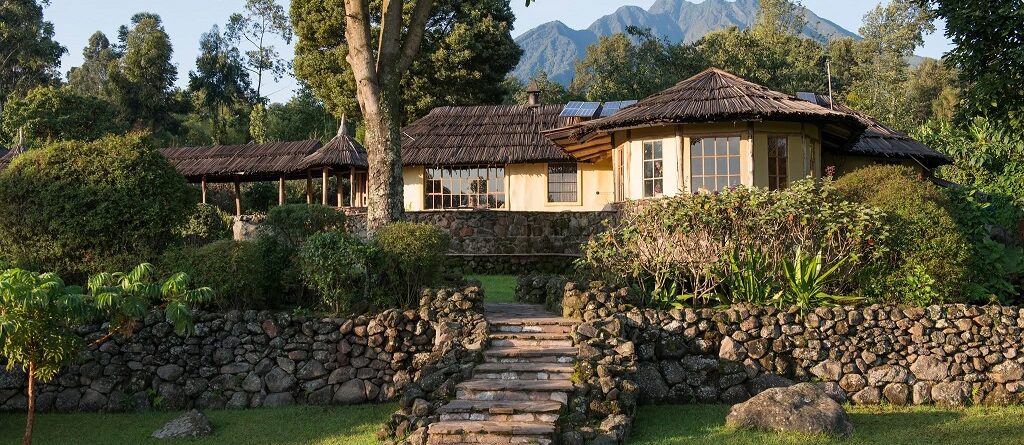
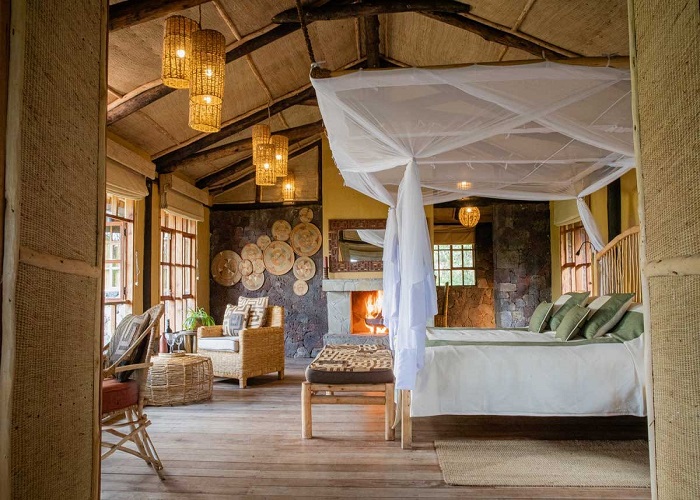
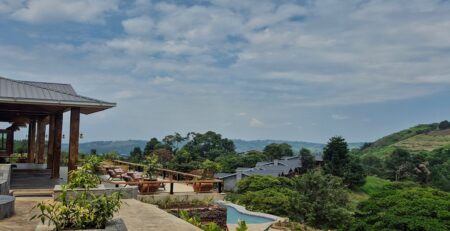
Mount Gahinga Lodge, run by Volcanoes Safaris, sits just outside the park boundary a short drive from the Ntebeko trailhead and is the most established luxury property in the immediate Mgahinga area. Its stone cottages, built in a style that echoes traditional local architecture while offering genuinely comfortable modern interiors, look out toward the volcanic peaks of Muhabura, Gahinga and Sabyinyo, and the lodge’s central lounge and dining area are positioned to make the most of these views. The lodge’s proximity to Ntebeko makes it the most convenient luxury base for an early gorilla or golden monkey trekking departure, and Volcanoes Safaris’ broader portfolio across the region, including properties in Rwanda and at Bwindi, means the operator has deep experience managing the specific logistics of primate trekking accommodation.
Amajambere Iwacu Community Camp:
Amajambere Iwacu Community Camp, positioned close to the park boundary, is a community-owned and operated property that channels its revenue directly into local development projects, making it a genuinely worthwhile choice for travellers who want their accommodation spending to have a clear, direct community benefit. The camp offers comfortable, if simpler, accommodation than Mount Gahinga Lodge, at a correspondingly more accessible price point, and its position close to Ntebeko still allows a reasonably convenient trekking departure. The camp’s guides, drawn from the local community, often bring genuine local knowledge and personal connection to the landscape that adds real value to activities like the Batwa Trail.
Kisoro Town Guesthouses and Budget Hotels
The town of Kisoro, roughly twenty to thirty minutes from Ntebeko, offers a further tier of budget guesthouses and small hotels, providing the most affordable accommodation option for visitors to Mgahinga. Staying in Kisoro also gives practical access to the town’s shops, restaurants and transport connections, useful for travellers combining Mgahinga with onward travel to Bwindi or across the border to Rwanda. The trade-off is a longer and earlier morning transfer for gorilla or golden monkey trekking, which requires an earlier wake-up call than staying at a property directly adjacent to the park.
Combining Mgahinga with Rwanda's Volcanoes National Park Accommodation
Given Mgahinga’s position directly on the border with Rwanda, some travellers choose to base at properties in Rwanda’s Musanze or Kinigi area, near Volcanoes National Park, and cross the border for a day specifically to trek at Mgahinga, or vice versa. This approach makes particular sense for travellers whose broader itinerary is centred on Rwanda, with Mgahinga treated as an add-on activity rather than requiring a dedicated Uganda-side accommodation booking. The border crossing itself is straightforward for most nationalities, though current visa and border requirements should always be confirmed before planning this specific approach.
When to Visit Mgahinga
Mgahinga’s high-altitude volcanic setting gives it a genuinely cool climate year-round, and like the rest of the Virunga Massif, its gorilla and golden monkey populations remain resident regardless of season, making trekking possible in any month. The seasonal variable that matters most is trail condition on both the primate treks and the volcano hikes, which become considerably more demanding during the wetter months.
Uganda’s two dry seasons, from June through September and from December through February, offer the firmest trekking and hiking conditions and are correspondingly the busiest booking periods for both gorilla permits and accommodation. The wetter months from March through May and October through November see reduced visitor numbers and occasionally better accommodation availability, though the volcano hikes in particular become notably more strenuous and slippery underfoot during these periods.
Season | Months | Trekking Conditions | Accommodation Booking |
Long dry season | June – September | Firmest conditions for gorilla, golden monkey and volcano treks | Book well in advance; highest demand period |
Short dry season | December – February | Good conditions; busy over the holiday period | Book well in advance for Christmas and New Year dates |
Long rains | March – May | More demanding; volcano hikes particularly affected | Better availability; consider only if comfortable with wet conditions |
Short rains | October – November | Moderate; manageable with preparation | Good availability; moderate booking pressure |
What Does Accommodation at Mgahinga Cost?
Mgahinga’s accommodation costs span from budget guesthouses in Kisoro town to the premium tier represented by Mount Gahinga Lodge, though the overall range is narrower than at Uganda’s larger, more visited parks given the smaller number of properties in the immediate area. Gorilla trekking permits, issued by the Uganda Wildlife Authority, apply regardless of accommodation choice, and given the single habituated family at Mgahinga, these permits should be secured as far in advance as possible.
Golden monkey trekking permits are considerably less expensive than gorilla permits and carry less scarcity pressure, making a Mgahinga visit built primarily around golden monkey trekking and volcano hiking, rather than gorilla trekking specifically, a genuinely more accessible and flexible option for budget-conscious travellers.
Budget — Kisoro town guesthouse, self-drive or shared transport
A guesthouse in Kisoro town, combined with self-drive or shared transport to Ntebeko, golden monkey trekking or a volcano hike rather than gorilla trekking, and standard park entry fees. This covers a genuine Mgahinga experience at the most accessible price point.
Mid-range — Amajambere Iwacu Community Camp, private vehicle
A comfortable community-run camp near the park boundary, a private guided vehicle, and either gorilla or golden monkey trekking permits depending on budget and availability. This is a strong option for travellers wanting comfort, community benefit and reasonable proximity to Ntebeko.
Luxury — Mount Gahinga Lodge, private vehicle and guide
A premium stay at Mount Gahinga Lodge, private vehicle and guide throughout, gorilla trekking permit secured well in advance, and often combined with a wider southwestern Uganda circuit including Bwindi or a Rwanda extension.
Detailed Accommodation Comparison
Because this guide is specifically built around the accommodation decision, here is a direct property-level comparison to help match your priorities to the right choice.
Given Mgahinga’s compact geography, the most useful filter here is less about location, since all these properties sit within a reasonable distance of Ntebeko, and more about comfort tier, community benefit and specific activity focus.
Property | Style | Distance to Ntebeko | Best Suited For |
Mount Gahinga Lodge | Established luxury, Volcanoes Safaris | 5-10 minutes | Travellers wanting the most comfortable, best-managed luxury base |
Amajambere Iwacu Community Camp | Community-run mid-range | 10-15 minutes | Travellers wanting genuine community benefit alongside solid comfort |
Kisoro town guesthouses | Budget guesthouses and small hotels | 20-30 minutes | Budget-conscious and self-drive travellers |
Rwanda border-area properties (Musanze/Kinigi) | Full range, budget to luxury | 45-60 minutes via border crossing | Travellers whose broader itinerary is centred on Rwanda |



Leave a Reply