

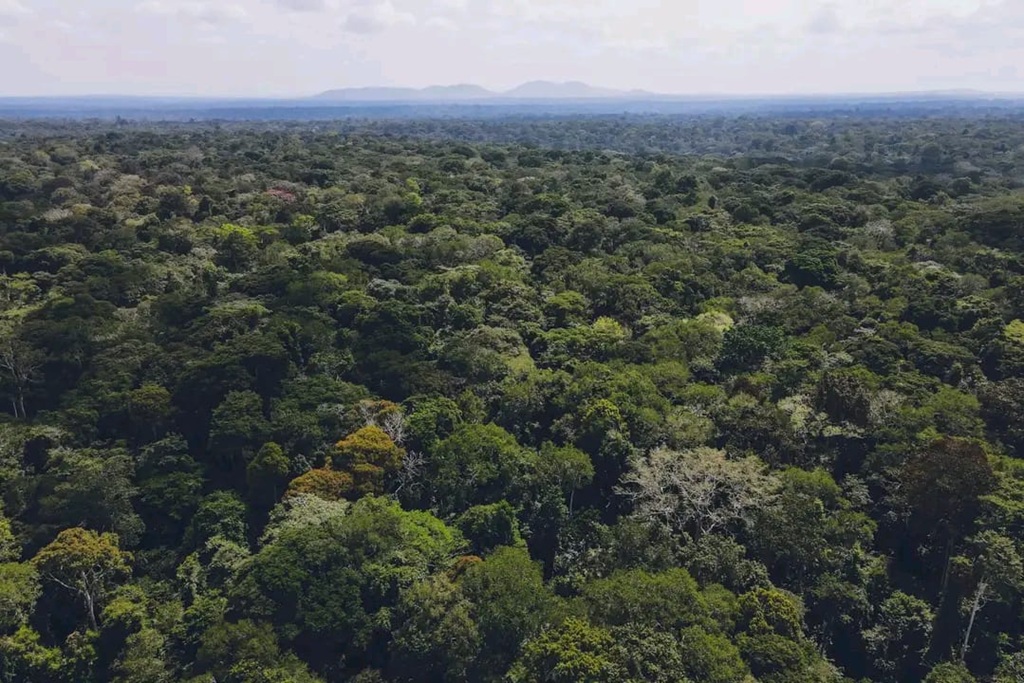
Bugoma Forest Reserve: Bugoma Forest is found in Hoima district and covers an area of about 41,144 hectares. It was gazetted in the 1930s, Bugoma Forest occupies the land area of about 401sq.kms, approximately 155sq.mi. Bugoma Forest Reserve is one of the beautiful natural forests Uganda boasts of. This natural tropical rainforest is among many extraordinary forests that host a remarkable number of chimpanzees in Uganda. Bugoma Forest Reserve is bordered by Kyenjojo town to the Northeast and Lake Albert in the East. The forest lies in Buhaguzi and Bugahya counties in the administrative district of Hoima. Most of the forested portion lies in the sub counties of Kabwoya and Kyangwali.
Bugoma forest holds vast ecological value and plays a perilous role in providing oxygen, absorbing carbon dioxide, and supporting a rich diversity of flora and fauna, some of which are worldwide rare or endemic. Among its prominent avian residents are the globally data-deficient Nahan’s Francolin and the black-eared ground thrush, which is only found from one other forest in Uganda.
A 2010 census estimated the chimpanzee population at around 600 as well as small numbers of African elephants have also been spotted in recent years but one was found dead due to ongoing destruction to pave way for sugarcane growing.
The forest serves as a dynamic migratory corridor for wildlife, linking national parks and game reserves, while also functioning as a vital catchment area for rivers that drain into Lake Albert.
Despite the forest’s ecological and cultural value, Bugoma forest faces several threats: illegal pitsawing, hunting, cattle grazing, unsustainable honey harvesting, political interference, and the illegal removal of medicinal herbs. The forest has lost roughly 40% of its cover in recent decades, with chimp numbers dropping from about 600 to 380 as logging, charcoal production, and sugarcane plantations encroach. Activists and groups like the Association for the Conservation of Bugoma Forest (ACBF) and Forest Canopy Trust Initiative are pushing for formal national‑park status, reforestation, and cancellation of illegal land titles. In 2016, part of the reserve was leased to Hoima Sugar Ltd under contested circumstances. The lease involved 5,779 hectares, about 14 percent of the total forest area. Satellite imagery since 2020 shows active clearing and sugarcane cultivation within the demarcated lease zone. Encroachment by smallholder farmers is also ongoing, especially along the southern and eastern boundaries. These incursions typically occur during dry seasons, when fire is used to prepare the land. Charcoal burning and pole cutting compound the degradation.
Activities To Do in Bugoma Forest Reserve
Chimpanzee Tracking
Chimpanzee tracking in Bugoma Forest Reserve is Uganda’s newest primate tourism activity that was officially launched for visitors on August 15, 2024. This offers an off-the-beaten-path alternate to more crowded destinations like Kibale Forest. There is one habituated chimpanzee community called the Mwera South community, offering a more exceptional, budget-friendly, and warm experience.
Bird Watching
Bugoma Forest Reserve is a hidden gem for birdwatching in Uganda; it serves as a sanctuary for over 221 to 260 recorded bird species. It is one of the few places in the world where you can find the globally threatened Nahan’s Partridge (also known as Nahan’s Francolin) and the Black-eared Ground-thrush. Notable sightings include the Endangered Nahan’s Francolin (or Nahan’s francolin), Grey Parrot, White-thighed Hornbill, Yellow-crested Woodpecker, Black-eared Ground-thrush, and Black Bee-eater.
Guided Nature Walks
Trails allow visitors to explore the forest, highlighting medicinal plants, primates, reptiles, and butterflies. These walks are primarily focused on spotting the endemic Uganda Mangabey and the forest’s newly habituated chimpanzee populations
Uganda Mangabey Tracking
The forest offers a premier experience because the forest is one of the few remaining sanctuaries for the endemic Ugandan Mangabey
Cultural Experiences
Cultural experiences in Bugoma Forest Reserve offer an immersive glimpse into local life, featuring community walks through villages like Nyakafunjo and Kyamujogo, traditional dance performances, and storytelling, often arranged by bujuku eco tours. Visitors can learn about local farming, craft-making, and the cultural, medicinal, and spiritual reliance of surrounding communities on the forest. Surrounding communities offer interactions, traditional dances, and local farming experiences.
Photography and Scenic Viewing
Bugoma Forest Reserve offers a raw, isolated experience for photographers and nature enthusiasts, characterized by dense tropical canopies and dramatic elevation changes. Positioned at the top of an escarpment east of Lake Albert, it provides amazing scenic views of the Albertine Rift Valley and the surrounding countryside.
When is the Best Time to Visit Bugoma Forest Reserve
The best time to visit Bugoma Forest Reserve is during the dry seasons, which are December to February and June to early September. During these months, trails are less muddy, and wildlife tracking is easier. While the reserve is open year-round, the dry season offers optimal conditions for hiking and birdwatching.
The Wet Seasons run from March–May and from September–November, while the trails are more challenging, the forest is at its most exciting and lush. This time of the year is favourable for birdwatching due to higher breeding activity.
How to get to Bugoma forest reserve
This amazing Forest Reserve is found 70 km away from Hoima district, and can be accessed using road transport through a tarmac road. You can use the Kampala-Hoima-Fort portal Road, then to Kabwoya to access Bugoma via the Kasindi Forest Station. You can access the forest on either a guided tour or even on a self guided trip.