

Rwenzori Mountains National Park is located in Southwestern Uganda and is known for its spectacular Alpine scenery and distinct biodiversity. This Park shelters Africa’s prominent block mountain –the Rwenzori Mountain range. Mount Rwenzori is the 3rd highest on the African continent, with Margherita Peak lying on Mount Stanley, which marks the park’s highest peak.
Rwenzori Mountains National Park was designated a National Park in 1991, and around 1994, it became a UNESCO World Heritage Site. The Park is known for its rich biodiversity and is also a recognized Ramsar Site since 2008. Mount Rwenzori National Park is set close to the Congo border, and is also bordered by Lake Albert and Edward.
Mount Rwenzori National Park is a vast National Park with an area coverage of about 996 sq. km, and its boundaries extend to the Kasese, Kabarole, and Bundibugyo Districts. This Park is most popular for its classical mountaineering adventures that usher climbers to the scenic Margherita Peaks on Mt. Stanley.
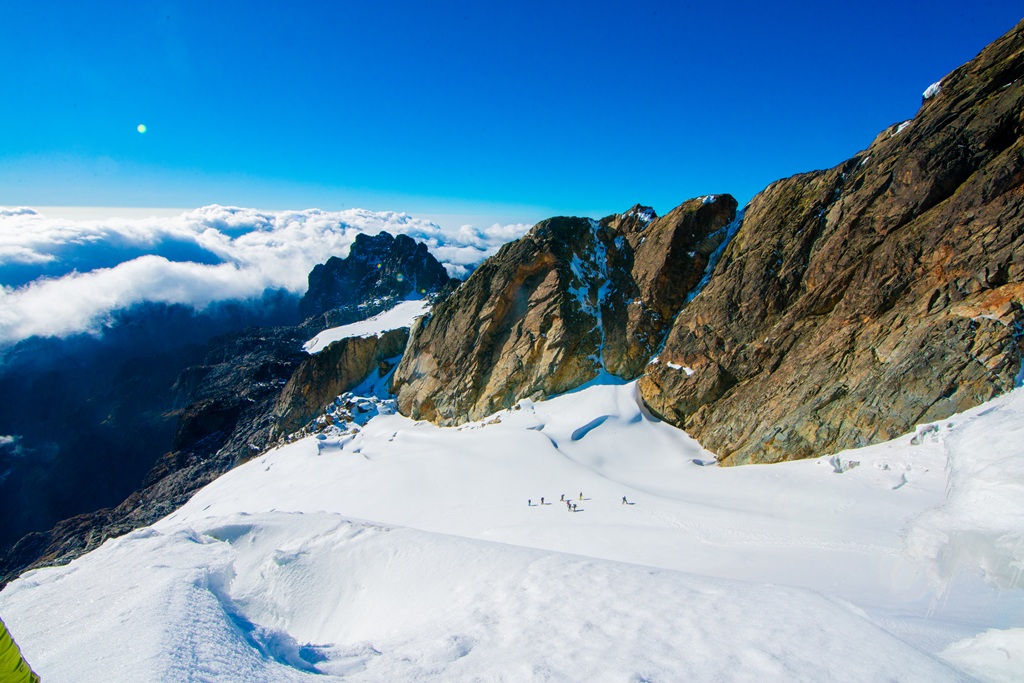
At the varying altitudes, the Rwenzori National Park features diverse vegetation zones. They include montane forest at 2000 to 3000m, bamboo forest located at the altitude of 2500 to 3500m, and heather at 3000-4000m. The Afro-alpine moorland forest lies at an altitude of 4000-4500m. At the extreme summits of 4500m, the Rwenzori Mountains are dominated by snow and glaciers. Other vegetation zones/types to expect to explore include the lobelia, giant tree heathers, and groundsel.
6 mountain ranges make up the Mount Rwenzori National Park, including Alexandra 5083m, Luigi da Savoia 4627m, Speke 4890, Emin 4791m, Mt. Stanley 5109m, and lastly Mount Gessi at an altitude of 4715m.
The diverse wild animals to explore
The Rwenzori Mountains National Park alone is endowed with over 70 mammal species. These reside in the varying habitats of the Park and include chimpanzees, elephants, duikers, leopards, Rwenzori otters, bushbucks, genets, giant forest hogs, golden cats, buffaloes, l’hoest monkeys, and Angolan black and white colobus monkeys. The Rwenzori Mountains National Park features the 3-horned chameleon, a unique reptile species worth exploring in this Park’s dense vegetation.
The Birds
Overall, Rwenzori Mountains National Park offers refuge to about 217 bird species. The presence of these diverse avifaunal species makes this Park one of the Important Bird Areas in Uganda –The Pearl of Africa. As per the current checklist, the birds worth spotting here include the streaky seed-eaters, Handsome francolins, barred long-tailed cuckoos, Blue-headed sunbirds, Montane sooty boubou, cinnamon-chested bee-eaters, Rwenzori turacos, yellow-fronted canary, thick-billed seed-eaters, and western yellow wagtail.
Other birds of Rwenzori Mountains National Park include slender-billed starling, Northern gray-headed sparrows, Lagden’s bush shrikes, fawn-breasted waxbill, scaly-breasted illadopsis, brown-capped weaver birds, village weavers, red-faced crimson wing, Stuhlmann’s starling, white-chinned prinia, Western barn owl, Peregrine falcons, African hobby, woodpeckers, and many others.
The Lakes in Rwenzori Mountains National Park
About 20 beautiful lakes exist in the Rwenzori Mountains National Park. The presence of these charming wonders makes this Park one of the most spectacular. The popular Lakes to explore on Uganda safaris in the Rwenzori Mountains include Lake Bujuku, Lake Kitandara, Lake Mahoma, and more. Most of the lakes exist in the varying altitudes of Rwenzori Mountains. Lake Mahoma is at 2651m and can be accessed through the Central Circuit. Lake Bujuku is set at the glacier-carved Bujuku Valley right at the shadow of Mt Baker, Stanley, and Speke.
Explore the Bulemba Houses
Embark on a historical tour to unearth more about the Bulemba houses located at the base of the Rwenzori Mountains. The Bulemba houses offer refuge to the remains of the Rwenzururu king. This historical and cultural site also holds remains of other leaders from the Rwenzururu Kingdom, including Isaiah Mukirania Kibanzanga. Expect to explore more about the Bakonzo cultures and traditions with the experienced Bakonzo guide leading you.
Activities to do in the Rwenzori Mountains National Park
Mountain Climbing/Hiking
A visit to the Rwenzori National Park is regarded as complete only when you have included a mountaineering adventure on your bucket list of experiences. Guided hikes or mountain climbing in the Rwenzori Mountains mainly focus on conquering the Margherita Peak found on Mount Stanley. Accessing the summits of the Stanley Mountain range requires a good number of days, about 9-10, and more to enable you to enjoy a complete trekking session.
Hikes to the Margherita peaks and other mountain ranges are aided by the available hiking trails. The prominent walking or hiking trails to explore to reach most of the Rwenzori Mountain ranges include the Central Circuit –this includes navigating through the Mihunga to the Nyabitaba on the Bujuku Valley till you get to the top peaks.
You should prepare for your Rwenzori Mountaineering, and this should include packing right and timing. The ideal items you need for a successful Mount Rwenzori climbing adventure include a first aid kit, waterproof hiking boots, hiking sticks, a camera, a rain jacket, sleeping bags, long-sleeved shirts, and bottled water, tents, torches harness, gum boots, summiting shoes and many more.
Other enriching hiking trails worth exploring include the Kilembe trail, most popular for its world-class hiking adventures. This route is available for climbers who are interested in hiking the Rwenzori Mountains in the southern end of the Park. It is a better alternative hiking path to the existing trails, rewarding climbers with unique experiences and expecting to traverse via the breathtaking landscapes characterized by Afro-montane forests, bamboo forests, and more till you reach the Margherita summits.
Visitors can also try the Bukurungu trail, which offers fresh hiking experiences to the summits of the Rwenzori Mountains. The main features awaiting you along this trail include the Rwenzori peaks, Lakes like Lake Mughuli, Bujuku etc. The beauty of this route is that it reconnects you to the Central Circuit trail, where you continue ascending to the magnificent Margherita Peak.
Nature walking excursions
Visitors who may not be in position to reach the Margherita peak can opt for the guided nature walks. These introduce visitors to the base areas as you unearth the different wildlife, especially the squirrels, horned chameleons, monkeys, birds, and many floral species. You can enjoy short hikes or take more days as you conquer different slopes. The ideal areas for guided nature walks here include the Karangura Community trail/embark on a journey to explore the scenic Lake Muhooma.
Birding
Rwenzori Mountains National Park offers great birding opportunities for birders. Expect to search birds such as peregrine falcons, Rwenzori turacos, European bee-eaters, cinnamon-chested bee-eaters, Eurasian kestrels, and more.
Community visits
Cultural tours offer complete immersion into the local cultures and traditions, especially in the Bakonzo community. The best locations to consider for cultural interactions include Mihunga Community, Bulemba House, Turaco View Community, ruboni community and others.
When to visit the Rwenzori National Park, Uganda
The Rwenzori Mountains National Park can be accessed for holidays at any time of the year. But the dry season offers excellent weather conditions for mountaineering, and this is possible from June to August. Or book your hiking adventure from December to February –the short dry months or seasons of the year. The lowest amount of rainfall is received during the peak dry seasons, unlike the wet months –March to May and October to November.
Where to stay when you visit Rwenzori mountains national park
At the base of the Rwenzori Mountains, there are multiple places to consider for an overnight stay. They include the Rwenzori Turaco View Campsite, Hotel Margherita, Rwenzori Backpackers, Equator Snow Lodge, Tours Holidays Inn, and Ruboni Community Camp.
Getting to the Rwenzori National Park –Uganda
Getting to the Rwenzori National Park is possible by road/air. Road transportation takes about 7-8 hours’ drive along the Kampala-Fort Portal –Kasese route, and if you take the Kampala through Mbarara-Bushenyi route, expect to take 8-9 hours.