

Samburu National Reserve is located in northern Kenya along the banks of the Ewaso Nyiro River. This national reserve is one of the most ecologically unique and culturally rich protected areas in East Africa. Covering approximately 165 square kilometres in Samburu County, this semi-arid reserve offers a striking contrast to the lush savannahs of southern Kenya, showcasing specialized wildlife, resilient vegetation, and deep connections to the Samburu people’s pastoralist traditions.
When was Samburu National Reserve Established
It was Established in the 1960s, Samburu National Reserve is not only a haven for wildlife but also the ancestral land of the Samburu people, a semi-nomadic pastoralist community closely related to the Maasai. The Samburu’s deep connection to the land is reflected in their colorful attire, cattle-based economy, and traditional ceremonies, which remain largely intact even as tourism grows.
Topography of Samburu National Reserve
Samburu sits at an altitude of 800-1,230 meters above sea level. The landscape is defined by rugged terrain, doum palm groves, riverine forests, and acacia scrub. Samburu is rooted in the tectonic forces and volcanic activity that shaped East Africa millions of years ago. The reserve lies on the eastern flank of the East African Rift Valley, a significant geological feature resulting from the tectonic rifting between the African and Somali plates.
Attractions of Samburu National Reserve
wildlife
Samburu National Reserve is home to a variety of rare and endemic species. These unique animals include the Grevy’s zebra, Somali ostrich, reticulated giraffe, Beisa oryx, and gerenuk, that are well-adapted to the region’s arid environment. Other animal species in Samburu include lions, leopards, cheetahs, buffalo, elephants and much more.
Birds
Samburu National Reserve hosts over 450 bird species that includes endemic and migratory birds making it a paradise for birdwatching. The bird species in Samburu are vulturine guineafowl, Verreaux’s eagle, pygmy falcon, superb starling, African darter, Rosy patched bush shrike, sacred ibis, African spoonbill, Somali ostrich, black capped social weevil, Eastern chanting Goshawk, Speckled Pigeons, Laughing Doves, Emerald-spotted Wood-Dove and many more.
Hot Air Balloon Rides
For a truly unforgettable experience, book a hot air balloon ride over Samburu. Float over the landscape at sunrise and witness breathtaking views of the reserve’s rivers, plains and wildlife from above.
Singing Wells
Singing waters where Samburu herders chant as they draw water for livestock and a hauntingly beautiful cultural ritual.
Photography spots
Koitogor Hill and Ololokwe Mountain offering panoramic views and breathtaking photo opportunities.
Samburu Cultural Heritage
The Samburu people, a semi-nomadic pastoralist community, share a deep connection with the land and wildlife. Visiting a Samburu village offers a unique opportunity to learn about their rich cultural heritage, traditional customs and sustainable lifestyle.
Characteristics of Samburu’s Special Five Animals
Grevy’s zebra
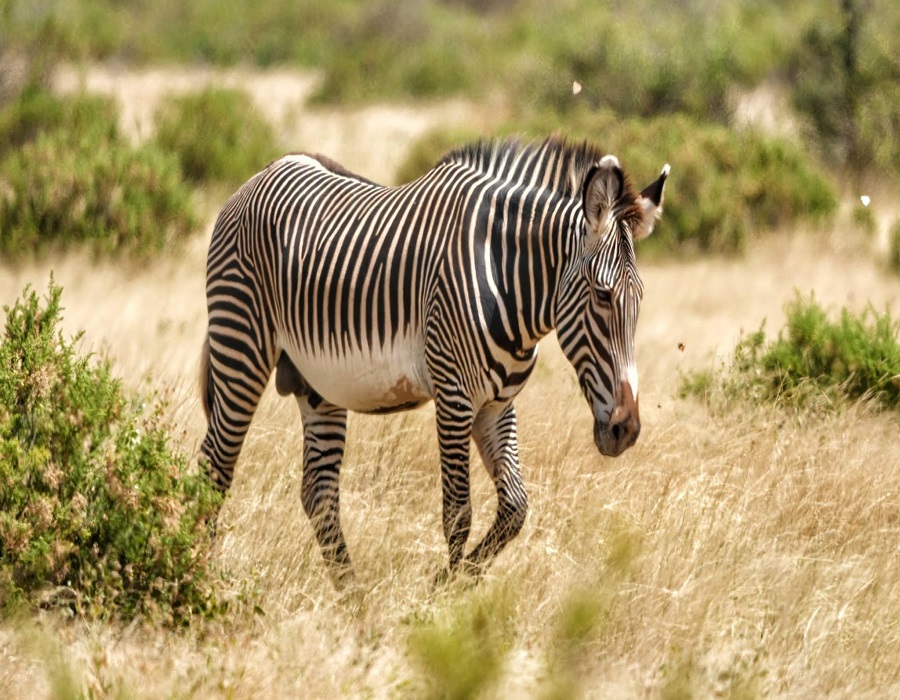
These are Known for their narrower stripes and larger ears, Grevy’s zebras are an endangered species found primarily in northern Kenya. Conservation programs in Samburu aim to protect this iconic zebra from habitat loss and competition with livestock. Grevy’s zebra is listed as endangered on the IUCN Red List with fewer than 3,000 individuals remaining globally.
Somali Ostrich
This unique bird, has blue-gray skin and unique feathering, the Somali ostrich is adapted to arid climates allowing it to thrive in Samburu.
Reticulated Giraffe
This giraffe subspecies is distinguished by its striking, net-like coat pattern. Conservation efforts are focusing on protecting this specie and its habitats, particularly from the impacts of human encroachment.
Beisa Oryx
This specie is recognizable by their long, straight horns and pale coats with black markings, Beisa oryx are well-suited to Samburu’s open plains.
Gerenuk
This Giraffe Gazelle is a long necked and medium size antelope Famous for its ability to stand on its hind legs to browse on higher vegetation, the gerenuk’s unique behavior sets it apart from other antelopes.
Is Samburu safe to visit?
Samburu is generally safe for tourists, but it’s essential to follow guidelines provided by park officials and travel with a reputable tour operator like Bujuku Eco TOURS and Travel ltd. Staying hydrated and prepared for hot weather is also recommended.
Access gates to Samburu National Reserve
- Archer’s gate.
Archer’s gate is one of the most developed gates in Samburu Game Reserve. This gate is located near Archer’s Post, just a few kilometres off the Marsabit highway. It is the main gate and most preffered because it is on the main road from Nairobi as well as from Isiolo Town.
- West gate
West gate is located on the western border of Samburu National Reserve with West Gate Community Conservancy. This amazing conservancy is covered by thorny acacia scrub, it is home to several thousand Samburu people and a healthy and growing population of large mammals, including up to 500 Grevy’s zebras. The Conservancy is only accessible if you are staying at Sasaab Lodge.
- Kalama gate
Kalama gate is located in Kalama Conservancy which is 7km from the Northern border of Samburu National Reserve. The only lodging option in Kalama Conservancy is Saruni Samburu Lodge.
- Uaso Bridge gate
Uaso Bridge gate is mainly used when crossing the Ewaso Nyiro bridge coming from Buffalo Springs National Reserve, that lies opposite Samburu National Reserve on the southern banks of Ewaso Nyiro river in Isiolo County. The best lodging options near Uaso Bridge gate include Ashnil Samburu Lodge and Samburu Simba Lodge.
- Central Airstrip gate
The Central Airstrip gate is only accessible to all visitors arriving in Samburu by air. The airstrip is served by Air Kenya and Safari Link with daily scheduled flights to and from Samburu.
Best Time to Visit Samburu National Reserve
Samburu reserve is visited all year round for wildlife viewing, but the dry seasons of June to October and December to March are ideal for safaris. During these months, animals congregate around the river and vegetation is sparse, making it easier to spot wildlife. The rainy seasons bring lush landscapes and more migratory birds, though wildlife disperses further into the bush, making it a bit more challenging to locate animals.
Accommodations near Samburu national Reserve
Samburu offers a range of accommodations from luxury lodges to budget campsites. Lodges like Samburu Sopa Lodge, Sarova Shaba Game Lodge, Samburu Riverside camp, Elephant Bedroom camp and Samburu Intrepids Camp provide eco-friendly stays with modern amenities. Budget travelers can enjoy simpler campsites within or near the reserve, perfect for those seeking an immersive experience in nature.