

Endangered Primates in Africa: Where to See Them and Why It Matters
Bujuku Eco Tours2026-08-04T11:31:35+03:00Africa holds some of the rarest and most threatened primate species on earth, and encountering them in the wild is one of the most profound experiences available to any traveler.
The mountain gorilla, reduced to a few hundred individuals by the 1980s and now recovering through one of conservation’s genuine success stories, shares the continent with chimpanzee populations under sustained pressure from habitat loss, golden monkeys confined to a handful of Albertine Rift forests, and a long list of smaller, less famous primates whose populations are declining faster than most travellers realise.
Visiting these species responsibly, through well-managed trekking permits and reputable operators, is one of the few forms of tourism that directly funds the conservation programmes keeping these populations alive.
This guide covers Africa’s most significant endangered primates: which species are most at risk, where each can genuinely be seen in the wild, what a responsible encounter looks like, and how the tourism revenue from trekking permits and lodge fees connects directly to the conservation programmes protecting these populations.
Understanding Primate Conservation Status
The International Union for Conservation of Nature maintains the Red List, the global standard for assessing extinction risk, and Africa’s primates occupy a disproportionate share of its most threatened categories. Habitat loss from agricultural expansion and logging, bushmeat hunting, disease transmission from human populations and, for some species, the illegal pet trade are the primary drivers pushing populations toward extinction.
What distinguishes the primates covered in this guide from many other threatened species is that a functioning, well-regulated tourism industry exists around several of them, creating a direct economic argument for habitat protection that doesn’t exist for most endangered wildlife.
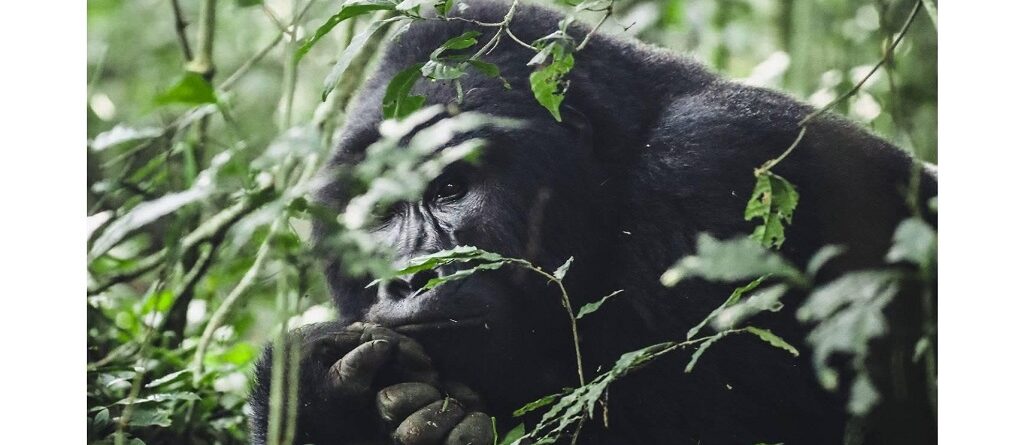
The mountain gorilla’s recovery is the clearest illustration of this model working. Confined to the Virunga Massif spanning Rwanda, Uganda and the Democratic Republic of Congo, and to Uganda’s Bwindi Impenetrable Forest, the mountain gorilla population was reduced to critical levels by habitat loss, poaching and the civil conflict that affected the region through the 1990s and 2000s.
The combination of high-value, strictly limited trekking permits, intensive veterinary monitoring of habituated groups, and community revenue-sharing programmes that give local populations a direct economic stake in gorilla survival has produced a sustained population increase that stands in sharp contrast to the trajectory of almost every other great ape population in Africa.
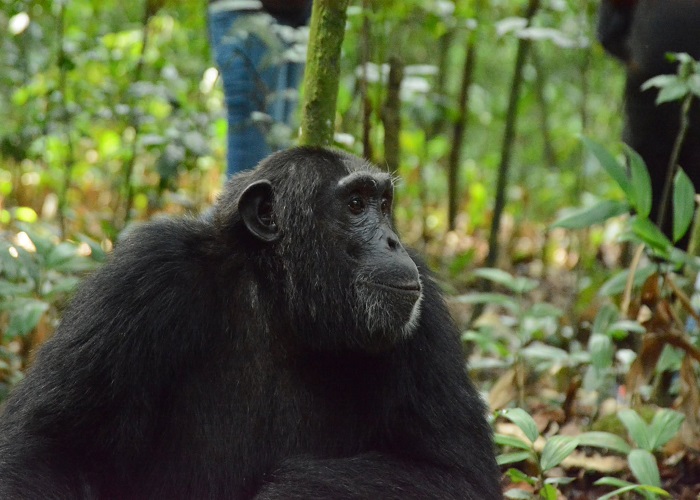
Chimpanzee populations across Africa tell a more mixed story. While chimpanzees remain present across a wide range of Central and East African forest habitat, the overall population trend is downward, driven primarily by habitat fragmentation as agricultural land expands into forest, and by disease transmission from human populations, since chimpanzees share enough genetic similarity with humans to be vulnerable to some human pathogens.
Tourism at well-managed sites like Kibale Forest in Uganda, Gombe and Mahale in Tanzania, and Nyungwe in Rwanda provides meaningful conservation funding, but the scale of habitat loss across the chimpanzee’s wider range means tourism revenue alone cannot address the primary threat in the way it has for the more geographically confined mountain gorilla.
Africa's Most Significant Endangered Primates at a Glance
Here is a direct comparison of the primates most relevant to a responsible wildlife trip, their conservation status and where they can be seen.
Species | IUCN Status | Estimated Wild Population | Where to See Them |
Mountain gorilla | Endangered (improving) | ~1,063 individuals | Volcanoes NP (Rwanda), Bwindi (Uganda), Virunga NP (DRC) |
Eastern chimpanzee | Endangered | ~181,000-256,000 (declining) | Kibale, Kyambura Gorge (Uganda); Gombe, Mahale (Tanzania); Nyungwe (Rwanda) |
Cross River gorilla | Critically Endangered | ~250-300 individuals | Cross River region, Nigeria/Cameroon border (very limited tourism access) |
Western lowland gorilla | Critically Endangered | ~360,000 (declining sharply) | Odzala-Kokoua NP (Congo), Dzanga-Sangha (Central African Republic) |
Golden monkey | Endangered | ~3,000-4,000 individuals | Volcanoes NP (Rwanda), Mgahinga (Uganda) |
Bonobo | Endangered | ~15,000-20,000 individuals | Salonga NP and select reserves in DRC (limited tourism access) |
Drill | Endangered | ~3,000-8,000 individuals | Cross River region, Nigeria/Cameroon (rarely seen; not a standard tourism circuit) |
Where to See Africa's Endangered Primates
What follows covers the primates most relevant to a responsible wildlife trip, with details on where each can genuinely be encountered, what the conservation story behind each location involves, and what a visit actually looks like.
Mountain Gorillas: Rwanda, Uganda and the Democratic Republic of Congo
Mountain gorillas exist in only two isolated populations worldwide: the Virunga Massif, spanning Rwanda’s Volcanoes National Park, Uganda’s Mgahinga Gorilla National Park and the Democratic Republic of Congo’s Virunga National Park, and Uganda’s separate Bwindi Impenetrable Forest population.
Rwanda’s Volcanoes National Park is the most accessible and most tourism-developed of the three countries, with well-established trekking infrastructure, a limited number of daily permits per habituated group, and direct flights into Kigali that make it logistically the most straightforward option for most international travellers.
Uganda’s Bwindi Impenetrable Forest offers a lower permit cost and a genuinely different trekking experience, through denser, more physically demanding forest terrain, with a correspondingly higher chance of a longer trek to reach a habituated group.
The Democratic Republic of Congo’s Virunga National Park, Africa’s oldest national park, offers gorilla trekking at a lower cost than Rwanda but requires careful attention to current security conditions in eastern DRC before any visit is planned, given the region’s history of instability.
Eastern Chimpanzees: Uganda, Tanzania and Rwanda
Kibale Forest in western Uganda is widely regarded as East Africa’s premier chimpanzee tracking destination, with a habituated community offering some of the most reliable sighting odds available anywhere on the continent, alongside twelve other primate species in the same forest. Kyambura Gorge within Queen Elizabeth National Park offers a smaller, more intimate chimp tracking experience in a dramatic riverine forest setting.
In Tanzania, Gombe Stream National Park, made famous by Jane Goodall’s pioneering research beginning in 1960, and the more remote Mahale Mountains National Park on the shore of Lake Tanganyika both offer chimpanzee tracking in genuinely wild, minimally developed settings.
Rwanda’s Nyungwe Forest offers chimpanzee tracking alongside a canopy walkway and strong general primate diversity, making it a natural addition to a Rwanda gorilla trekking itinerary.
Golden Monkeys: Rwanda and Uganda
The golden monkey, a strikingly coloured subspecies found only in the bamboo forests of the Virunga Massif, is one of Africa’s least-known endangered primates despite occupying the same mountain range as the much more famous mountain gorilla.
Rwanda’s Volcanoes National Park and Uganda’s Mgahinga Gorilla National Park both offer golden monkey trekking, typically at a considerably lower permit cost than gorilla trekking and requiring less physically demanding terrain, since the golden monkey’s bamboo forest habitat sits at a somewhat lower elevation than the gorilla’s preferred zone.
Golden monkey trekking is frequently combined with a gorilla trekking permit on the same trip, since both are accessed from the same park headquarters and require similar logistics.
Western Lowland Gorillas: Republic of Congo and Central African Republic
Western lowland gorillas, genetically and physically distinct from the mountain gorilla and facing a considerably steeper population decline, are found across Central Africa’s Congo Basin rainforest, though tourism access is limited to a small number of well-managed sites.
Odzala-Kokoua National Park in the Republic of Congo and Dzanga-Sangha in the Central African Republic both offer habituated gorilla tracking in genuinely remote rainforest settings, requiring considerably more logistical effort to reach than the East African gorilla trekking circuit but offering a correspondingly more remote and less commercialized experience.
These destinations suit experienced travellers specifically seeking western lowland gorillas rather than those for whom the mountain gorilla circuit’s greater accessibility is the priority.
Bonobos: Democratic Republic of Congo
Bonobos are found exclusively in the Democratic Republic of Congo, south of the Congo River, and represent one of the least tourism-accessible great apes on the continent, both because of the DRC’s challenging travel logistics and because bonobo habituation for tourism remains limited compared with the well-established gorilla and chimpanzee circuits.
Lola ya Bonobo, a sanctuary near Kinshasa caring for orphaned bonobos rescued from the bushmeat and pet trade, offers the most accessible bonobo encounter for most travellers, while wild bonobo viewing in reserves like Salonga National Park requires considerably more logistical commitment and current security guidance for the specific region being visited.
Cross River Gorillas and Drills: Nigeria and Cameroon
The Cross River gorilla, the most critically endangered of Africa’s gorilla subspecies with a wild population estimated at only 250 to 300 individuals, survives in a small, fragmented forest region spanning the Nigeria-Cameroon border.
Tourism access to this population is extremely limited, reflecting both the population’s genuine rarity and the underdeveloped tourism infrastructure of the region compared with East Africa’s gorilla circuit.
The drill, a large, colorful forest-dwelling primate found in the same general region, is similarly rare in the wild and rarely part of any standard tourism circuit. The Drill Ranch sanctuary in Nigeria’s Cross River State, run by the Pandrillus Foundation, offers the most accessible encounter with drills for most travellers, caring for orphaned and confiscated individuals as part of a breeding and conservation programme.


Leave a Reply