

Aberdare National Park is an isolated volcanic range that forms the eastern wall of the rift valley. This beautifully scenic region is much cooler than the savannahs and offers a completely different perspective on the country. Lying above the tree line, the scenery is spectacular with its mountainous terrain covered in thick tropical forests swathed in mist.
The park is renowned as the location where, in 1952, whilst staying at Treetops lodge, Princess Elizabeth became Queen after the death of her father King George V1.
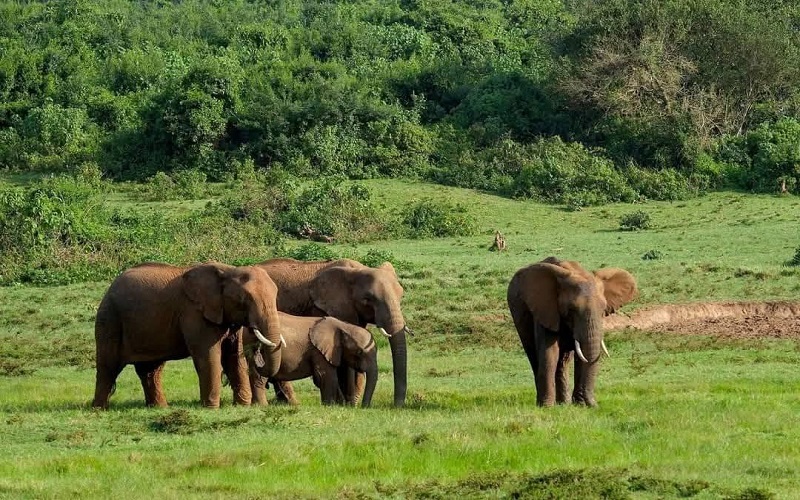
Herds of elephants and buffalo regularly traverse in and out of the dense rain forest, providing an extra thrill for a visitor’s game viewing experience. One of the best places to see wildlife residents is at one of the waterholes by the lodges. The park boasts several imposing peaks, streams and several waterfalls. Exploration of the park can be through game drives or trekking.
The rise and fall of the misty valleys, hills and mountains of the spectacular Aberdare National Park are a sight to behold. Open moorlands and forests characterize the vast park coupled with a deep lush of clean crisp air that hangs around just perfect for peace and tranquillity. This picturesque mountainous scenery is one of the highlights of a visit to this wonderland.
Where is Aberdare National Park located?
The Aberdare National Park is a protected area located in the Aberdare Mountain Range in central Kenya, Nyandarua, Nyeri county and east of the East African Rift Valley. It covers 767 square kilometres in the higher areas and the Aberdare Salient to the east.
Key attractions and activities at Aberdare National Park
Waterfalls
The park is renowned for its torrential waterfalls plunging from cloud shrouded heights to spray filled ravines. These are the magnificent Karuru waterfall, whose ice-cold crystal-clear waters drop an impressive 300 meters, the outstanding Gura waterfall which torrent from the opposite side of the same gorge, the sheer drop of the Chania waterfall and the enchanting Magura waterfalls which cascade across the yawning mouth of the queen’s cave.
Dragon Teeth
This is a volcanic rock formation assuming the rugged look of a set of teeth sitting on a jaw. They are located in the northern moorlands part of the park, south of the equator. The twin rocks are also a magical sight in the foggy but beautiful landscapes of the Aberdare moorlands. The pair of rocks located near each other are outcrops formed as a result of volcanic formations.
Trekking and hiking
This park boasts of suitable peaks for trekking such as Rurimieria, Table Mountain, Kinangop and Maritini. The hiking activity in this part of the Aberdare ranges is gaining popularity with groups as its a one-day activity that combines well with a road trip. Also join a hike up to the elephant and satima hills via Shamata for a day activity with family and friends.
Wildlife viewing
Aberdare hosts common and rare animals that include, black serval, black rhino, black leopard, mountain bongo, red duiker, suni, reedbuck, eland, bushbuck, warthogs, giant forest hog, buffalos, African golden cats, and primates such as olive baboons, colobus monkeys, Sykes monkeys and many more.
How to get there
The park can be accessed by road through 8 gates namely; Muturi, Rhino, Ruhuruini, Ark, Treetops, Kiandongoro, Shamata and Wandare. The park is located 150 km away from Nairobi and through Nyeri and Naro Moru. By Air transport, they are domestic flights from Mweiga Airstrip along Nyeri Nyahururu road near sasini estate farm.
Accommodations in Aberdare national park
Fishing lodge
The lodge offers a luxury stay in the wild for travellers, it has 2 units and each takes 7 occupants with amenities such as dinning area, solar lamps, fire place, beds, kitchen, towels and much more. For camping lovers, there are 2 public campsites, namely; Reedbuck and Ruhuruini campsites.