


Endangered Primates in Uganda
Bujuku Eco Tours2026-07-17T11:07:34+03:00Endangered Primates in Uganda: Uganda holds a genuinely unusual position in African wildlife tourism. It’s a country roughly the size of Oregon that carries more primate diversity than anywhere else on the continent, and within that diversity sit four species carrying real conservation weight; mountain gorillas, chimpanzees, golden monkeys, and the Ugandan red colobus.
Seeing any one of them is a wildlife encounter. Understanding what each sighting actually represents, a species pulled back from the edge of extinction, or one still sliding toward it, changes what the experience means. That distinction matters more than most safari planning guides let on. Mountain gorillas were reclassified by the IUCN from Critically Endangered to Endangered in 2018, a genuine conservation success story built on decades of patrol work and tourism revenue.
Chimpanzees, golden monkeys, and the Ugandan red colobus haven’t had that same turnaround, and each faces a different specific threat, from habitat fragmentation to predation to logging pressure outside protected boundaries. Planning a Uganda primate safari with this context in mind, rather than treating every sighting as interchangeable, is what separates a well-informed trip from one built purely around a checklist.
Uganda’s headline primate encounters, gorilla trekking above all, are not casual add-ons. Gorilla permits alone run into the hundreds of dollars, treks can take hours through genuinely difficult terrain, and the encounter itself lasts a strictly regulated hour once you find the family.
If your Uganda itinerary already includes several other demanding activities, adding gorilla trekking on top requires deliberate scheduling rather than an afterthought squeezed between other stops.
Where this genuinely earns its place is for travelers who want an experience with weight behind it, not just a good photograph. Watching a habituated gorilla family go about an ordinary morning, young ones tumbling near a resting silverback, carries a different kind of significance once you know that species existed in the low hundreds within living memory.

Why Uganda's Endangered Primates Matter
Uganda’s four flagship endangered primates each tell a distinct conservation story, and knowing the differences changes how you understand what you’re seeing on the ground.
- Mountain gorillas (Gorilla beringei beringei) carry Uganda’s best-known conservation success. Gorilla numbers collapsed to roughly 254 individuals in the early 1980s, driven by poaching, habitat loss, and regional conflict. Sustained anti-poaching patrols, veterinary intervention for snare injuries, and a tourism model that funnels permit revenue directly into protection and community programs brought the population back to over 1,000 individuals by the most recent counts, split between the Virunga Massif and Bwindi Impenetrable Forest. That recovery led the IUCN to downgrade the species from Critically Endangered to Endangered in 2018, the first change in its listing since 1994. The species remains genuinely fragile, confined to roughly 300 square miles of total habitat and highly prone to human disease given its close genetic relationship to people, but the trajectory is a rare piece of good news in primate conservation.
- Chimpanzees (Pan troglodytes) present a considerably less settled picture. Uganda’s population is estimated at around 5,000 individuals today, down from a figure believed to have once numbered around 50,000. Habitat loss and fragmentation, alongside continued hunting pressure in some areas, keep the species listed as Endangered without the same clear upward trend gorillas have shown. Kibale National Park, often called the primate capital of Africa, holds Uganda’s strongest chimpanzee population, with additional groups in Budongo Forest, Kyambura Gorge, Kalinzu Forest, and Semliki.
- Golden monkeys (Cercopithecus kandti) occupy one of the narrowest ranges of any primate on this list. In Uganda, they exist only in the bamboo forests of Mgahinga Gorilla National Park, part of the wider Virunga ecosystem shared with Rwanda and the Democratic Republic of Congo. Listed as Endangered, their populations have suffered from habitat loss tied to historical conflict in the region and ongoing pressure from bamboo harvesting. Their genuinely striking golden-orange flanks make them a rewarding, if narrowly located, target for primate-focused travelers.
- The Ugandan red colobus (Piliocolobus tephrosceles) is arguably the least understood of Uganda’s endangered primates by casual travelers, and arguably the most urgently threatened. Populations dropped by an estimated 89 percent between 1975 and 2007, and the species is now Endangered, found in fragmented pouches including Kibale National Park, Semliki, and a handful of forest reserves. What makes this species’ situation unusual is that one of its principal threats comes from another primate: at Kibale’s Ngogo area, resident chimpanzees prey on red colobus monkeys so consistently that up to 12 percent of the local red colobus population is killed annually. Habitat loss outside protected boundaries compounds the pressure. Red colobus rarely receive the same conservation attention as gorillas or chimps, in part because they’re harder to view and less studied by the general public, which makes seeing them on a Uganda itinerary a genuinely meaningful, less crowded encounter.
Where to find Each of the Endangered Primate Species
Uganda’s endangered primates cluster in specific parks, and matching your itinerary to the species that matters most to you is the only most useful planning decision you’ll make.
Bwindi Impenetrable National Park and Mgahinga Gorilla National Park, both in Uganda’s southwest, hold the country’s entire mountain gorilla population. Bwindi hosts the larger share of habituated families and is the more commonly chosen destination given its greater number of trekking permits and sectors. Mgahinga is smaller, sees far fewer visitors, and is also Uganda’s only location for golden monkey trekking, making it a genuinely efficient stop for travelers wanting both species without excessive additional travel.
Kibale National Park, in western Uganda, is the strongest only destination for both chimpanzees and the Ugandan red colobus, alongside twelve other primate species that make it Uganda’s most primate-dense forest. This is the park’s most safari consultants point to for a single stop that maximizes primate diversity, including the two most vulnerable species on this list.
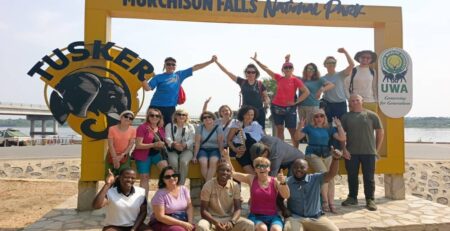
Budongo Forest, within Murchison Falls National Park’s broader landscape, and Kyambura Gorge, inside Queen Elizabeth National Park, both offer chimpanzee tracking as a genuinely strong complement to a broader wildlife safari itinerary, letting travelers combine primate encounters with classic savannah game viewing in the same park stay.
Semuliki National Park, in Uganda’s far west, holds smaller populations of both red colobus and chimpanzees within a genuinely distinct lowland rainforest ecosystem, though it’s a considerably more remote add-on than Kibale for travelers specifically prioritizing these species.
Comparing Uganda's Endangered Primates
Species | IUCN Status | Estimated Population | Best Location | Signature Threat |
Mountain gorilla | Endangered (downgraded from Critically Endangered in 2018) | Over 1,000 across Virunga and Bwindi combined | Bwindi Impenetrable NP; Mgahinga Gorilla NP | Disease transmission from humans, habitat confinement |
Chimpanzee | Endangered | Roughly 5,000 in Uganda | Kibale NP; also Budongo, Kyambura Gorge, Semuliki | Habitat loss and fragmentation |
Golden monkey | Endangered | Small, restricted bamboo-forest population | Mgahinga Gorilla NP (Uganda’s only site) | Habitat loss, historical regional conflict |
Ugandan red colobus | Endangered | Severely fragmented, down ~89% since 1975 | Kibale NP; also Semuliki and select forest reserves | Chimpanzee predation, habitat loss outside protected areas |
When is the Best Time to Visit and Timing Your Primate Encounters
Primate trekking in Uganda runs year-round, since none of these species migrate seasonally, but trail conditions and overall comfort shift meaningfully with the calendar.
Season | Months | Conditions | Best For |
Long dry season | June to September | Firmer forest trails, easier trekking conditions | The most comfortable window for physically demanding treks like gorilla trekking |
Short dry season | December to February | Similarly favorable, generally the second peak period | A strong alternative with slightly different crowd patterns |
Long rains | March to May | Muddy, slippery forest trails, denser vegetation | Lower rates and quieter parks for travellers comfortable with difficult footing |
Short rains | September to November | Mixed conditions, generally still workable | A reasonable compromise for flexible travellers |
What is the Cost for Primate Encounters
Costs vary enormously across these four species, and understanding the full picture prevents an unpleasant surprise partway through itinerary planning.
Activity | Approximate Cost | Notes |
Gorilla trekking permit, Uganda | $800 per person | Covers a single trek and one hour with a habituated family; book months ahead |
Gorilla habituation experience | $1,500 per person | Extended, four-hour session with researchers in a semi-habituated group, limited permits daily |
Chimpanzee tracking permit | $200 per person | Standard tracking experience, typically one hour with the group |
Chimpanzee habituation experience | $250 to $300 per person | Extended full-day experience following researchers, fewer participants per group |
Golden monkey trekking permit | $60 to $100 per person | Considerably more affordable than gorilla or chimp permits |
Red colobus and general forest walks | $15 to $30 per person | Often bundled with broader nature walks rather than sold as a standalone permit |
Where to Stay Near Uganda's Primate Parks
Accommodation choice should follow directly from which species and parks you’ve prioritized, since each cluster has a genuinely different range of options.
Park/Region | Accommodation Cost Range | Lodges |
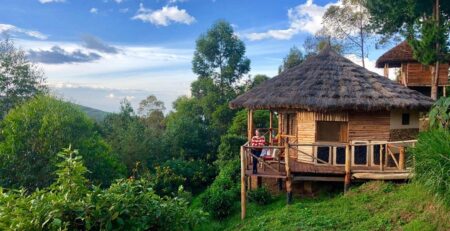
Bwindi Impenetrable Forest | $80 to $900+ per person/night | Clouds mountain gorilla lodge, Buhoma lodge, Bwindi lodge, Ichumbi gorilla lodge, Gorilla mist camp, etc |
Mgahinga Gorilla National Park | $60 to $400 per person/night | Mountain Gahinga lodge, Lake mulehe safari lodge, chameleon hill lodge, Mucha hotel Kisoro, etc |
Kibale National Park | $50 to $400 per person/night | Primate lodge, Chimpundu lodge, crater safari lodge, Kibale Forest lodge, etc |
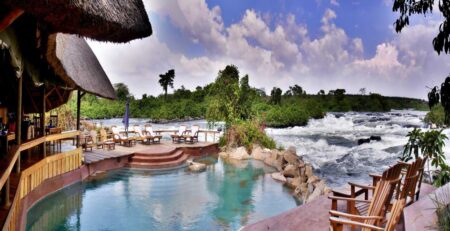
Queen Elizabeth (Kyambura Gorge) | $100 to $450 per person/night | Mweya safari lodge, Kyambura gorge lodge, Elephant plains lodge, Engiri game lodge and campsite |
Murchison Falls (Budongo area) | $50 to $500+ per person/night | Sambiya river lodge, Entikko safari lodge, Murchison River loge, Paraa safari lodge, Red Chilli lodge |
What to Expect During the Trekking Experience
Each species involves a genuinely different kind of encounter, and setting the right expectations for each matter as much as choosing the right park.
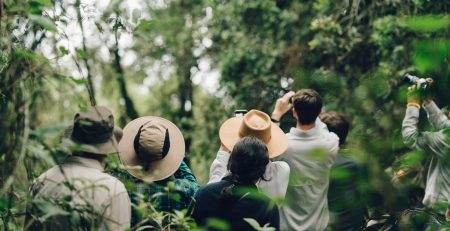
Gorilla trekking begins with an early morning briefing at your park’s headquarters, followed by a hike that can run anywhere from thirty minutes to several hours depending on where the habituated family has moved since the previous day’s tracking.
Once found, you’re allowed a strictly regulated hour with the group, at a mandated distance, before quietly withdrawing. Chimpanzee tracking follows a broadly similar structure but with more movement involved, since chimps range further and move faster through the canopy than gorillas do on the ground. Golden monkey trekking is generally shorter and less physically demanding, given Mgahinga’s more compact bamboo forest habitat. Red colobus viewing typically happens as part of a broader guided forest walk in Kibale, without the same strict single-hour structure, giving a more relaxed, open-ended encounter.




Leave a Reply