

Mount Rwenzori Hiking Equipment: The Complete Gear Guide for Africa’s Mountains of the Moon
Bujuku Eco Tours2026-07-01T22:48:03+03:00The Rwenzori gets under a thousand visitors a year, compared to fifty thousand for Kilimanjaro. That relative obscurity means most of the gear articles written for African mountain trekking are calibrated for the dry volcanic cone of Kilimanjaro rather than for a mountain range that generates its own weather, sits inside a rainforest, and does not stop being wet just because the season is technically dry. What works on Kili does not necessarily work here, and the stakes of getting the gear wrong on the Rwenzori where the wetness is relentless and the temperature range extreme are higher than on many mountains that receive more media attention.
This guide gives you a comprehensive equipment list for a Rwenzori trek. It covers every zone of the mountain, explains why specific items matter, tells you what is available for hire at the trailhead so you do not over-pack or over-spend, and gives you the advice that comes from guiding real people up and down these peaks rather than writing gear lists from a desk.
Two Types of Rwenzori Trek with Two Different Equipment Requirements
Non-summit trekking (up to 4,000 meters): Routes like the Mutinda Lookout, the Waterfalls Circuit, and the lower sections of the central circuit take you up to roughly 3,975 meters. These treks require serious hiking equipment waterproof everything, warm layers, trekking poles but not technical mountaineering gear. No crampons, no ice axes, no harnesses. This is the route accessible to fit, non-specialist hikers who have solid mountain walking experience.
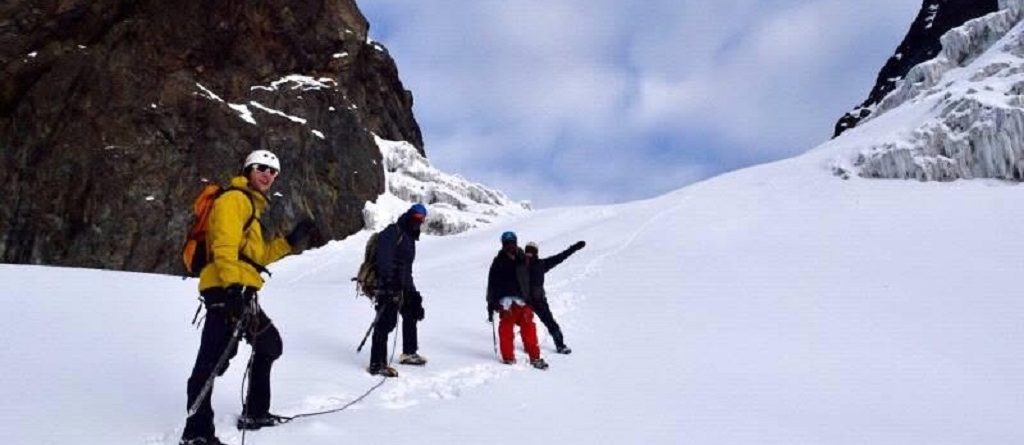
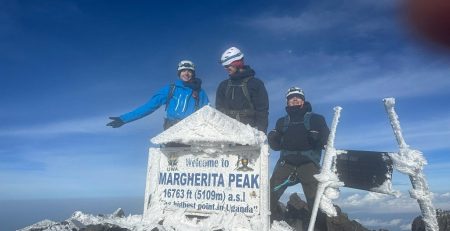
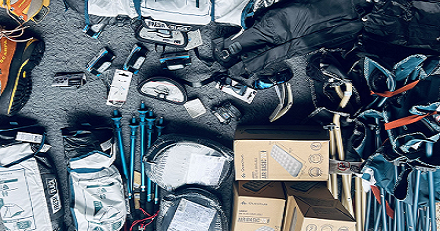
Summit trekking to Margherita Peak (5,109 meters): The full central circuit route to Margherita Peak requires crossing glaciers and navigating technical ice and rock terrain at over 4,800 meters. This requires crampons, an ice axe, a harness, a helmet, and ropes. It is classified as a technical climb, and Uganda Wildlife Authority now requires all Margherita summit attempts to be done with a certified and trained mountain guide who carries the technical equipment. Most of the technical gear can be hired at bujuku eco tours office who are the leading Rwenzori mountains climbing expedition organizers in Uganda.
Footwear — The Most Important Equipment Decision You Will Make
Hiking Boots
The non-negotiable for any Rwenzori trek is a pair of genuinely waterproof, ankle-supporting hiking boots with a proper lug sole. The emphasis is on genuinely waterproof not water-resistant, not treated with DWR spray, but boots with a waterproof membrane (Gore-Tex or equivalent) that will resist sustained immersion. On the Rwenzori, you will step in puddles, cross streams, push through wet vegetation, and walk through bog sections where the ground is saturated regardless of weather conditions above. A boot that leaks after two hours leaves you with wet feet for the rest of the day, and wet feet at altitude in falling temperatures is both uncomfortable and potentially dangerous.
Gaiters
Gaiters are one of those items that first-time Rwenzori trekkers often question and experienced Rwenzori trekkers never leave behind. They strap over your boots and extend up your lower leg, sealing the junction between boot and trouser and keeping mud, water, insects, and debris out of your boot throughout the day. On a mountain where the lower trails run through saturated vegetation and the bog crossings are frequent, gaiters keep your feet significantly drier than they would otherwise be. Full-length gaiters (covering from ankle to below the knee) are preferable to ankle gaiters, which are too short to be effective in the deepest bog sections.
Camp Footwear
Bring a pair of lightweight sandals, flip-flops, or camp shoes to wear inside the mountain huts in the evening. Your hiking boots will be wet by the end of the day and will dry overnight inside the hut. Having something else to wear in the hut even simple flip-flops makes the evening considerably more comfortable and lets your feet breathe after a long day in wet boots.
Clothing — The Layering System That Actually Works
The Rwenzori requires a more sophisticated clothing approach than most hiking destinations because of the extreme range of conditions across its altitude zones and the persistence of the moisture. A clothing system that keeps you comfortable in the humid forest at 1,800 meters needs to also keep you functioning on a glacier at 4,800 meters at 3am. The system that works is a well-executed layering approach with three distinct layers each with a specific function and completely waterproof outer protection.
Base Layer — Moisture Management Against the Skin
Your base layer does one job: move sweat away from your skin. In the lower forest zone, you will sweat heavily from the physical exertion and the humidity. A base layer that traps that moisture against your skin becomes cold and uncomfortable as soon as you stop moving, and in the cold upper zones that discomfort can become dangerous. Synthetic moisture-wicking fabrics (polyester, nylon) or merino wool work well. Cotton does not it absorbs sweat, stays wet, and turns cold against your body. This is the single most consistent advice from every experienced Rwenzori guide: no cotton base layers.
Pack two thermal base layer sets top and bottom so you have a dry set to sleep in each night while the trekking set dries in the hut. At the upper altitude camps, a heavier weight merino wool base layer provides better thermal protection without adding significant weight.
Mid Layer — Insulation for Warmth
The mid layer sits over the base layer and provides insulation. A fleece pullover or lightweight fleece jacket is the standard choice for the lower and middle mountain. It should be warm enough to wear in the evenings at the middle-altitude camps (around 3,000 to 3,500 meters), where temperatures drop significantly after dark. Pack this layer in your daypack and add it when you stop for any significant rest the temperature drops when you stop moving at altitude is fast.
For the upper mountain camps above 4,000 meters particularly Elena Hut at around 4,541 meters, which is the standard base for the Margherita summit attempt a significantly warmer insulating layer is needed. A lightweight down jacket or heavy synthetic insulation jacket provides the warmth required for evenings and early morning summit departure at these altitudes. Temperatures at Elena Hut can drop below -5°C before dawn, and standing still on the glacier in the dark at 4,800 meters requires serious insulation over your base layer.
Outer Layer — Hardshell Waterproof, Not Water-Resistant
This is where a lot of Rwenzori trekkers underestimate the mountain and pay for it. The outer layer needs to be a genuine hardshell waterproof jacket with fully sealed or taped seams. Not a soft-shell with a DWR coating. Not a ‘shower-proof’ windbreaker. A proper waterproof shell that can handle sustained rain over multiple hours because on the Rwenzori, that is exactly what it will face.
Sleeping Equipment
Sleeping Bag
Your sleeping bag is the most important piece of equipment for the nights on the Rwenzori and it is the one where cutting corner has the most serious consequences. The mountain huts at middle and upper altitude can be cold significantly colder than the thin walls suggest when you are inside a sleeping bag in the small hours. At Elena Hut (4,541m), summit night temperatures can drop well below 0°C. Your sleeping bag needs to be rated to at least -10°C for a Margherita summit attempt, and at least 0°C for non-summit trekking to the middle mountain camps.
Sleep Mat
The mountain huts on both the central circuit and Kilembe route provide mattresses or foam pads. You do not need to carry a full sleeping mat for hut-based trekking. A lightweight inflatable sit pad for rest stops on the trail is useful and takes almost no space in the pack.
Trekking Equipment
Trekking Poles bring them, both of them
Trekking poles are not a luxury on the Rwenzori. They are a functional tool that reduces fatigue, provides balance on slippery terrain, and distributes the physical load between your upper and lower body on a long day of climbing. The steep, wet slopes and bog crossings of the Rwenzori benefit from the stability that poles provide more than almost any other mountain environment we know of.
Bring two poles. Collapsible poles that pack into a bag for the flight are ideal. Make sure the lower sections are secure the mud on the Rwenzori will pull at poles aggressively and a loose lower section makes a pole useless. Rubber tips on the basket ends provide better grip on rock surfaces; standard baskets work in mud and bog. Carry both and swap as terrain changes.
Pack and Daypack
Your main pack the one that carries your full kit for the trek will be carried by a porter. This is not optional vanity. It is the sensible division of labor on a long mountain trek and it supports the local porter community economically. The main pack can therefore be a full-size soft duffel or trekking pack of 50 to 70 litres. It needs to be soft-sided for the narrow hut storage and it needs to be fully waterproofed either with a pack rain cover or by putting all contents in dry bags and heavy plastic bags inside. On the Rwenzori, water finds its way into everything not actively protected from it.
Crampons and Technical Summit Gear
If you are planning to summit Margherita Peak, crampons are essential and non-negotiable. The approach from Elena Hut to the summit ridge crosses permanent glacier ice at over 4,700 meters, and without crampons you cannot safely navigate this terrain. Crampons for mountaineering (not trail crampons or microspikes) strap to your boots and provide the grip on hard ice that makes movement possible.
Headlamp
The summit attempt on Margherita departs from Elena Hut at around midnight to 2am, depending on your guide’s assessment of conditions. You walk on glacier ice in the dark to reach the summit at dawn. A reliable headlamp with fresh batteries is non-negotiable. Pack spare batteries for the headlamp in your main pack cold temperatures reduce battery life significantly, and the last thing you want is a dimming headlamp on the summit ice.
A headlamp is also useful on every day of the trek for early morning departures, navigating huts in the dark, and the occasional afternoon arrival when fading light and dense cloud make the trail difficult to see. Bring it in your daypack, not your main pack.
Water Bottles and Hydration
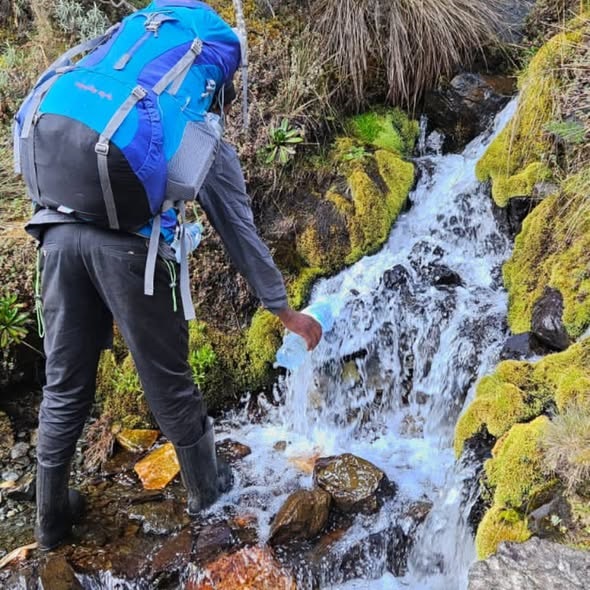
Two to three litres of water carrying capacity is appropriate for Rwenzori trekking days. Water on the mountain is abundant streams, waterfalls, and rainwater are everywhere and your trekking company will boil water at each hut for drinking and fill your bottles before departure each morning. Water purification tablets are good insurance for the occasions when a stream crossing makes a quick refill tempting without waiting for the boiled hut supply.
Sun and Weather Protection
The equatorial sun above the cloud line on the Rwenzori is intense in a way that lower-altitude walkers consistently underestimate. At 4,000 meters and above, you are above much of the atmosphere that normally filters UV radiation. The reflection off snow and glacier surfaces amplifies exposure further. Even on overcast days which are common on the Rwenzori significant UV reaches the upper mountain.
- Sunscreen (SPF 50 or higher)
- Glacier sunglasses
- Lip balm with SPF
- Insect repellent (DEET 30%+)
- Anti-chafe cream or balm
Medical and First Aid Equipment
Medical facilities near the Rwenzori Mountains are limited, and evacuation from the mountain in the event of a serious incident is time-consuming and expensive. A well-stocked personal first aid kit is not optional gear it is part of responsible preparation for any mountain trek of this scale.
Altitude Sickness — What to Know
Acute mountain sickness (AMS) can affect anyone at altitude regardless of fitness level, age, or prior experience. The Rwenzori’s altitude particularly above 3,500 meters puts trekkers in the range where AMS becomes a genuine consideration. Symptoms include headache, nausea, dizziness, fatigue, and difficulty sleeping. More serious forms (High Altitude Pulmonary Edema HAPE and High-Altitude Cerebral Edema HACE) are rare but life-threatening.
The best prevention is proper acclimatization ascending gradually, spending at least one night at intermediate altitude before pushing higher, drinking plenty of water, and not ascending if you have significant AMS symptoms. Your guide is trained to recognize AMS and has the authority to insist on descent if they believe a trekker’s condition is deteriorating. Listen to your guide on this. No summit is worth a serious altitude incident.
Photography and Electronics
The Rwenzori is one of the most visually extraordinary mountains in Africa. The giant lobelia plants some of them several meters tall, looking like something from a science fiction film the ancient tree heather draped in lichen and moss, the glaciers on the equator, the mist rolling through the forest in the early morning it is a landscape that rewards good photography. But the persistent moisture creates real challenges for camera equipment.
- Camera
- Dry bag for camera
- Extra batteries
- Memory cards
- Power bank
- Phone or GPS device

Leave a Reply