

A Guide to Climbing Mount Kilimanjaro: Routes, Huts and Prices
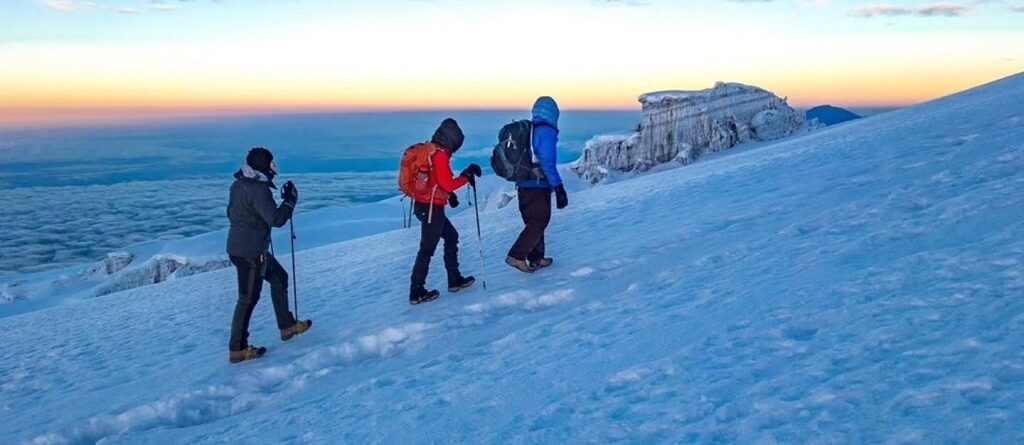
Harrison2026-10-14T18:49:21+03:00Climbing Mount Kilimanjaro is one of Africa’s most rewarding trekking adventures. Located in northern Tanzania, Mount Kilimanjaro is Africa’s highest mountain, rising to 5,895 metres above sea level at Uhuru Peak. The climb takes you through beautiful rainforests, heathland, alpine deserts and snowy summit landscapes.
Whether you are planning your first mountain adventure or looking for a challenging trekking experience, choosing the right route is essential. This guide to climbing Mount Kilimanjaro explains the main routes, mountain huts, climbing prices, the best time to visit and what to expect on the journey.
Which Are the Best Routes to Climb Mount Kilimanjaro?
Mount Kilimanjaro has several established climbing routes, each offering different scenery, durations and acclimatisation opportunities. Most climbers spend between five and nine days on the mountain, depending on the route and itinerary.
- Marangu Route
The Marangu Route, often called the Coca-Cola Route, is the only standard Kilimanjaro route with permanent sleeping huts. It approaches the mountain from the southeast and is popular with climbers who prefer sleeping indoors rather than in tents.
The route usually takes five or six days. A six-day itinerary is generally preferable because it allows an additional acclimatisation day. Climbers pass through rainforest, moorland and alpine terrain before attempting the summit.
Best for: Trekkers who prefer hut accommodation and a well-established trail.
Day by day itinerary for 6 days Marangu Route
Day 1: Mandara Huts
Once you have finished breakfast, it is time to leave Arusha and head towards the southeast entrance of Kilimanjaro National Park, better known as Marangu Gate (1,860m). Upon arriving at Marangu Gate, you will be given the time to check-in and register. This is where you begin your ascent of Kilimanjaro.
The first hike of this route takes you through the woods and the rainforest where you will be able to take in the eucalyptus trees and various species of birds. If you are lucky, you may just spot a Colobus monkey or two – keep an eye out for black or white fur! Make sure you have the appropriate equipment and footwear because the low altitudes can produce wet, muddy soil.
Hiking: 5-7 hours
Mandara Hut Altitude: 2,720m
zone: Montane Rainforest.
Day 2: Mandara Huts – Horombo Huts
To start off day 2, you will explore the final stretch of woodland as the massive stretch of moorland begins to open up right in front of your eyes. On your walk, you can appreciate the jagged peaks of Mawenzi that ascend up towards the skies of Africa. It is common for people to experience the onset of altitude sickness at these heights. It is important to pay attention to how you feel and communicate with your guide at the first and slightest indication of illness. After reaching the Horombo Huts, you will have time to unpack and experience the view of Kibo before dinner.
Hiking: 5-7 hours
Horombo Hut Altitude: 3,720m
zone: Heather/Moorland
Day 3: Acclimatization Day
You will spend an extra day at the Horombo Huts to allow your body to acclimate to the increasingly high altitude. You must stay at camp and relax if you are showing any signs of illness or are feeling especially tired. However, if you feel well-acclimated to the altitude, then you are free to walk up to Mawenzi Hut and admire the incredible view of Kibo and Mawenzi. Keep a steady pace and you walk the route and enjoy the magnificent landscape. Otherwise, you can take a journey to the remarkable Zebra Rocks. This requires a climb of 310 metres.
Hiking: 1-2 hours
Altitude:
Zone: Heather/Moorland
Day 4: Horombo Huts – Kibo Huts
On day 4, you will walk through varied and strikingly picturesque landscapes. To begin, you will continue across the heather forest as it slowly turns into the parched, desolate highlands between Mawenzi and Kibo. The scenery here is littered with huge and small volcanic rocks, acting as a testament to the volcanic activity of years past. The final stretch to the Kibo Huts is very steep and physically challenging.
Once you arrive at the Kibo Huts, it is time to organize your equipment and warm clothes for tomorrow’s journey to the peak. To prevent freezing, keep any water your plan on bringing in a thermos. Get to bed early, as the next day’s trek requires a full night’s sleep worth of energy. You are getting ready to take on Kilimanjaro’s most ultimate challenge!
Hiking: 5-7 Hours
Altitude: 4,703m
Zone: Alpine
Day 5: Kibo Huts – Gilman’s Point – Uhuru Peak – Horombo Huts
As you awake around midnight, there is just enough time for a small meal before you begin your nightly hike. Many hikers consider the difficult terrain, scattered with loose rocks, to be the most difficult part of the climb. The goal is to reach Gilman’s Point by dawn. This is to make sure that you can make it to Uhuru, the highest point of Kibo, shortly after sunrise. There will be a quick stop at Gilman’s Point to experience the glorious view. Afterward, you will continue along the edge of the crater to Uhuru – this is the last part of the ascent and features a steady incline.
Depending on when you take your journey, you may face snow on the final stretch of the path to the Uhuru Peak – the highest point in Africa and the very top of Kilimanjaro. As you reach the peak, an altitude of 5,895, you can congratulate yourself as you experience the astounding view and get a picture in front of the Uhuru Peak Sign.
Now it is time to start back towards the Kibo Huts, you will find that this part goes by incredibly quickly. At the Kibo Huts, you will stop to relax and enjoy a much-needed lunch, before moving along to the Horombo Huts, where you will enjoy a well-deserved full night’s rest.
Hiking: 4-5 Hours
Altitude: 5,895m-
Day 6: Horombo Huts – Marangu Gate – Arusha
As we make the final descent through the rainforest to the Marangu Gate, we will have lunch and say farewell to our mountain crew. Afterward, we will leave Mount Kilimanjaro National Park and drive back to Arusha for a much-need shower and a commemorative dinner!
Hiking: 5-7 Hours
Altitude: 1,860m
Zone: Alpine
- Machame Route
The Machame Route, also known as the Whiskey Route, is one of the most popular ways to climb Kilimanjaro. It is known for its scenic landscapes and varied terrain, including forest trails, rocky ridges and expansive high-altitude views.
The climb typically takes six or seven days, with the longer itinerary offering more time to acclimatise. Accommodation is in mountain tents at designated campsites.
Best for: Active travellers looking for scenic trekking and a good balance between adventure and acclimatisation.
Day by day itinerary for 7 days Machame Route.
Day 1: Arusha – Machame Camp
Hiking time: 5-7 hours
Drive from Arusha to Mt Kilimanjaro National Park, passing by the village of Machame to meet your climb crew at the Machame Gate. As you begin the gentle ascent, the trail winds though the verdant Afromontane rainforest that beards Kilimanjaro’s lower slopes. Moss and tattered lichen dangles from tall branches, tree ferns rest in soft cradles, and begonias, busy lizzie impatiens, and violas bloom year-round in multiple colors on the forest floor. Many species of birds – as well as colobus monkeys, blue monkeys and other creatures of the forest – can be seen and heard. The first camp is set amongst giant heather at Machame Camp.
Day 2: Shira Camp
Hiking Time: 4-6 hours
Leaving the glades of the rainforest behind, you continue on an ascending path along a steep ridge onto heather-clad moorland. This is known as the heath zone and, as the vegetation becomes more sparse, attractive helichrysum and lobelia are the only plants dominating the harsh mountain landscape. Various geological features can be observed, ranging from lava tubes to glacial valleys.
A picnic lunch is taken on trail today. Continue up a rocky ridge onto the Shira Plateau. By now you can see the Western Breach with its stunning glaciers, and after a short hike you reach the Shira Camp. Your tent tonight can definitely be described as “a room with a view” looking out towards the snow-dusted Kibo peaks. Overnight Shira Camp.
Day 3: Barranco Camp
Hiking Time: 6-8 hours
Today is a walk-high sleep-low day. You ascend into alpine desert towards the main peak of Kibo, where the western glaciers become clearly visible. Lunch is taken as a picnic en route. If you feel very strong there is an optional ascent of the 300-foot-tall Lava Tower before descending to Barranco Camp in the afternoon, passing through the strange yet beautiful ‘Garden of the Senecios’ (giant groundsel), which also features many giant lobelias. The Barranco Valley is one of the prettiest areas of the entire trail. This is long day but the next time you head to this altitude is in two days’ time, making this a great acclimatization day! Overnight at Barranco Camp.
Day 4: Karanga Camp
Hiking Time: 4-5 hours
You now have a relatively short day to reach Karanga Camp, after conquering the intimidating Barranco Wall. Be prepared to use all four limbs as you traverse the wall to the top of the Karanga Valley. From here, follow a path that sojourns through many inclines and declines to Karanga Camp, arriving in the late afternoon. Our selection of Karanga Camp is strategic – significant time at altitude is essential for safe acclimatization. Sunsets here are particularly spectacular with views of the southern glacial valleys and ice fields towering over 3000 feet above you. Overnight at Karanga Camp.
Day 5: Barafu camp
Hiking time: 4-5 hours
Today is another half day ascending to Barafu Camp. Once again lunch is taken in this high camp, allowing plenty of time to relax before the summit bid. Desolate alpine desert and, at times, strong winds rip over this camp, yet in the evening’s splendid views of Mawenzi Peak are the norm. A relatively early dinner is taken before resting for the evening. Overnight at Barafu Camp.
DAY 6: Summit Ascent, Mweka Camp
Hiking time: 7-8 hours ascent, 4-6 hours descent
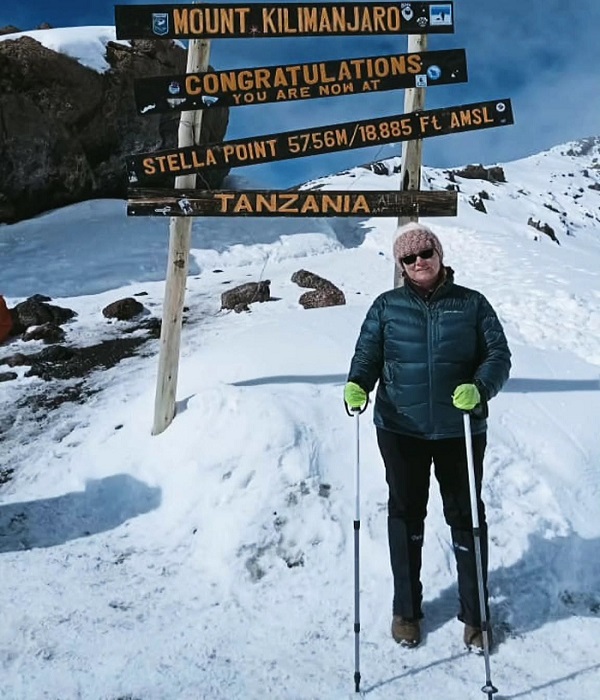
Depart just before midnight for the final summit bid. Patience and persistence is the name of game to reach the summit, and this is the coldest, windiest section of your adventure. Most likely by dawn, as the first rays of light start to appear across the Tanzanian landscape, you arrive near the rim at Stella Point, at an altitude of 18,652ft. Here, you are rewarded with the most glorious sunrise you are ever likely to see, appearing over Mawenzi Peak.
Ascending via Stella Point affords a relatively short final section to Uhuru Peak, the Roof of Africa! Take as many pictures as you can! After a short celebration at the summit, begin the ebullient trek down. Go slowly and enjoy the wonderful rainforest scenery as you head towards Mweka Camp, arriving before dusk. With every step the air has more and more oxygen so although your legs will be jelly your heart will be light. Overnight Mweka camp.
Day 7: mweka camp – Arusha.
Descend duration: 3-4 hours
After breakfast you descend once again through montane forest and at around midday, after saying farewell to your crew, you are picked up and transferred back to your hotel for a well-deserved shower and a celebratory dinner!
3: Lemosho Route
Detailed itinerary for 7 days Lemosho route
Day 1: Arusha to Forest Camp
Hiking Time: 4 hours
From Arusha, set out in vehicles for the long drive to the starting point of the Lemosho Trail, the Londorossi Gate. Approaching the mountain from the west, the Lemosho Route starts in the Afromontane Rainforest, which is the first of four ecological zones you encounter on Kilimanjaro. Here you meet the rest of your crew and set off at a leisurely pace while keeping your eyes peeled for wildlife. Lunch is taken on the trail and camp is reached mid-afternoon. Overnight at Forest Camp.
Day 2: Forest Camp to Moir Hut Camp
Hiking time: 5-6 hours
From the forested slopes of Lemosho you ascend through a podocarpus and juniper forest and then break out on to a zone of heather and lichen-draped volcanic rock and the Shira Plateau, which used to be Kilimanjaro’s third peak before it collapsed. Lunch is taken on the trail and you arrive in camp mid-afternoon. The view of Kibo (the peak of Kilimanjaro) is breathtaking from this vantage point. Overnight at Moir Hut.
Day 3: Moir Hut Camp to Barranco Camp
Hiking Time: 4-6 hours
From Moir you traverse the slopes of Kibo. Here relatively little flora or fauna can survive the extreme temperature ranges and conditions that typify this zone. Lunch is normally taken close to a volcanic rock formation known as the Lava Tower. If you feel very strong there is an optional ascent of the 300-foot-tall Lava Tower before descending down to Barranco camp in the afternoon, passing through the strange yet beautiful ‘Garden of the Senecios’ (giant groundsel) which also features many giant lobelias. The Barranco Valley is one of the prettiest areas of the entire trail. Overnight at Barranco Camp.
Day 4: Barranco Camp to Karanga Camp
Hiking time: 4-5 hours
You now have a relatively short day to reach Karanga Camp, after conquering the intimidating Barranco Wall. Be prepared to use all four limbs as you traverse the wall to the top of the Karanga Valley. From here, follow a path that sojourns through many inclines and declines to Karanga Camp, arriving in the late afternoon. Our selection of Karanga Camp is strategic – significant time at altitude is essential for safe acclimatization. Sunsets here are particularly spectacular with views of the southern glacial valleys and ice fields towering over 3000 feet above you. Overnight at Karanga Camp.
Day 5: Karanga Camp to Barafu Camp
Hiking duration: 7-8 hours ascent, 4-6 hours descent
Today is another half day ascending to Barafu Camp. Once again lunch is taken in this high camp, allowing plenty of time to relax before the summit bid. Desolate alpine desert and, at times, strong winds rip over this camp, yet in the evening splendid views of Mawenzi peak are the norm. A relatively early dinner is taken before resting for the evening. Overnight at Barafu Camp.
Day 6: Barafu to the Summit to Mweka Camp
Trek hours: 3-4 hours
Depart just before midnight for the final summit bid. Patience and persistence is the name of game to reach the summit, and this is the coldest, windiest section of your adventure. Most likely by dawn, as the first rays of light start to appear across the Tanzanian landscape, you arrive near the rim at Stella Point, at an altitude of 18,652ft. Here, you are rewarded with the most glorious sunrise you are ever likely to see, appearing over Mawenzi Peak.
Ascending via Stella Point affords a relatively short final section to Uhuru Peak, the Roof of Africa! Take as many pictures as you can! After a short celebration at the summit, begin the ebullient trek down. Go slowly and enjoy the wonderful rainforest scenery as you head towards Mweka Camp, arriving before dusk. With every step the air has more and more oxygen so although your legs will be jelly your heart will be light. Overnight Mweka Camp
Day 7: Mweka Camp to Arusha
Trek hours: 4-7 hours
After breakfast you descend once again through montane forest and at around midday, after saying farewell to your crew, you are picked up and transferred back to your hotel for a well-deserved shower and a celebratory dinner!
The Lemosho Route approaches Kilimanjaro from the west and is particularly attractive for its remote scenery and gradual ascent. Climbers pass through forest and open highland landscapes before joining the southern circuit toward the summit.
The route generally takes seven to eight days, although longer itineraries are available. Its extended duration can help the body adjust to altitude.
Best for: First-time climbers and travellers who want a scenic route with more acclimatisation time.
- Rongai Route
The Rongai Route approaches Kilimanjaro from the north, near the Kenyan border. It is often quieter than the busier southern routes and may be worth considering during periods of heavier rainfall.
The climb usually takes six or seven days. Accommodation is in tents, and the descent generally follows the Marangu side of the mountain.
Best for: Climbers seeking a quieter approach and a different perspective of Kilimanjaro.
Day by itinerary for 7 days Rongai Route
Day 1: Arusha to Rongai Gate to Simba Camp
Trek hours: 4 hours
After breakfast in your hotel, you will be given an overall briefing from your guide. At 9am you will be met by the rest of our guides and porters and then we will drive you to the Kilimanjaro National Park. Note that climbers using Rongai route usually have their registration at Marangu Park Gate. our staff will do a final cross-check of equipment and supplies and pack the vehicles. After the registration you will be transferred further 70 kilometres on poor roads to the Rongai Start Point at 1,950 meters.
The trek begins from Nale Moru village and follows a gradual and winding trail that first crosses maize and potato fields before entering the rainforest which is occupied by various wildlife. After 4-5 hours trekking, you will be welcomed with boiled washing water and some snacks before dinner is served in the mess-tent.
Day 2: Simba Camp to 2nd Cave Camp
Trek time: 3-4 hours
You will be woken up after your first night on the mountain with a nice cup of coffee, tea or hot chocolate at 06:30am in your tent. After breakfast you start your climb on a trail continuing up towards Kibo. For most of the day you will be walking up slopes flanked with heather and erica with a nice view on the twin peaks of Kilimanjaro – Mawenzi and Kibo and your first glimpse of the ice fields on the Eastern crater rim.
Once we approach second cave our cook will welcome you in the camp with boiled drinking water and hot washing water. You can put your feet up with some snacks and a hot lunch. After lunch, there is plenty of time to relax and enjoy the spirit of the camp and to take pictures.
Day 3: 2nd Camp cave to Kikelewa Camp
Trek time: 3-4 hours
From Second Cave the path takes an abrupt south-easterly turn directly towards the jagged peak of Mawenzi. Traversing open moorland you stumble into Kikelewa Camp, situated by a couple of caves by the Kikelewa River with giant groundsels and lobelias flourishing nearby. The views start to open up and from Kikelewa Camp you will see for yourself how huge Mt. Kilimanjaro features.
Day 4: Kikelewa Camp to Mawenzi Tarn Hut
Trek time: 4 hours
Though this stage to Mawenzi Tarn is relatively short at less than 4-5km and it is usually completed in the morning. The climb is also steep as you gain 660m, the path shedding the moorland vegetation as it climbs steadily. The Mawenzi Tarn Hut is situated in one of the most spectacular settings, in a cirque beneath the jagged teeth of Mawenzi. In the afternoon we offer you another walk up the ridge in the west for better acclimatization. If you are lucky and the sky is clear, you will enjoy fantastic views of kibo.
Day 5: Mawenzi Tarn Hut to Kibo hut
Trek Time: 5-6 hours
This lovely day begins with a slight retracing of your steps before you strike out west-wards, crossing the ridge and dropping down the slope to tiptoe along the beautiful barren Saddle’s northern edge. With views like screensavers to east and west, this day is the most favoured day on the mountain. Our destination for today will be Kibo Campsite, which offers you again a spectacular view on the Kibo.
We will arrive at the camp very early and you get served hot lunch. In the afternoon our guides will give you a final briefing to prepare you for the summit day. Time to relax, to cross check and prepare your equipment and clothing. Dinner will be served very early to give you ample time to rest and sleep. Good food, lots of water and sleep are the keys for a successful summit. We advise you to be to bed before 7pm to be rested for your wake-up hot drink at 11:30pm.
Day 6: Kibo Hut to Gilman’s Point to Uhuru Peak – Horombo Hut
Hiking time: 6-8 hours ascent, 4-5 hours descent
The wake-up tea will be served at 11:30pm with the departure at midnight. After a hot drink and some biscuits, we will start the challenge for the summit. Our initial 6-hour climb begins in the dark with only our headlamps and guides to show us the way. Just remember the golden rule ‘pole, pole’, which means slowly, slowly. There are a number of landmarks on the way: William’s Point at 5.131m, Hans Meyer Cave at 5.259m that act as milestones break up the journey and provides you with some measure of your progress.
At Gilman’s Point (5.681m) you will see what might be the most magnify-cent sunrise in your life so far. After taking some pictures at the sign and enjoying a fantastic view of Mawenzi, we continue our climb on a part of the Marangu Route for 1-2 more hours to reach your ultimate goal – the summit – the highest peak of Africa – Uhuru Peak at 5.985m. Congratulations! You are now standing on ‘the roof of Africa’s. Our guides will take pictures of you and post it on Facebook for your family and friends at home.
After a few minutes spent at the summit, due to the altitude and the cold, it is important to start our descent. After the descent the rest of our team will congratulate you and welcome you with a hot lunch at Kibo Camp. You will have the chance for a break before we start the next descent to Horombo Hut. After this long day, you can enjoy your dinner and your last night on the mountain.
Day 7: Horombo Hut to Marangu Gate to Arusha
Hiking time: 5-7 hours
you will be woken for your final celebratory break-fast where our team will thank and con-gratulate you in their unique, special way! This is also the opportunity for you to say thank you for their support and encouragement and show your appreciation by giving tips. We continue our descent by passing Mandara Hut down to Marangu Gate. There you will get the chance to have a celebratory beer while the equipment is loaded in the van and then it is off to a restaurant in Moshi for lunch where you will be presented with your certificate of achievement. After lunch you will dropped off at your hotel, where you can relax under a long, well deserved hot shower.
- Northern Circuit Route
The Northern Circuit is one of the longest routes on Kilimanjaro, usually taking eight to nine days. It approaches from the west before circling around the quieter northern slopes.
The longer itinerary offers valuable time for acclimatisation and spectacular views across different sides of the mountain.
Best for: Travellers with enough time and budget who prioritise gradual acclimatisation
Day by day itinerary for 9 days Northern Circuit Route
Day 1: Arusha to Londorossi Gate to Mti Mkubwa /Forest Camp
Trek time: 3-4 hours
After breakfast in your hotel, you will be given an overall briefing from your guide. At 9am you will be met by our staff, who will drive you several hours to the Western side of Mt. Kilimanjaro and to the Londrossi Gate, where our guides and porters will prepare and pack the equipment and supplies Once at the gate you will be given a packed lunch and after registration with the Kilimanjaro Park office, we will drive for another 45mins to Lemosho Glades where your trek will begin with ascending into the rainforest.
You will ascend for approx. 3 hours in dense rain forest which could be very wet and muddy so be ready with your gaiters and trekking poles. During the trek we will have a break and you can enjoy the rest your packed lunch. We will reach the Mti Mkubwa Camp also known as ‘Big Tree’ Camp in late afternoon. After arrival, you will be taken to your camp and tent which has already been set up by the porters who ran ahead, where you will be greeted with boiled drinking water and hot washing water. Once you have freshened up and settled in, a hot dinner will be served in the mess-tent.
Day 2: Forest Camp to Shira 1 Camp
Trek Time: 5-6 hours
From the forested slopes of Lemosho you ascend through a podocarpus and juniper forest and then break out on to a zone of heather and lichen-draped volcanic rock and the Shira Plateau, which used to be Kilimanjaro’s third peak before it collapsed. Lunch is taken on the trail and you arrive in camp mid-afternoon. The view of Kibo (the peak of Kilimanjaro) is breathtaking from this vantage point. Overnight at Shira 1 Camp.
Day 3: Shira 1 to Shira 2
Trek Time: 3-4 hours
After breakfast you will continue on your hike across and up the Shira plateau to Shira Camp 2 at 3,850 meters. Here you will join trekkers from the Machame Route whilst enjoying stunning view across the valley below and Western Breach of Kilimanjaro above. The plateau is exposed so be prepared for a cold night with temperatures getting below zero.
Day 4: Shira 2 to Moir Hut Camp
Trek Time: 5-7 hours
We leave the forest behind now and a gentle grade walk takes you across the high-altitude Shira Caldera to Shira Cave with fabulous views of Arrow glacier. We will camp here for the night at 4200m.
Day 5: Moir Camp to Buffalo Camp/Pofu Camp
Trek Time: 5-7 hours
We climb out of the Moir Valley and take a short detour to reach the summit of Lent Hills (15,400ft). After admiring the views, we return to the trail and head eastwards around the northern circuit trail. The final section of today’s walk undulates until reaching the location of Pofu Camp.
Day 6: Buffalo Camp / Pofu to Third Cave
Trek time: 5-7 hours
From Pofu Camp we cross numerous small valleys as the trail continues eastwards through a landscape that has increasingly sparse vegetation to eventually reach Third Cave Camp.
Day 7: Third Cave to School Hut Camp
Trek time: 4-5 hours
There is a steady ascent to reach the saddle, a lunar landscape between the peaks of Kibo and Mawenzi. From here we continue upwards and reach School Hut in the early afternoon. The remainder of the afternoon is spent resting and preparing for the summit day.
Day 8: School Hut to Uhuru Peak to Mweka Camp
Trek Time: 6-8 hours ascent, 4-6 hours descent
We start the final and most demanding part of the climb at around 1:am on a switchback trail through loose volcanic screen to reach the crater rim at Gillman’s Point We rest here for a short time to enjoy the spectacular sunrise over Mawenzi. We then head on to Uhuru Peak, passing close to the spectacular glaciers and ice cliffs that still occupy most of the summit area. We retrace our steps along the crater rim to Stella Point and then descend down through Barafu Camp to reach Mweka Camp
Day 9: Mweka Camp – Mweka Gate
Trek Time: 3-4 hours
Once again you will be woken for your final celebratory breakfast where our team will thank and congratulate you in their unique, special way! We will then set off for the final 3-hour scenic descent to Mweka Gate. After lunch you will drop off at the hotel where you can relax under a long, well deserved hot shower.
- Umbwe Route
The Umbwe Route is a steep, demanding approach that gains altitude relatively quickly. It is less suitable for inexperienced trekkers because it offers a more challenging ascent profile.
The route commonly takes around six or seven days, depending on the itinerary.
Best for: Experienced, physically fit trekkers who understand the demands of high-altitude climbing.
Day by day itinerary for 6 days Umbwe Route
DAY 1: UMBWE GATE TO UMBWE CAVE CAMP
Trek time: 6 hours
We will register at Umbwe Park Gate before starting our trek. The small winding path leads us up through rainforest and along the Umbwe river. The first night’s camp is at Umbwe Cave Camp, at about 2,900m altitude.
DAY 2: UMBWE CAMP TO BARRANCO CAMP
Trek Time: 4-5 hours
We leave camp and shortly afterwards the forests end. We can see the sheer wall of the Western Breach appearing and disappearing as the afternoon mists roll up the Great Barranco. We will camp at Barranco camp for overnight stay
DAY 3: BARRANCO CAMP TO KARANGA CAMP
Trek Time: 4 hours
Today starts with a short, but fun, scramble, to the top of the Great Barranco Wall. We then traverse over scree to the Karanga Valley (3930m) beneath the icefalls of the Heim, Kersten and Decken Glaciers. We will stay overnight at Karanga campsite.
DAY 4: KARANGA CAMP TO BARAFU CAMP
Trek Time: 3 hours
We leave Karanga campsite behind to meet the junction connecting with the Mweka descent Trail. From here we continue up to the Barafu Hut. You have now completed the Southern Circuit, which offers views of the summit from many different angles. At camp, we can rest, enjoy dinner, and prepare for the summit day. The two peaks of Mawenzi and Kibo are to be clearly seen from this position.
DAY 5: BARAFU CAMP TO SUMMIT TO MWEKA HUT
Trek Time: 6-8 hours ascent / 7-8 hours descent.
You will wake up early for an early breakfast before midnight and your trek to the summit between the Rebman and Ratzel glaciers. We will head in a north-westerly direction and ascend through heavy scree towards Stella Point on the crater rim. This is the most mentally and physically challenging part of the trek. At Stella Point (5732m), we will stop for a short rest and will be rewarded with the most magnificent sunrise you are ever likely to see (weather permitting).
At Uhuru Peak (5895m), we will have reached the highest point on Mount Kilimanjaro and the continent of Africa. It can be very cold at night at these elevations, but it will be quite warm by the end of the hiking day. From the summit, we descend down to the Mweka Hut camp site, via Barafu for lunch. Trekking poles will be needed for the loose gravel going down to Mweka Camp (3100m). Later in the evening, we will enjoy our last dinner on the mountain and a well-earned sleep.
DAY 6: MWEKA CAMP TO HOTEL
Trek Time: 3-4 hours
We depart after breakfast descending down to the Mweka Park Gate to receive your summit certificates. At lower elevations, it can be wet and muddy. Gaiters and trekking poles will help. Shorts and t-shirts will be suitable (keep rain gear and warmer clothing handy).
Mount Kilimanjaro Routes Compared
Route | Typical duration | Accommodation | Main advantage |
Marangu | 5–6 days | Mountain huts | Indoor sleeping |
Machame | 6–7 days | Tents | Scenic and varied terrain |
Lemosho | 7–8 days | Tents | Gradual ascent and scenery |
Rongai | 6–7 days | Tents | Quieter northern approach |
Northern Circuit | 8–9 days | Tents | Extended acclimatisation |
Umbwe | 6–7 days | Tents | Steep, challenging approach |
For many first-time climbers, a seven-day Machame or eight-day Lemosho itinerary offers a useful balance of scenery, duration and acclimatisation. Individual fitness, health and altitude response still matter.
How Much Does It Cost to Climb Mount Kilimanjaro?
The cost of climbing Mount Kilimanjaro depends on the route, number of days, group size, season and tour operator. Longer climbs generally cost more because they require additional park fees, meals, crew support and accommodation.
As a preliminary budgeting guide, organised group climbs may fall within these approximate ranges:
Route | price per person |
Marangu, 5–6 days | $1,700–$2,100 |
Machame, 6–7 days | $1,900–$2,850 |
Rongai, 6–7 days | $1,800–$2,900 |
Lemosho, 7–8 days | $2,200–$3,200 |
Northern Circuit, 8–9 days | $2,500–$3,800 |
These are market estimates for planning 2026/2027, not fixed market rates or guaranteed prices. Obtain a current written quotation before booking.
A climbing package commonly includes park and camping or hut fees, guides, porters, meals on the mountain, drinking water arrangements and transfers between the hotel and trailhead. Depending on the operator, pre- and post-climb accommodation may also be included.
International flights, travel insurance, personal climbing equipment, tips, visas and some meals may be excluded. Always confirm the inclusions and exclusions before paying a deposit.
What Is the Best Time to Climb Mount Kilimanjaro?
The main recommended climbing periods are from December to early March and June to September. These periods often provide favourable trekking conditions, although weather can change quickly at high altitude.
January and February can offer relatively warm conditions and good visibility. June to September is another popular period, with cooler weather and generally drier conditions. March to May is usually wetter, while November can bring short rains.
No season guarantees clear skies or a successful summit. Prepare for cold temperatures, strong winds and possible snowfall near the top.
How Difficult Is Climbing Mount Kilimanjaro?
Kilimanjaro does not normally require technical mountaineering skills on its standard trekking routes, but it is physically demanding. The greatest challenge is often altitude rather than the distance alone.
Headaches, nausea, dizziness and unusual tiredness can indicate altitude sickness. Choose an itinerary with sufficient acclimatisation time, walk at a steady pace, follow your guide’s instructions and report symptoms immediately. Severe symptoms require urgent descent and medical assessment.
You should prepare with regular walking, hill training, stair climbing and endurance exercise. Appropriate hiking boots, warm layers, waterproof clothing and a sleeping bag suited to freezing temperatures are essential.
What Should You Pack for Kilimanjaro?
Packing right for Kilimanjaro is essential, pack warm layers, fleece or insulated jackets, a waterproof shell, trekking trousers, waterproof hiking boots, warm gloves, a hat, sunglasses, sunscreen, a headlamp and a comfortable daypack. You will also need personal medication/first aid kit, water bottles or a hydration system, snacks and a sleeping bag appropriate for the expected temperatures.
Book Your Mount Kilimanjaro Climb with Bujuku Eco Tours
Climbing Mount Kilimanjaro is an unforgettable way to experience Tanzania’s remarkable landscapes and reach the highest point in Africa. Selecting the right route, allowing enough time for acclimatisation and understanding the total cost can help you prepare for a safer and more rewarding adventure. Bujuku Eco Tours help travellers plan mountain trekking and East African adventures around their preferred dates, route and budget. Contact the team to request a personalised itinerary and an itemised quotation for your Kilimanjaro climb.


Leave a Reply