

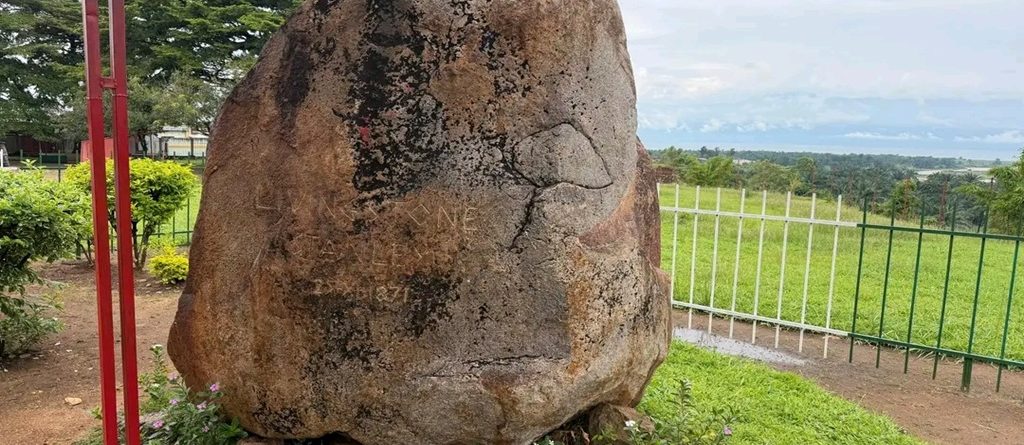
Livingstone Stanley Monument
Bujuku Eco Tours2026-04-23T14:07:13+03:00The Livingstone Stanley Monument at Mugere in Bujumbura, marks a location where two famous explorers and missionaries Dr. David Livingston and Henry Murton Stanely met. The two explorers spent two nights in Burundi on 25th -27th November 1871. The monument is located 12 km south of the enormous city and former capital city of Burundi, Bujumbura with a view of Lake Tanganyika and Rusizi River plains. This monument brings history lovers, tourists, and locals to learn more about the history and Africa’s past exploration. The initial meeting point of Dr David Livingstone and Henry Morton Stanely took place at Ujiji in Tanzania on 10th November 1871.
The late 19th century was the golden age of European exploration of the African continent. Dr David Livingstone (1813-1873) was a Scottish missionary and explorer, famous for his excursions into Central Africa. During his attempt to discover the source of the Nile, he was the first European to record important geographical features such as Lake Malawi.
Livingstone was a tireless missionary and did much to establish Christianity in central Africa. He was also very active in efforts to end the African slave trade.
In 1865, Livingstone went missing and because of his fame, it caused a sensation in Europe and America. For 6 long years the outside world heard nothing from the explorer, who was ill for much of this time.
Sir Henry Morton Stanley, a Welsh journalist and explorer, best known for exploring the Congo Basin, went in search of Livingstone and eventually found him in 1871. When he first saw the Scottish missionary/explorer he is purported to have uttered the memorable phrase, ‘Doctor Livingstone, I presume?’ However, it is highly unlikely that Stanley ever spoke these words.
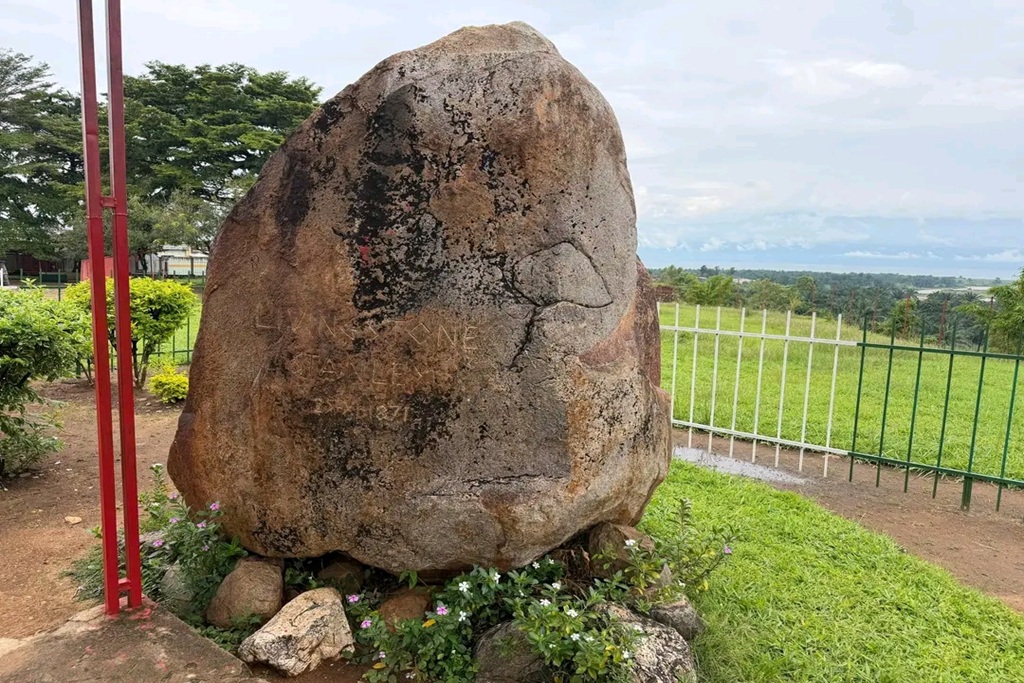
Description of Livingstone–Stanley Monument in Burundi
The monument which is 12 km south of the city of Bujumbura and next to Lake Tanganyika, comprises of a vertical stone standing on flat land. That is marked with a crude engraving which reads “Livingstone-Stanley, 25-11-1871” and is surrounded by a circle of smaller stones at the bottom. It is regularly climbed by locals and visitors to get a clear view of Lake Tanganyika, one of the largest lakes in Africa. This monument is almost a parallelogram of a rock that stands over 10 feet (3.2m) high and 6 feet (2 m) wide and is an unusual feature in the flat landscape around the lake as the colouring of the granite is distinctive with its reddish hue. A small settlement where local people still live a largely traditional lifestyle can be found near the rock.
Discovering the Livingstone–Stanley Monument
The location is not far from the former capital and biggest city in Burundi, Bujumbura, even though the monument can be difficult to find as it is off the main road. There is no admission fee to the site, and it is possible to buy food from the locals at roadside stalls.
There is also a small visitors center at the site with some information on the history of the site, although much of the information is in French. Accommodation near the Livingstone–Stanley Monument is plentiful.
What to expect during your visit to Livingstone Stanely monument
When visiting the Livingstone-Stanley Monument also known as “La Pierre de Livingstone et Stanley” in French found in Mugere, Burundi, expect a modest but historically significant site. The area is a simple and less crowded place with some days you being the only guest there. There are no big signs or shops, you are advised to carry your own water of snacks to eat.
Visiting the monument with a guide makes it even better coz the place has limited signage and the roads are not so well made. Getting to Livingstone – Stanely monument is easy if you take a taxi or a local guide for information, directions and guidance.
Expect excellent, unobstructed views of Lake Tanganyika and surrounding mountains, ideal for photography.

Leave a Reply