

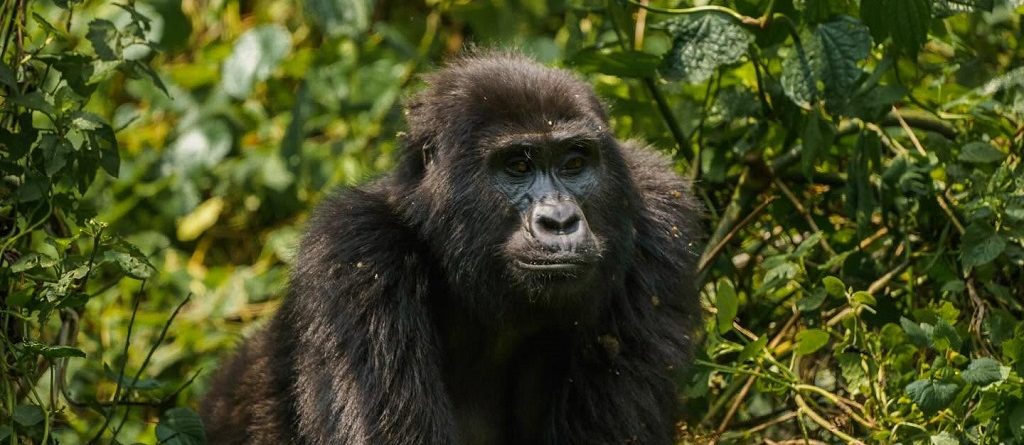
Facts About Mountain Gorillas
Bujuku Eco Tours2026-06-19T13:45:44+03:00Facts about mountain gorillas, the endangered mountain gorillas are one of the most thrilling and fragile primates on earth and offer the strongest wildlife encounter that one can experience while on an African safari. located in a few protected areas, the gentle giants have become the highlight of many of the Uganda safari and Rwanda safari. The gorilla trekking safari offers an opportunity to tourists to step into the rich rainforests and come face to face with the endangered mountain gorillas within their natural habitat
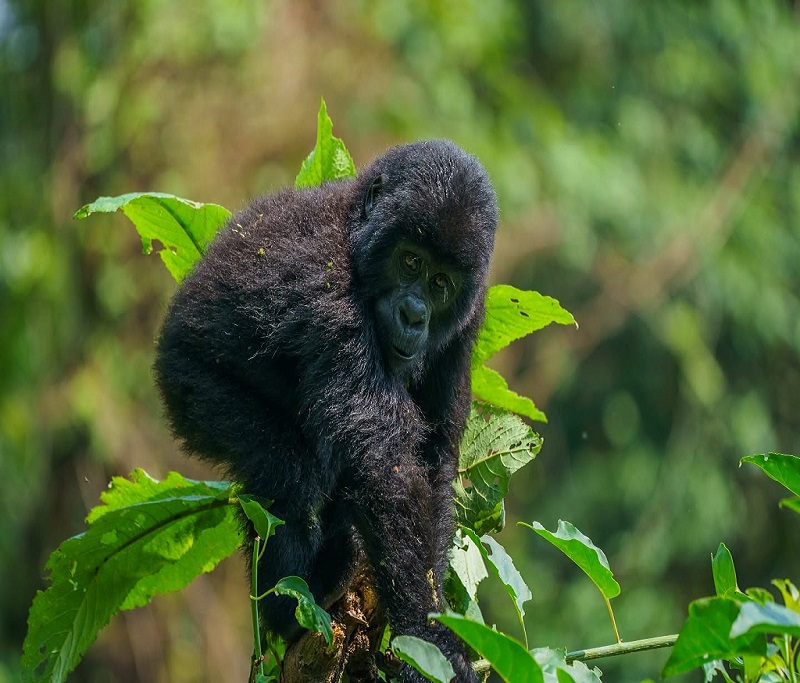
What are mountain gorillas?
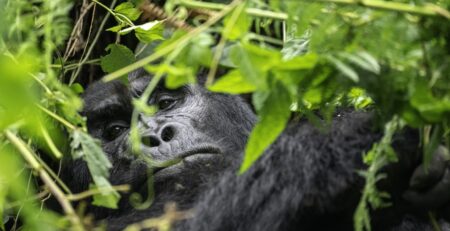
The mountain gorillas are also a subspecies of the eastern gorilla and are one of the unique primates in the world. These primates are found in the Virunga national park in the democratic republic of Congo, volcanoes national park in Rwanda, Bwindi impenetrable national park and Mgahinga gorilla national park in Uganda.
These areas that are protected, are recognized worldwide for offering gorilla trekking safari experiences thus making them the leading safari destinations for an African safari. The dense vegetation, mist-covered hills and variety make a good setting for observing mountain gorillas.
Below are the facts about the endangered mountain gorillas
- The mountain gorillas share a 98% DNA with human beings
Mountain gorillas share 98% of their DNA with human beings thus making them one of the closest relatives. This is displayed in their emotional intelligence, social interactions and behavior. While on a gorilla trekking safari, trekkers frequently observe;
- Mothers nurturing their babies with care
- Juveniles playing and jumping from one branch to another
- Gorillas cry when hurt
- The silver back gorilla protecting its family
All these behaviors make a deep and emotional connection thus turning a wildlife safari memorable one.
- Mountain gorillas are critically endangered species
Mountain gorillas were once critically endangered species as numbers were reducing due to poaching, destruction of habitat and civil unrest. As of today, the population has increased to over 1,000 individuals thus making them one of the few success stories of conservation
These giants are highly vulnerable to threats such as diseases which can be transmitted from humans and illegal activities. This is the reason as to why the gorilla trekking safaris are strictly regulated in all the gorilla trekking safari destinations. Therefore, tourists participating in a gorilla trekking safari actively contribute to the protection of these endangered species thus making the African safari a conservation effort not just an adventure.
- They live in complex family groups
The mountain gorillas live in social groups spearheaded by a dominant silverback. The group always consists of;
- A dominant male
- Many females
- Infants and juveniles
- Subordinate males
The silverback is the head and backbone of the group. This is so because he protects each and every member from threats and decides how they move in the forest and keeps law and order. Watching these while on a Uganda safari offers a glimpse into the most complex social systems.
- Mountain gorillas are gentle giants
Although the mountain gorillas are big in size and strong, they are gentle and non-aggressive. The adult males weigh up to 200kg and spend most of their day feeding, interacting and resting.
For the gorillas to be aggressive is when they feel threatened but it’s so rare. They show this by beating their chest, vocalisations or they charge as a warning rather than acting violently.
- Mountain gorillas are mostly vegetarian
The mountain gorillas are primarily herbivores and feed on a lot of plant species. Their diet involves bamboo shoots, stems, fruits, roots and leaves. An adult gorilla can eat up to 30 kilograms of vegetation on a daily basis. Their feeding is a major highlight while on a gorilla trekking safari thus offering a look into the ecological importance of the gorillas within an African safari habitat.
- Gorillas build new nests every night
Each evening, mountain gorillas build new nests while using branches, leaves and vegetation. These nests offer comfort and protection at night. However, infants share nests with their mothers, adults construct nests on the ground and the young gorillas construct nests in the trees.
The construction of nests shows their adaptability and connection to the environment thus adding depth of captivation to the wildlife safari experience.
- Mountain gorillas are shy
Mountain gorillas are known to be shy and quiet. Within their habitats, they tend to avoid unnecessary confrontation and prefer to be calm and peaceful, distant from anything, even humans. This character is a survival technique and being careful in the wild helps to avoid threats and keep peace within the group. While having an encounter with the gorillas, they rarely show aggression therefore instead they will quietly observe, continue feeding or slowly move away in case they feel uncomfortable.
- Gorillas leave in high altitudes
Mountain gorillas live in high elevations between 2,200 and 4,300 meters and the forests are characterized by cool temperatures, dense vegetation and frequent mist and rainfalls. This environment contributes to the physical demand while on a gorilla trekking safari.
- Mountain gorillas communicate in complicated ways
Mountain gorillas tend to use a system of communication which includes vocalisations, body language and facial expressions. Therefore, scientists have identified over 20 different sounds used for many purposes. These include hooting, grunts, roars and chest beating.
Their ability to communicate tends to strengthen the family and make sure they survive within the wild. Tourists witnessing this on a gorilla trekking safari is educative and exciting.
- Female gorillas produce at the age of 10 years
The female mountain gorillas reach reproductive maturity at 10 years of age. The gorillas often leave their birth group to join another family, helping to maintain their genetic diversity. This helps to support the growth of the population within the forest.
The female gorillas have a gestation period of 8.5 months and give birth to one baby every 3 to 4 years. This tends to slow reproduction rate and makes conservation efforts to survive. While on an African safari, tourists can see mother gorillas taking care of their young ones which is an emotional highlight of the trekking experience.

Comment (1)
[…] climate is more forgiving than many safari destinations because gorilla trekking happens inside dense forest regardless of season, so rain affects comfort more than it affects […]