

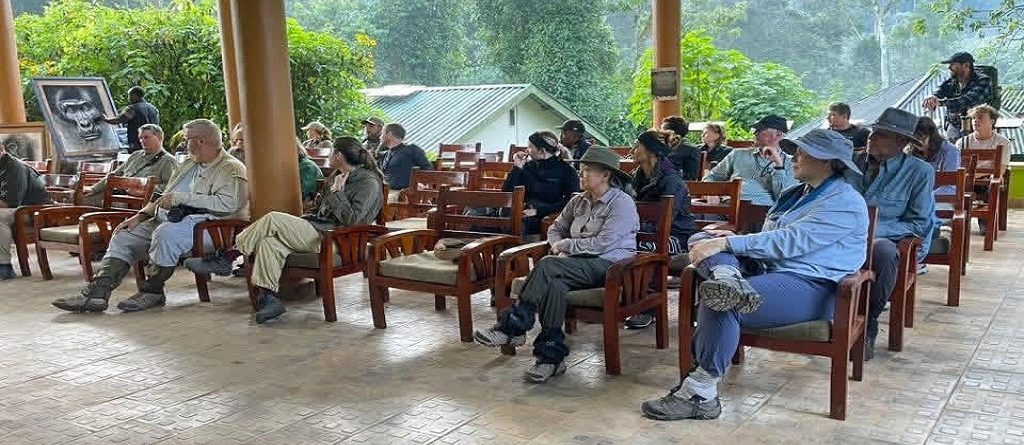
Reasons Why You Should Trek Gorillas in Uganda
Bujuku Eco Tours2026-06-30T15:49:07+03:00There are compelling reasons to choose Uganda for gorilla trekking over Rwanda, and there are compelling reasons to do Uganda’s gorilla trek even if you have already done Rwanda’s.
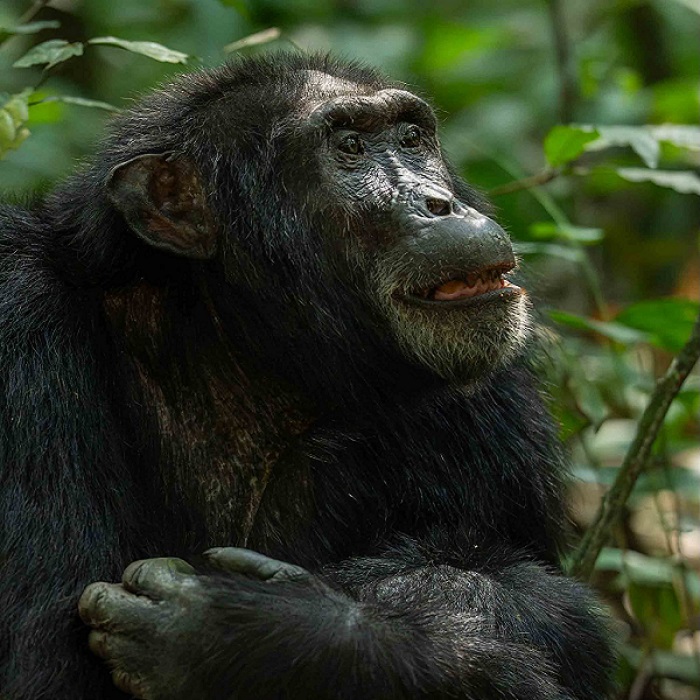
Here is a number of Reasons why you should trek gorillas in Uganda
- The $800 Gorilla Permit Is the Most Affordable in East Africa
The Uganda gorilla trekking permit costs $800 per person. Rwanda’s equivalent permit at Volcanoes National Park costs $1,500. The DRC’s Virunga permits, when available, run at approximately $400 but come with the access and safety complications that eastern DRC currently presents. For anyone doing the straightforward comparison between Uganda and Rwanda which is the comparison most travelers are actually making the permit difference is $700 per person.
For a couple, that is $1,400. For a family of four adults, it is $2,800. For a group of six, it is $4,200. These are not trivial sums. They translate to two or three additional lodge nights, a chimpanzee trekking permit and a game park circuit, a domestic flight between parks, or simply a meaningful reduction in the overall cost of a trip that is already significant in total budget.
- Uganda Has More Habituated Gorilla Families Than Any Other Country
Uganda’s Bwindi Impenetrable National Park has seventeen habituated gorilla families available for trekking, spread across four distinct sectors: Buhoma in the north, Ruhija in the east, Rushaga in the south, and Nkuringo in the southwest. Rwanda’s Volcanoes National Park has ten. The DRC’s Virunga has additional families but access is limited by the ongoing security situation in eastern Congo.
The practical impact of Uganda’s larger number of habituated families is meaningful. More families means more permits available per day 136 in total across Uganda’s four sectors. It means more flexibility for groups and families who need multiple permits on the same date. It means more sector choice, allowing you to match your fitness level and the type of forest experience you want to the right trekking area. And it means better permit availability in peak season, even if you have not booked twelve months ahead.
- The Gorilla Habituation Experience
If there is one reason that experienced gorilla trekkers choose Uganda over Rwanda for a repeat visit, it is this. The gorilla habituation experience a four-hour, maximum four-person visit with a gorilla family that is still in the process of being accustomed to human presence is exclusive to Uganda, available only in the Rushaga sector of Bwindi, and is consistently described by clients who have done both the standard trek and the habituation experience as the more profound of the two.
The standard gorilla trek gives you one hour with a fully habituated gorilla family. The habituation experience gives you four hours with a family that is still learning to tolerate human observers. During those four hours, you watch a complete morning of gorilla family life the first movements after waking, feeding in the forest, the juveniles at play, the silverback’s interactions with the females and sub-adults, the family’s gradual movement through the vegetation. Rangers and researchers are present throughout, and the morning unfolds around you as it would if you were not there at all.
- The Encounter Is Genuinely Intimate with Eight People Maximum
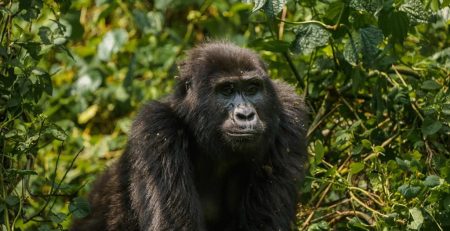
Uganda Wildlife Authority limits each gorilla trekking group to a maximum of eight people per gorilla family per day. This cap is non-negotiable and strictly enforced at every sector gate. The result is that your gorilla encounter is experienced by at most seven other people often fewer, as many operators send smaller groups of two to six. This is not a wildlife show with an audience. It is a private encounter between a small group of quiet humans and a family of wild gorillas who have simply learned to tolerate this morning ritual.
The intimacy of those eight-person groups is something that travellers who have experienced crowded wildlife encounters elsewhere consistently find striking. There is no jostling for position, no noise competition between groups, no sense of being part of a managed tourist procession.
- You Are Directly Funding the Gorilla’s Survival
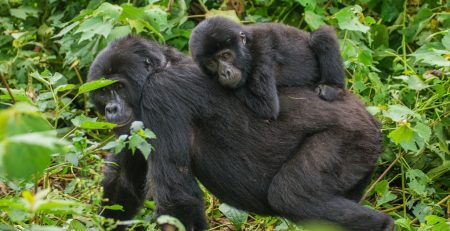
When you pay $800 for a Uganda gorilla trekking permit, you are not simply buying a wildlife experience. You are funding the conservation programme that has allowed the mountain gorilla population to grow from fewer than 300 individuals in the 1980s to over 1,063 today. That recovery the only large primate species whose wild population is currently increasing is directly attributable to the revenue generated by gorilla tourism.
Twenty percent of Uganda’s gorilla permit revenue goes to communities surrounding Bwindi and Mgahinga through the Revenue Sharing Programme. This money funds schools, health clinics, water projects, and income-generating programmes in the villages that live alongside the park. The communities that once had an economic incentive to poach gorillas and encroach on park land now have a direct financial stake in keeping the gorillas alive and the forest intact.
- Uganda Offers the Most Complete East Africa Safari Combined with Gorilla Trekking
Rwanda is primarily a gorilla destination. Its national parks Volcanoes for gorillas, Nyungwe for chimps, Akagera for game drives are excellent, but the country is small and the wildlife variety, while genuinely good, is limited compared to what Uganda offers. Uganda is a full safari country that happens to also have the world’s best gorilla trekking, and the combination of the two within a single trip is what makes a Uganda safari so compelling.
After gorilla trekking at Bwindi, a Uganda safari circuit takes you to Kibale Forest National Park for chimpanzee trekking, the highest concentration of habituated chimps in the world, with over 1,500 individuals and a success rate close to 98% on tracking days. From Kibale, you drive to Queen Elizabeth National Park for the Kazinga Channel boat safari, game drives among tree-climbing lions, and a night game drive for leopard. Murchison Falls adds the Nile boat cruise, Rothschild’s giraffes, and the dramatic spectacle of the falls themselves. Kidepo Valley in the far northeast offers the most remote and wild game drive experience in Uganda.
The practical result is that a properly designed Uganda safari delivers mountain gorillas, chimpanzees, tree-climbing lions, Nile boat safaris, Big Five game drives, and over 1,060 bird species within a country that is compact enough to cover all of these in ten to fourteen days. No other country in Africa delivers this breadth. The gorilla trek is the headline, but Uganda is the full story.
- Four Distinct Sectors Mean Different Experiences for Different Travelers
Not all gorilla treks at Bwindi are the same, and the sector you choose has a significant effect on the character of your experience. This is one of Uganda’s specific advantages over Rwanda, where all trekking begins from a single park headquarters. At Bwindi, four separate trekking sectors each have distinct terrain, atmosphere, and lodge options including Buhoma Sector (Northern Bwindi), Ruhija Sector (Eastern Bwindi), Rushaga Sector (Southern Bwindi) and Nkuringo Sector (Southwestern Bwindi
- You Can Combine Uganda and Rwanda for the Ultimate Gorilla Safari
If you have the time and the budget, the best answer to the question of whether to trek gorillas in Uganda or Rwanda is: both. The two countries share the Virunga Massif border and the crossing between them at the Cyanika or Katuna border post between Kisoro in Uganda and Musanze in Rwanda is one of the smoothest land crossings in East Africa. The drive from Bwindi to Volcanoes National Park takes two to three hours and passes through some of the most beautiful highland scenery in the region.
The two gorilla encounters are genuinely different from each other, and the differences are worth experiencing rather than just reading about. Bwindi’s forest is ancient, dense, steep, and physically demanding the encounter feels earned in a way that comes from the terrain itself. Volcanoes’ forest is more open, the terrain more managed, the overall experience more polished and logistically smooth. Rwanda’s lodges near the park are among the finest safari properties in Africa. Uganda’s lodges range from budget to excellent luxury at a more accessible price point. Together, the two experiences give you the full picture of what gorilla trekking in East Africa can be.

Leave a Reply