

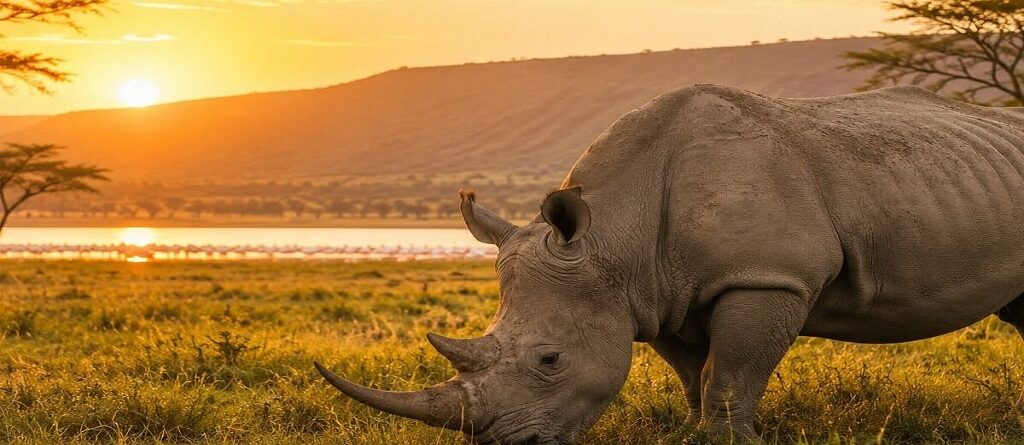
Big Five Animals in Akagera National Park
Bujuku Eco Tours2026-08-03T12:30:13+03:00Big five animals in Akagera National Park, Rwanda’s only savannah safari destination, and it holds one of the most remarkable wildlife recovery stories in Africa. Following the 1994 Genocide against the Tutsi, the park was reduced to roughly two-thirds of its original size to accommodate returning refugees, and its large mammal populations, including lion and rhino, were effectively wiped out by poaching and encroachment in the years that followed.
Lions vanished from the park entirely by the early 2000s, and the last rhino sighting was recorded in 2007. Today, through a partnership between the Rwanda Development Board and the conservation organisation African Parks, Akagera holds all five of Africa’s iconic Big Five species once again, a recovery that stands among the most complete and best-documented rewilding efforts on the continent.
This guide covers each of the Big Five in Akagera specifically: the reintroduction history behind lion and rhino, where in the park each species is most reliably found, current population figures, and what a realistic Big Five sighting expectation looks like on a standard Akagera safari.
Can You Really See the Big Five in Akagera?
Yes, and this is a genuinely significant claim given Akagera’s history. Rwanda’s Big Five status is a relatively recent achievement, built through a deliberate and well-documented reintroduction programme: lions were brought back in 2015 after a fifteen-year absence, black rhino followed in 2017 and again in 2019, and southern white rhino were introduced in 2021 and again as recently as 2025.
Buffalo, elephant and leopard survived the park’s difficult decades in reduced but persistent numbers and have recovered steadily under the intensive anti-poaching protection the park has maintained for over a decade.
Seeing all five within a single visit requires realistic expectations about each species individually. Buffalo and elephant are reliable sightings on almost any multi-day game drive circuit. Lion sightings have improved considerably as the reintroduced population has grown and multiplied.
Rhino sightings, while genuinely achievable, benefit from a dedicated rhino tracking activity rather than a standard game drive alone. Leopard remains the most elusive of the five, and a leopard sighting in Akagera is properly understood as a rare bonus rather than a guaranteed outcome, best pursued specifically through a night game drive.
Akagera's Big Five at a Glance
Here is a direct summary of each species’ current status, typical location within the park, and realistic sighting expectations.
Species | Reintroduced or Resident | Current Population (approx.) | Best Area | Sighting Likelihood |
Lion | Reintroduced 2015 (7 individuals) | Around 50-58 individuals as of recent counts | Northern plains, though seen park-wide | Good; improved significantly since reintroduction |
Black rhino | Reintroduced 2017 and 2019 | Part of Akagera’s total rhino population, now over 20-30 combined | Southern acacia woodland and forest | Moderate; benefits from a dedicated tracking activity |
White rhino | Reintroduced 2021 and 2025 | Growing population from initial 30 individuals plus further arrivals | Northern grassland, Kilala Plains area | Moderate to good; grassland habitat aids visibility |
Elephant | Resident (recovering population) | Approximately 130+ individuals | Throughout the park, especially near water | Good; reliable sighting on most multi-day visits |
Buffalo | Resident (never extirpated) | Approximately 4,000 individuals | Northern plains, large herds | Excellent; the most commonly seen of the five |
Leopard | Resident (small, elusive population) | Not precisely counted; low density | Woodland and riverine forest, park-wide | Low; requires night game drives and considerable patience |
Where to Find Each of the Big Five
Understanding where each species tends to concentrate within Akagera helps structure a game drive itinerary that maximises your overall Big Five sighting odds rather than driving randomly and hoping.
Lion
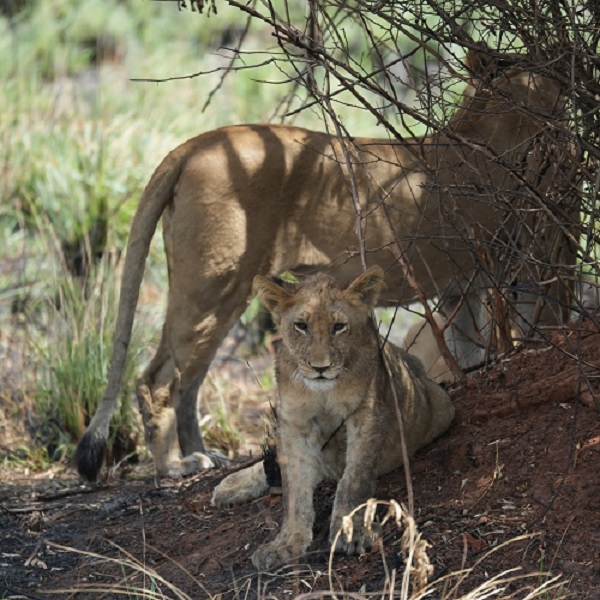
Akagera’s lions are found in both the northern and southern sections of the park, but the best sighting odds are generally in the north, near the open plains where antelope and other grazing species concentrate, providing the prey base that supports hunting activity.
A long game drive circuit that moves from south to north often concludes with the best chance of finding lions resting under acacia shade after a morning hunt. The reintroduced population, now numbering in the fifties, has multiplied substantially since the original seven individuals arrived in 2015, and sighting odds have improved accordingly as the population has grown and spread across more of the park’s territory.
Black Rhino
Black rhino inhabits the acacia woodland and forest of Akagera’s southern section, a habitat that suits their browsing feeding style, taking leaves and shoots from woody vegetation rather than grazing grassland. This denser habitat makes black rhino sightings less reliable on a standard game drive than the more open-country white rhino, and the park’s dedicated rhino tracking activity, joining rangers on their monitoring routine, is the most effective way to see black rhino specifically, given both the habitat’s cover and the species’ naturally lower population relative to white rhino.
White Rhino
White rhino occupies Akagera’s northern grassland, particularly around the Kilala Plains, reflecting their grazing feeding style and preference for open country. This more open habitat generally makes white rhino somewhat easier to spot on a standard game drive than their black rhino counterparts, though rhino tracking remains a worthwhile activity for visitors specifically prioritising a reliable rhino sighting during their visit.
Elephant
Elephant are found throughout Akagera but are most reliably seen near the park’s lakes and rivers, particularly during the dry season when water sources become more concentrated and elephant herds gather to drink and bathe. The population has grown steadily from a low base following the near-extinction pressures of the poaching era, and a herd sighting, sometimes including several generations moving together, is one of the more consistently rewarding experiences on a multi-day Akagera visit.
Buffalo
Buffalo are Akagera’s most numerous and most reliably seen Big Five species, with large herds, sometimes numbering in the hundreds, most commonly found across the northern plains. Because buffalo were never fully extirpated from the park even during its most difficult decades, their recovery has been the most straightforward of the five, and a buffalo sighting on any Akagera game drive is close to a certainty.
Leopard
Leopard remains the most elusive of Akagera’s Big Five and the species requiring the most patience and, ideally, a specific strategy to see. Leopards favour dense woodland and riverine forest cover throughout the park, and their solitary, largely nocturnal habits mean they’re rarely seen during standard daytime game drives. A guided night game drive, which Akagera offers specifically and which is one of the most effective ways to see nocturnal and crepuscular species generally, gives considerably better leopard odds than a daytime circuit alone, though even then a sighting should be treated as a genuine bonus rather than an expectation.
Best Time to See the Big Five in Akagera
Akagera’s Big Five are present year-round, since none of the five are migratory in the way that East Africa’s wildebeest herds are, but the dry seasons offer the most reliable and concentrated sightings as water sources become scarcer and wildlife gathers more predictably around the park’s lakes and rivers.
The long dry season from June through September and the short dry season from December through February are the strongest windows for general game viewing across all five species, with elephant and buffalo in particular showing more concentrated behaviour around permanent water during these months. The wetter months see wildlife disperse more widely across the park, which can make specific sightings, particularly of the more elusive rhino and leopard, somewhat less predictable.
Season | Months | Overall Conditions | Big Five Viewing |
Long dry season | June – September | Firm roads, clear visibility | Strong; wildlife concentrates at water sources |
Short dry season | December – February | Warm, dry, good conditions | Strong; similar concentration effect |
Long rains | March – May | Wetter, lush landscape | Wildlife more dispersed; still achievable with patience |
Short rains | October – November | Moderate rainfall | Moderate; transitional conditions |
What Does a Big Five Safari at Akagera Cost?
Akagera’s park entry fees apply to all visitors regardless of which specific Big Five species you hope to see, with non-resident international visitors paying approximately USD 100 per person, foreign residents around USD 50, and East African Community citizens a considerably lower rate. These figures should be confirmed with your operator or directly through the park, since they’re reviewed periodically.
The rhino tracking activity, if you choose to add it specifically to improve your rhino sighting odds, carries its own additional fee on top of standard park entry, as does a night game drive if you’re specifically pursuing a leopard sighting. Both are worthwhile additions for travellers whose Big Five priorities specifically include the two hardest species to see through a standard daytime game drive alone.
Standard game drive circuit — Park entry plus a private or shared vehicle
A standard day or multi-day game drive circuit covering the park’s main north-south route delivers reliable buffalo and elephant sightings, good lion odds, and a reasonable chance of white rhino in the northern grassland, without any additional specialist activity fees.
Enhanced Big Five circuit with rhino tracking — Standard game drives plus a dedicated rhino tracking activity
Adding the rhino tracking activity to a standard game drive itinerary significantly improves your odds of a black rhino sighting specifically, given the species’ denser southern woodland habitat, and is a worthwhile addition for visitors prioritizing a complete Big Five outcome.
Complete Big Five pursuit with night drives — Game drives, rhino tracking and night game drives
For visitors specifically wanting the best possible odds of all five species including leopard, combining standard game drives, rhino tracking, and at least one night game drive gives the most comprehensive approach, though even this combination cannot guarantee a leopard sighting given the species’ natural elusiveness.
Where to Stay for the Best Big Five Access
A Kagera’s accommodation is concentrated in the park’s southern section, giving good access to both the classic game drive circuits and the rhino tracking activity, while the northern grassland where lion and white rhino are most concentrated typically requires a longer drive regardless of where you’re based.
For visitors specifically prioritising Big Five sightings, a lodge or camp with a private vehicle and an experienced guide who can adapt the day’s route based on current wildlife reports from other vehicles and park rangers offers a meaningful advantage over a fixed-circuit shared vehicle.
Property | Location | Best For |
Magashi Safari Camp | Northern sector | Travellers prioritising proximity to the northern plains where lion and white rhino concentrate |
Ruzizi Tented Camp | Southern sector, near Lake Ihema | Travellers wanting convenient access to the boat cruise alongside game drives |
Mantis Akagera Game Lodge | Southern sector | Comfortable mid-range base with good access to the main game drive circuits |
Shakani, Muyumba and Mutumba campsites | Southern sector | Budget-conscious and self-drive travellers |




Comments (2)
[…] Akagera National Park […]
[…] guide, the boat cruise on Lake Ihema is consistently rated as the single most rewarding activity in Akagera National Park, Rwanda’s only savannah safari destination, and for good […]