

Rwanda Luxury Safaris
Bujuku Eco Tours2026-08-04T12:21:39+03:00Rwanda Luxury Safaris: Rwanda has quietly become one of Africa’s most sought-after luxury safari destinations. It got there by offering something no other country can replicate at the same level: face-to-face encounters with mountain gorillas, exceptional road infrastructure, and a standard of lodge design and service that now rivals anywhere on the continent.
Planning a trip here, though, raises more questions than most people expect. Permit costs change from year to year, park logistics interact with each other in ways that are not obvious from a quick search, and lodge selection can make or break the experience.
Having built tailor-made itineraries across Rwanda for years, we have seen exactly where good trips come together and where they quietly fall apart. This guide walks through every decision in the order you will actually need to make it.
Why Rwanda, Specifically
Three countries offer mountain gorilla trekking: Rwanda, Uganda, and the Democratic Republic of Congo. All three sit on the same Virunga ecosystem, and the gorillas themselves do not recognize the borders between them. The difference for travelers comes down to access, comfort, and cost, and it is worth being direct about the trade-offs rather than assuming Rwanda is automatically the right call.
Factor | Rwanda | Uganda | DR Congo |
Permit cost (per person) | Highest of the three | Mid-range | Lowest, but variable |
Drive to trailhead | 1.5–2 hrs from Kigali | 8–10 hrs from Entebbe | Short, but security-dependent |
Road quality | Excellent, mostly paved | Mixed, often unpaved | Limited, unpredictable |
Lodge standard | Some of Africa’s finest | Strong mid to high-end options | Basic, improving slowly |
Political stability | Very stable | Stable | Regionally volatile |
Best suited for | Short, high-comfort trips | Longer trips, tighter budgets | Adventurous, flexible travelers |
Where to Go for Rwanda's Key Safari Regions
Rwanda is compact enough that a well-planned ten-day trip can realistically cover its four main regions without the exhausting internal flights that longer African itineraries often require.
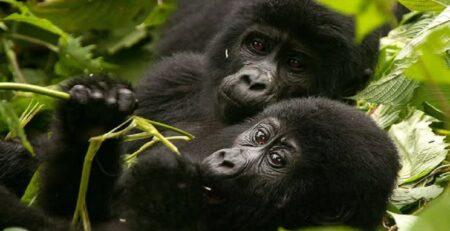
This is the reason most travelers come to Rwanda. Volcanoes National Park sits in the northwest, along the border with Uganda and DR Congo, and protects the Rwandan side of the Virunga volcanic range. Beyond mountain gorillas, it is also one of only two places on earth where golden monkey trekking is possible, and its lodges are concentrated within a short drive of the park headquarters at Kinigi.
Nyungwe Forest National Park
In the southwest, Nyungwe is one of Africa’s oldest rainforests and the best place in Rwanda for chimpanzee tracking, along with a canopy walkway suspended above the forest floor. It suits travelers who want primate variety beyond gorillas, and it pairs naturally with a drive south from Volcanoes or a stop en route to Lake Kivu.
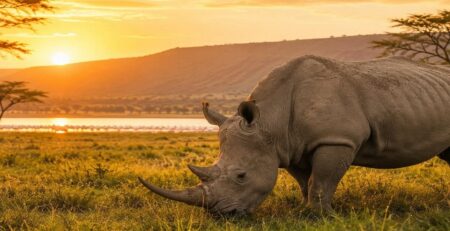
Akagera, in the east near the Tanzanian border, is Rwanda’s answer to classic savannah safari, and it is the only Big Five park in the country following the reintroduction of lions and rhinos over the past decade. Game drives and boat safaris on Lake Ihema round out a trip that would otherwise be almost entirely primate-focused.
Lake Kivu
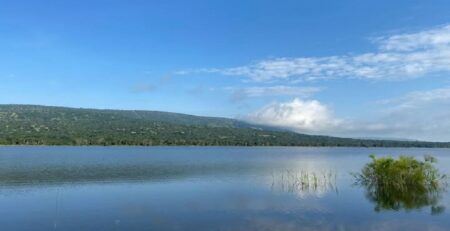
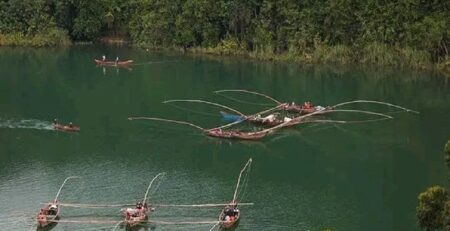
Lake Kivu is not a wildlife destination; it is the recovery stop most itineraries need after the physical demands of trekking. Its lakeside lodges offer boat trips, kayaking, and simply a slower day between more intense park visits, and it works well as either a first-night arrival point or a closing few days before flying home.
Region | Signature Experience | Time Needed | Best For |
Volcanoes NP | Mountain gorilla & golden monkey trekking | 2–3 nights | Every Rwanda itinerary |
Nyungwe Forest | Chimp tracking, canopy walk | 2 nights | Primate enthusiasts |
Akagera NP | Big Five game drives, boat safari | 2–3 nights | Classic safari lovers |
Lake Kivu | Relaxation, boat trips | 1–2 nights | Recovery / honeymooners |
When to Go
Rwanda’s climate is more forgiving than many safari destinations because gorilla trekking happens inside dense forest regardless of season, so rain affects comfort more than it affects sightings. That said, timing still shapes cost, crowd levels, and how muddy the trekking trails will be.
Season | Months | Conditions | Good For |
Long dry season | June – September | Driest trails, peak demand, highest permit availability pressure | First-time visitors wanting easiest trekking conditions |
Short dry season | December – February | Drier, quieter than mid-year peak | Travelers avoiding the busiest months |
Long rainy season | March – May | Heaviest rain, muddy trails, lush scenery | Budget-conscious, flexible travelers |
Short rainy season | October – November | Moderate rain, fewer crowds | Photographers wanting greener forest backdrops |
What a Rwanda Luxury Safari Actually Costs
Rwanda is not a budget safari destination, and it does not try to be. The government deliberately positions gorilla tourism at the premium end of the market to limit visitor numbers and protect the habitat, which means the gorilla permit alone is a significant line item before accommodation, transport, or flights are even considered.
Cost Category | Mid-Range | Luxury | Ultra-Luxury |
Gorilla permit (per person) | $1500 |
|
|
Accommodation (per night, per person) | US$250 – 450 | US$600 – 1,200 | US$1,300 – 3,000+ |
In-country transport | Shared/private road transfers | Private 4×4 with guide | Private 4×4 or helicopter transfers |
Typical 7-night trip (all-in, per person) | US$4,000 – 6,000 | US$7,000 – 11,000 | US$12,000+ |
Accommodation
Lodge selection in Rwanda matters more than in most safari countries because so much of the country’s luxury reputation rests on a handful of exceptional properties near Volcanoes National Park. The right choice depends less on budget alone and more on what kind of experience you want each evening after a physically demanding day on the trails.
Lodge / Style | Location | Best For |
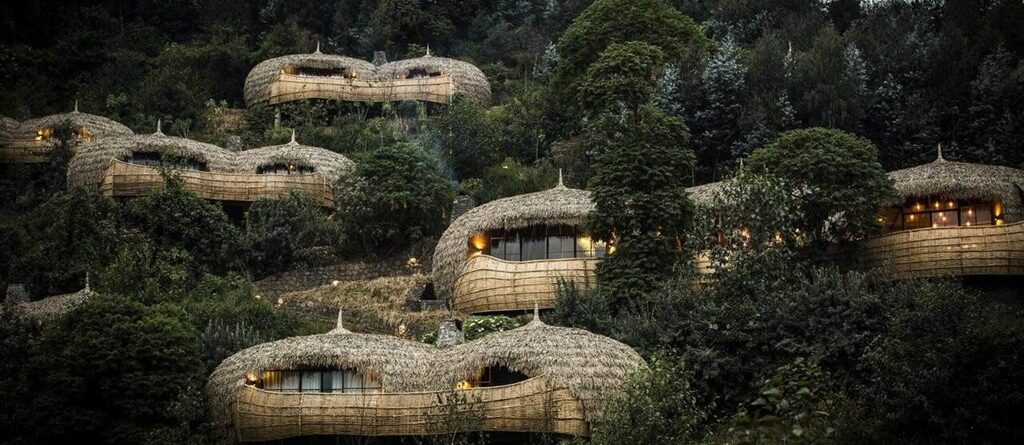
Bisate Lodge | Volcanoes NP | Design-focused travelers wanting architectural drama and forest restoration views |
Singita Kwitonda | Volcanoes NP | Ultra-luxury travelers wanting understated, conservation-led elegance |
One&Only Gorilla’s Nest | Volcanoes NP | Couples and honeymooners wanting polished five-star service |
Wilderness Sabyinyo Silverback | Volcanoes NP | Travelers wanting a warmer, more intimate lodge feel |
One&Only Nyungwe House | Nyungwe Forest | Tea-estate setting paired with chimp tracking |
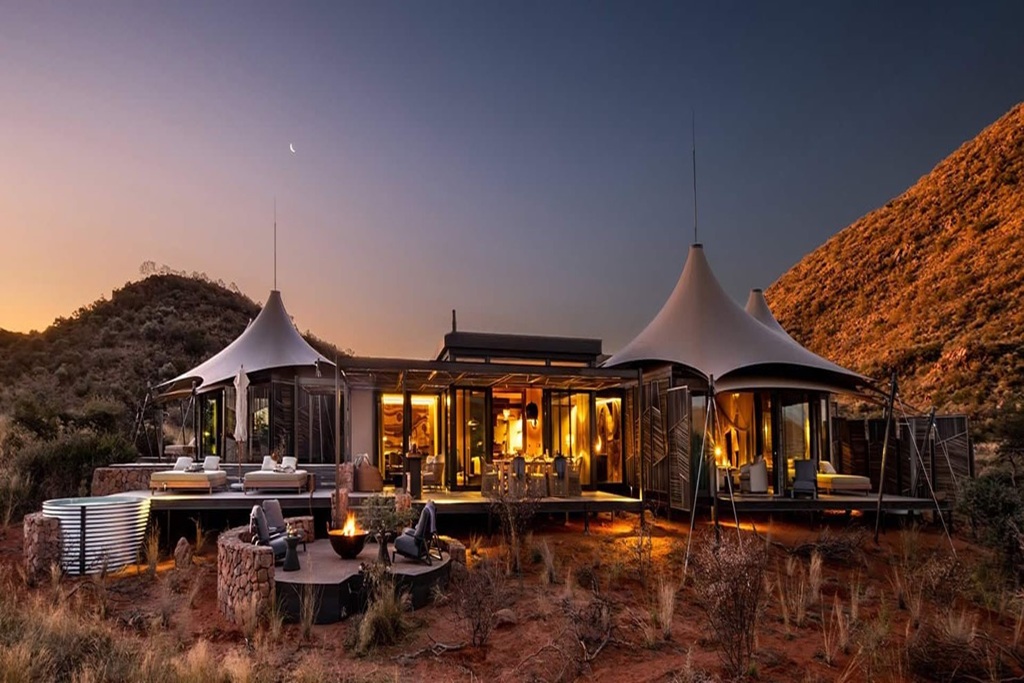
Magashi Camp | Akagera NP | Classic tented-camp safari atmosphere with Big Five access |
Lake Kivu Serena / boutique villas | Lake Kivu | Relaxation and recovery days |
Activities You Will Actually Do Each Day
- Mountain gorilla trekking — a permitted, ranger-led hike of anywhere from thirty minutes to several hours through Volcanoes National Park, followed by a strictly timed one hour with a habituated gorilla family.
- Golden monkey trekking — a shorter, less physically demanding half-day activity, often combined with gorilla trekking on a multi-day stay.
- Chimpanzee tracking in Nyungwe — a steeper, often longer trek than gorilla trekking, rewarding but genuinely more physically demanding.
- Nyungwe canopy walk — a suspended walkway roughly seventy meters above the forest floor, suited to travelers wanting a lighter-effort activity with dramatic views.
- Akagera game drives and boat safaris — traditional open-vehicle game viewing plus a boat cruise on Lake Ihema for hippos, crocodiles, and water birds.
- Cultural visits — community walks, the Iby’Iwacu Cultural Village near Volcanoes NP, and Kigali’s Genocide Memorial, which many travelers choose to visit for historical context before heading north.
- Congo Nile Trail cycling and Lake Kivu boat excursions — lower-intensity days built around recovery and scenery.
Planning Tips
Gorilla permits are limited to eight visitors per habituated family per day, and Rwanda issues a fixed number of permits across the park daily. This is the single biggest constraint on any Rwanda itinerary, and it should be the first thing booked, before flights, before other lodges, before anything else. During June to September and the Christmas period, permits can sell out four to six months in advance.
A well-paced Rwanda itinerary generally runs seven to ten days: one night to arrive and adjust in Kigali or Lake Kivu, two to three nights at Volcanoes National Park to allow a buffer day in case a trek needs to be rescheduled, two nights in Nyungwe if chimp tracking is a priority, and two to three nights in Akagera to close the trip with more conventional game viewing. Trying to compress this into four or five days is possible but tends to turn a considered trip into a checklist.
Packing deserves more attention than most travelers give it. Waterproof hiking boots that are already broken in, a lightweight rain jacket regardless of season, gardening-style gloves for gripping stinging nettles and vegetation on the trail, and a daypack with a rain cover all make a measurable difference to how enjoyable the trek feels. Insect repellent and a basic first aid kit are worth carrying personally rather than assuming a lodge will have exactly what you need on trek morning.
Combining Rwanda with a second country works well logistically because Kigali International Airport has direct or short connecting flights to Nairobi, Entebbe, and Dar es Salaam, making a two-country Rwanda and Kenya or Rwanda and Tanzania trip straightforward to build without excessive backtracking.
Recommendations by Traveler Type
Honeymooners: Bisate Lodge or One&Only Gorilla’s Nest for the trekking leg, followed by three relaxed nights on Lake Kivu. Prioritize privacy and design over ticking off every activity.
First-time safari travelers: pair Volcanoes National Park with Akagera for a balance of primate trekking and classic game drives, timed for the June to September or December to February dry windows for the easiest introduction.
Serious primate enthusiasts: extend into Nyungwe for chimp tracking and consider adding Uganda’s Bwindi for a second gorilla trek with a different family group, since permits and habituated families differ by park.
Families with teenagers: note the minimum age for gorilla trekking is fifteen; Akagera’s game drives and Lake Kivu’s boat activities are better suited to younger children, with gorilla trekking reserved for when the whole family can participate.
Budget-conscious but unwilling to skip gorillas: travel in the April–May or November shoulder months, choose mid-range lodges outside the immediate park boundary, and limit the trip to Volcanoes NP and Lake Kivu rather than adding Nyungwe and Akagera.




Comment (1)
[…] royal history, its living traditions of dance and craft, the sobering and essential story of the 1994 genocide, and the way traditional pastoralism and conservation now coexist in places like Volcanoes National […]